
Learn how you can comply with regulatory requirements and promote a culture of trust for business success.
Every negotiation with a potential customer can either help close a deal or ruin the opportunity. Two things usually decide the outcome: we have to play by the rules, and we have to earn people's trust. As sellers, we navigate a maze of complex regulations and make ethical decisions daily — all while building strong, lasting relationships with our customers.
To give you a complete picture of why sales compliance matters in day-to-day business, this article covers what sales policies are, their legal framework, the benefits they deliver, their core elements, and the key tools that make compliance management effective.
What is Sales Compliance?
Compliance with sales guidelines is the foundation of every successful sales process. It means following defined rules and standards whenever a company sells its products or services. These rules can come from government laws, industry associations, or the company itself. Sales compliance is not only about avoiding legal problems — it is about doing business in a way that is ethical, fair, and consistent with the company's values. It sits alongside broader contract compliance management, which governs how obligations are met across the entire agreement lifecycle.
The Legal Framework for Complying with Sales Regulations

The rules that apply can vary significantly depending on the industry, region, and type of product or service being sold. In general, companies need to weigh several essential areas to stay compliant when offering products or services.
- Consumer protection laws create a framework for fair and transparent treatment of consumers. They enforce principles such as truth in advertising, product safety, fair pricing, and transparent guarantees. Complying with these laws maintains trust and prevents fraudulent practices that could harm consumers.
- Contract law sets the ground rules for sales agreements. It covers essentials such as the nature of the item sold, any warranties or guarantees, the payment terms both parties accept, and what happens if either party fails to fulfil its obligations.
- Product liability laws hold the various entities in the distribution chain — manufacturers, distributors, suppliers, and retailers — responsible for injury or damage caused by faulty or unsafe products. Their aim is to protect consumers by ensuring that products on the market meet safety and quality standards.
- Privacy and data protection laws govern how personal data is collected, stored, used, and transferred in connection with a sale. Their core purpose is to protect individuals' privacy and keep personal data safe from unauthorised access, disclosure, or loss. A foundational principle is informed consent: a person must voluntarily agree to the collection and specified uses of their data, be told the purposes of collection and transfer, and be free to refuse. Companies must also secure the data they hold — through encryption of sensitive data, proper password controls, and regularly updated security systems.
- Intellectual property laws protect the products of human creativity, granting creators or owners exclusive rights to their innovations and works.
- Sales tax and VAT law requires companies to follow tax rules on sales — collecting and remitting sales tax or VAT based on the products or services they sell and the applicable rates.
- International trade laws are the agreements that govern how countries do business across borders. They oversee imports, exports, tariffs, quotas, and the settlement of trade-related disputes.
- Record-keeping and reporting requirements cover the steps companies must take to document and report their sales activities accurately and in line with applicable law. This includes keeping orderly records of transactions, financial details, customer information, and other data related to the sale.
Benefits of Sales Compliance
In an era of greater transparency and consumer self-determination, complying with sales guidelines is about far more than avoiding hefty fines — it builds trust, protects your brand's reputation, and ultimately drives sustainable growth.
- Legal protection: Carefully following the laws and regulations that apply to your industry gives your company a strong shield against serious legal consequences. It protects you from costly lawsuits and keeps your operational practices firmly within the law.
- Reputation management: A brand's reputation is one of its most valuable assets. When customers see that your company operates ethically and legally, they are more likely to trust your brand, buy again, and recommend you to others.
- Competitive advantage: Companies that prioritise sales compliance often gain an edge. By positioning themselves as trustworthy and reliable, they win customers who are wary of less ethical competitors — leading to greater market share and long-term success.
- Risk management: Compliance in sales is not only about external legal requirements; it is also about managing internal risk. When your sales team understands and follows compliance guidelines, the likelihood of internal errors, fraud, or inappropriate behaviour drops, mitigating the damage those issues can cause.
- Cost savings: Investing in sales compliance means training your team and putting systems in place to meet legal and ethical standards. That upfront cost pays off: you avoid violations that trigger heavy fines, keep a clean legal record, and protect the brand reputation that is so expensive and slow to rebuild once damaged.
- Higher morale: When sales teams work in an environment where ethics and legal standards are a priority, employees tend to be more satisfied. Knowing their employer values and practises ethical conduct gives them confidence — which boosts job satisfaction, engagement, and commitment.
The Key Elements of Sales Compliance

1. Clear sales policies and procedures
Clear, comprehensive sales policies and procedures are the backbone of a strong compliance program. Think of them as the user guide for your sales team, defining what is acceptable and unacceptable in the sales process. Covering ethical conduct, pricing strategy, and customer contact, they give your team a reference for correct behaviour and ensure transparency and consistency across sales practices. A well-maintained contract playbook is a practical way to codify these rules.
2. Training for sales teams
Effective sales compliance starts with a well-informed, properly trained team. Equip your salespeople with the knowledge and skills to make rule-compliant decisions day to day. Comprehensive training should cover the legal and ethical dimensions of selling, industry-specific regulations, and your organisation's own compliance requirements — so your team can meet compliance challenges with confidence.
3. Monitoring and reporting systems
Set up monitoring and reporting systems that act like attentive supervisors, continuously watching sales activity so potential issues surface early. These systems track sales activities, customer interactions, and financial transactions meticulously. This proactive approach keeps the integrity of your sales operation intact and lets you take corrective action the moment it is needed.
4. Integrate technology for effective compliance
In today's digital age, technology is essential to making compliance measures effective. Compliance management software, for instance, simplifies documentation, streamlines policy monitoring, and generates informative reports for deeper analysis. Bringing technology in raises operational efficiency, minimises manual errors, and delivers a more methodical, systematic approach to compliance.
5. Learn from real-world case studies
Studying real companies that have implemented effective sales-compliance strategies is highly instructive. These case studies show how organisations handle the complex environment of sales compliance — the specific approaches, methods, and the role compliance plays in daily operations. Analysing them can inspire and sharpen your own strategy. A structured compliance checklist helps turn those lessons into repeatable practice.
What Tools Should Be Used to Comply with Sales Regulations?
As regulatory requirements keep changing and expanding, organisations increasingly turn to compliance management tools to handle their obligations effectively. Here are some of the leading software solutions for compliance management.
1. PowerDMS
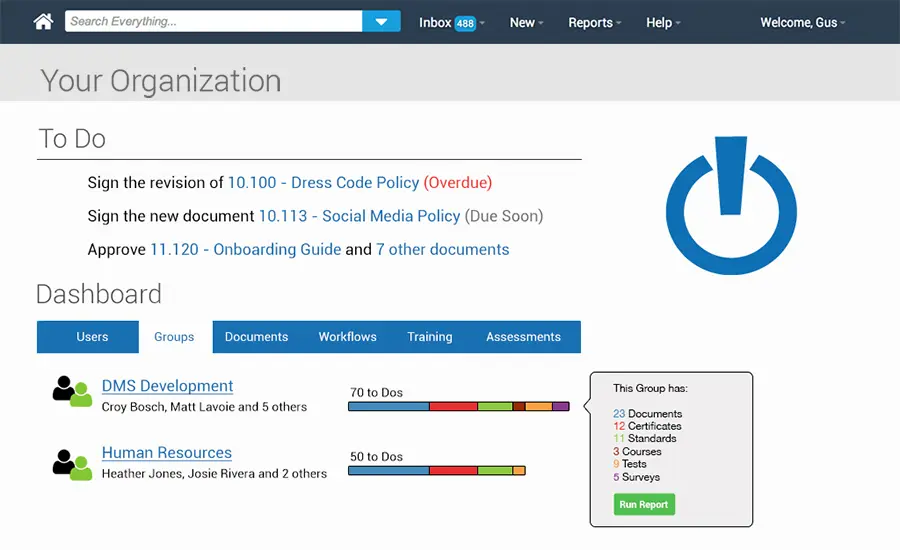
A web-based compliance management system built for companies of all sizes. It provides a central platform for policy documents, training materials, and compliance obligations, ensuring employees can reach the latest information wherever they are.
PowerDMS features that support compliance:
- Create, store, and manage policies, procedures, and other important documents in one central location.
- Distribute policies efficiently and confirm that employees have reviewed and acknowledged them.
- Track acknowledgements to demonstrate that staff are up to date on current requirements.
2. HSI Donesafe
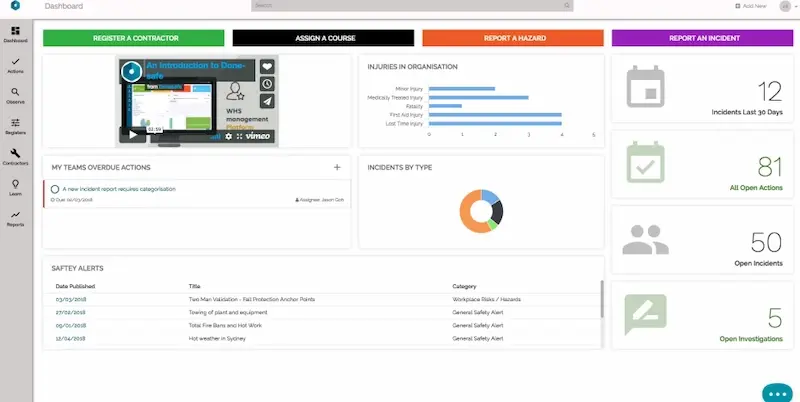
HSI Donesafe's compliance software is tailored to modern businesses, helping teams manage risk, corporate governance, regulatory compliance, and workplace responsibility. It includes features such as risk assessments, incident reports, and threat detection — a comprehensive choice for any company operating in a high-risk sector.
HSI Donesafe features that help with compliance:
- User-friendly interface that makes compliance tasks easy to navigate and complete
- Customisable workflows to build your own compliance processes
- Automatic notifications for compliance-related tasks and deadlines
- Real-time reporting to track progress and spot areas for improvement
3. Libryo
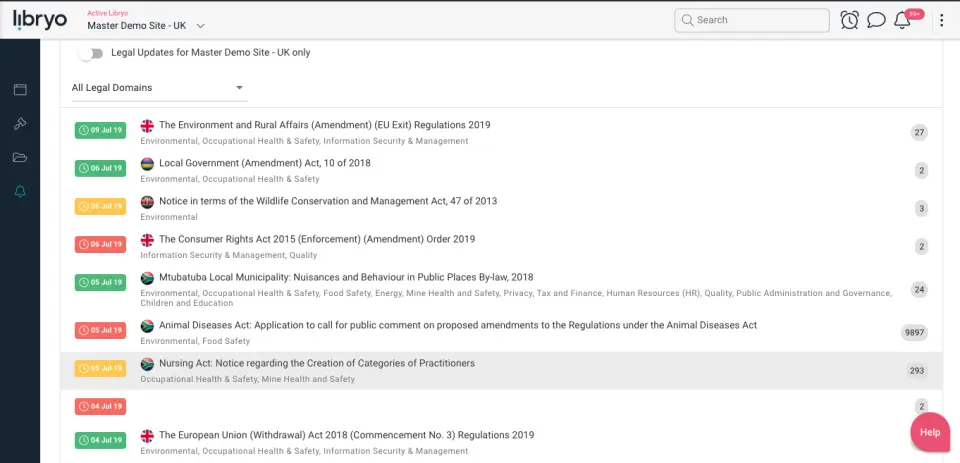
Libryo's compliance software was built specifically for the legal sector. It gives companies a live view of their compliance obligations — including compliance monitoring, automatic updates, and customisable workflows — making it easier to stay current with the standards relevant to their activities.
Libryo features for compliance:
- User-friendly interface that makes regulatory information easy to find
- Real-time updates on changes to legal and regulatory requirements
- Coverage across multiple jurisdictions worldwide
- Automated compliance reports that save time and reduce the risk of human error
4. Predict360
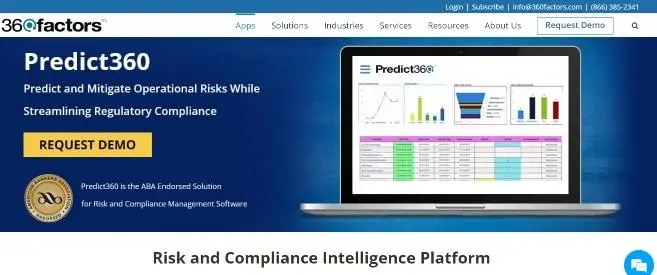
A powerful tool for companies managing complex risks and compliance obligations across multiple areas of law and industry. It offers a central platform for regulatory compliance monitoring, enterprise risk management, audit management, and regulatory-change management.
Predict360 features that help with compliance:
- Automation for repetitive tasks
- Modules for straightforward risk management
- Support for managing reputational risk
- Seamless document upload
- Simple, intuitive interface
Ready for the next step?
Book a demo with our team and see top.legal in action