
Slow contracts kill deal momentum. See how top sales teams remove approval bottlenecks with pre-approved templates, automation, and e-signatures to close faster.
Have you ever felt that the deal was ready to close — right up until the contract showed up?
The last stretch, from a verbal "yes" to a signed contract, should be the easy part. Too often it's where deals slow down, stall, or fall apart altogether.
A customer's "yes" feels like the win, but it's only half the story. The deal is only sealed once that agreement becomes a signed contract — and when the contract process is slow or disorganized, even your best opportunities lose momentum.
Research by World Commerce & Contracting puts the cost of poor contract management at up to 9% of a company's annual revenue — an expensive drag on something so central to growth. For sales teams, a well-run contract process isn't just about efficiency; it's a competitive advantage that helps you move faster, build trust, and keep deals on track when every day counts.
Where contract bottlenecks come from
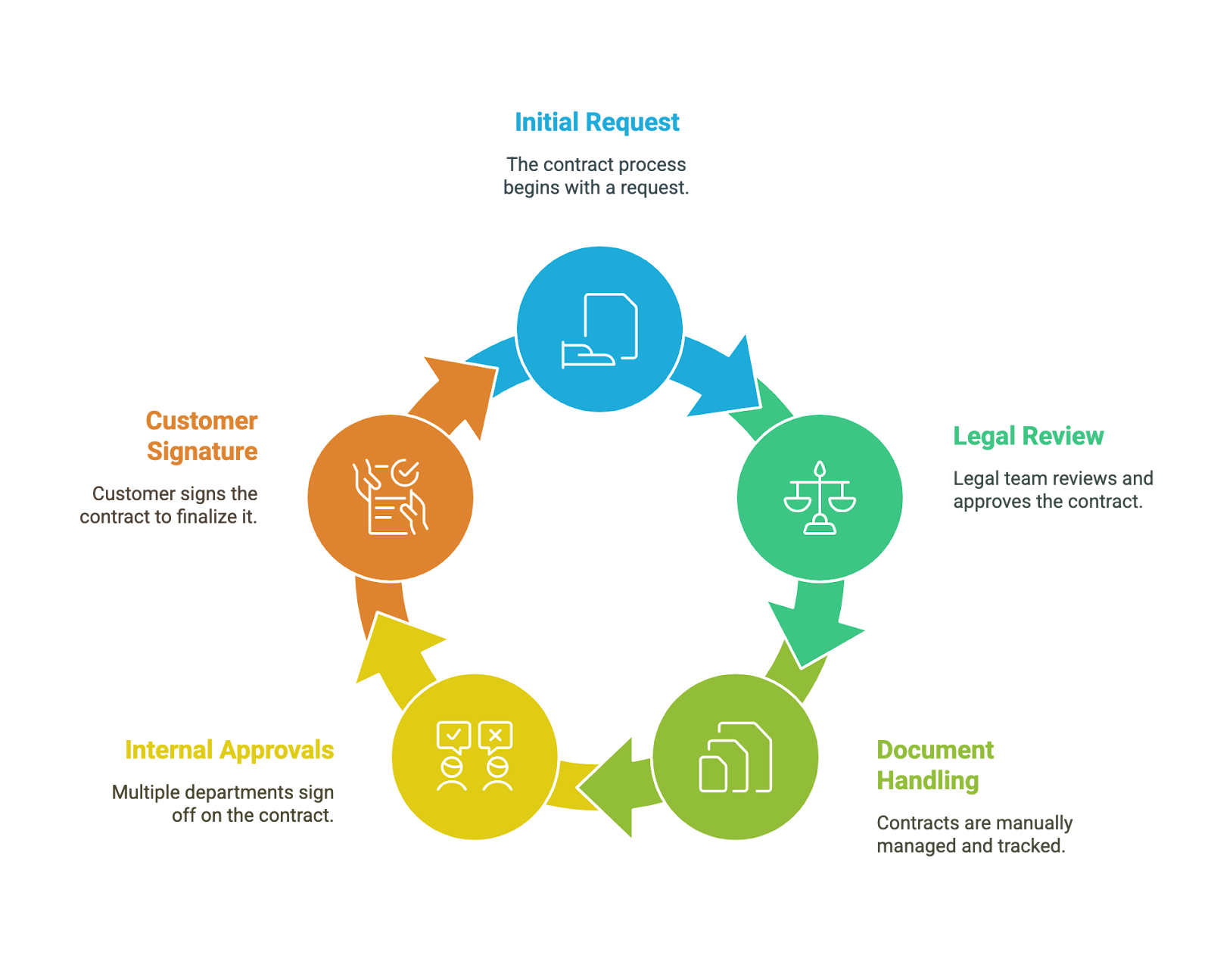
The contract process runs through many stages, from the first request to the final signature, and every step is a chance to delay the deal. Even when things look fine, small hiccups turn into major obstacles fast. These are the four places bottlenecks show up most:
- Leaning on legal at every step. When sales depends on the legal team to draft, review, and approve every contract, the process stalls the moment legal is overloaded — and important deals stall with it.
- Editing documents by hand. Plenty of contracts still move by email, with versions tracked in Word and signatures chased down manually. It's an easy way to lose a contract in an inbox or tangle it in version control.
- Slow internal approvals. Sign-off often takes longer than anyone expects. Once several departments are involved, days become weeks, and deals slip or die.
- Customer-side delays. Even a contract that reaches the customer doesn't always move. Without a simple signing process, waiting on the counterparty can push a deal past a quarter-end or another hard deadline.
Two strategies to get ahead of bottlenecks
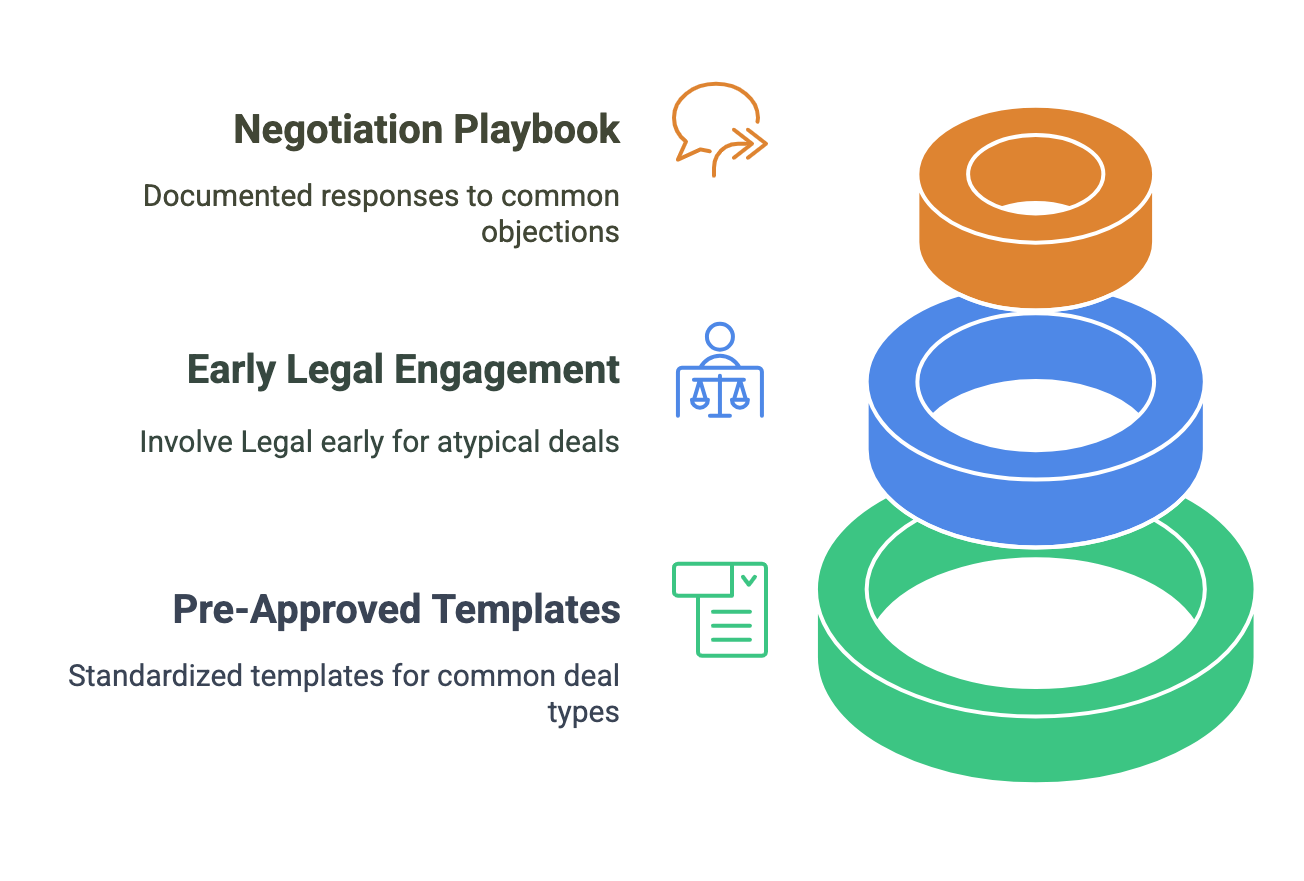
The best sales teams don't just react to delays — they design them out from the start. Two habits do most of the work.
Use pre-approved templates. Build a library of standardized, legally vetted templates for your most common deal types. Instead of starting from a blank page, reps fill in a few key fields and move straight to signature. That upfront investment from legal — balanced templates and a clause library — lets routine contracts take care of themselves without a fresh review each time. The payoff: faster deals, less back-and-forth, and more of legal's time freed up for the complex, high-stakes agreements that actually need it.
Involve legal early, but selectively. Treat legal as a partner at the scoping stage, not a last resort. For large or unusual deals, bring them in to flag non-standard terms before you build the quote. Ask prospects about their approval process and legal requirements up front, and arm reps with pre-approved fallback clauses for the items that get negotiated most (liability, payment terms, and the like). This turns legal into an enabler rather than a roadblock — and heads off last-minute surprises.
Create a negotiation playbook. Document the objections that come up again and again, and pair each with a pre-approved response. When a prospect pushes back on a clause, the rep reaches for an approved alternative on the spot instead of opening another review cycle. Fed by real customer feedback over time, the playbook keeps speeding up negotiations and shrinking legal bottlenecks.
Where automation makes the difference
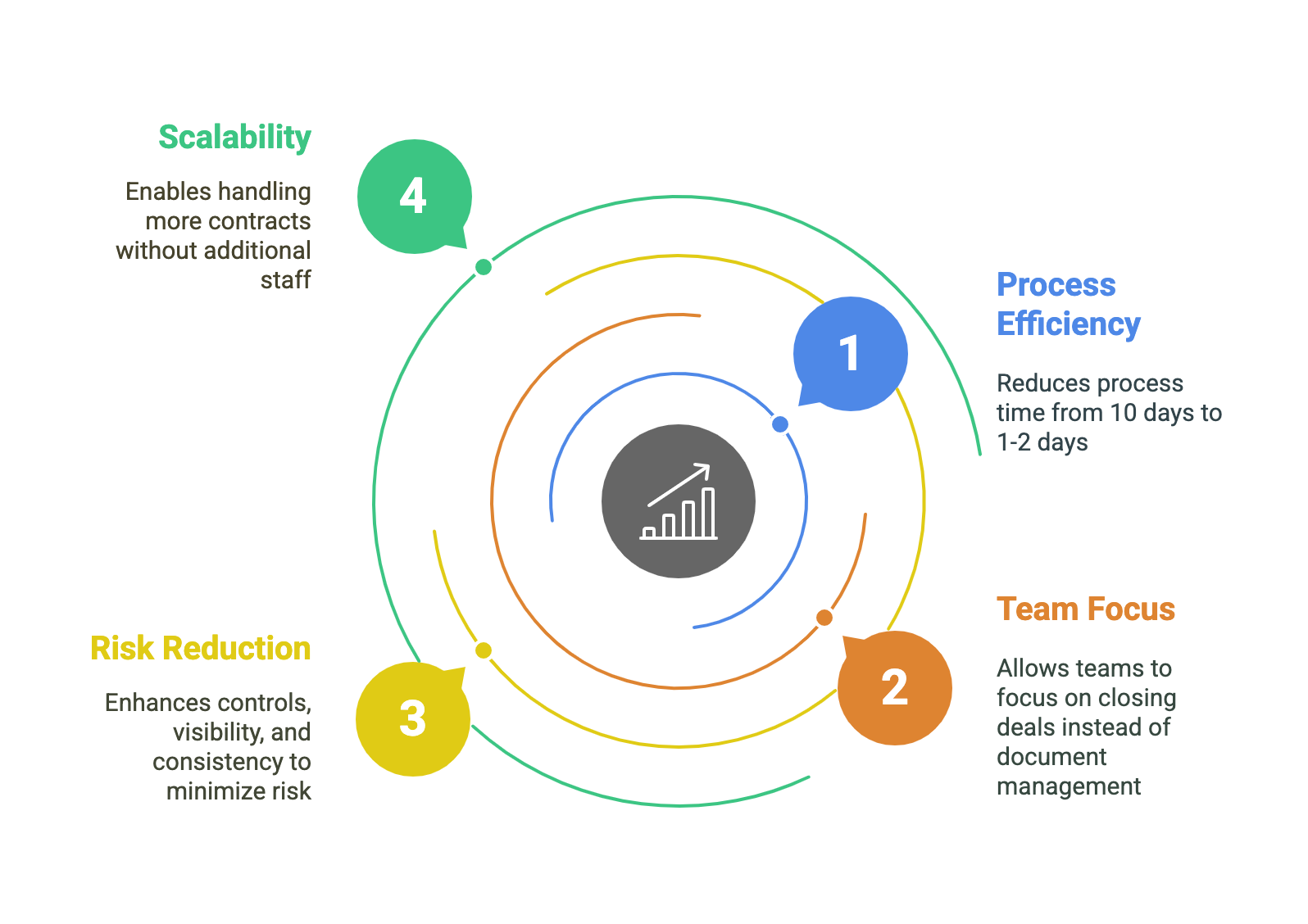
Even with great templates and early alignment, managing contracts by hand slows a business down. This is where automation earns its keep. Contract lifecycle management (CLM) software and CRM-integrated tools strip out the tedious manual steps and keep contracts moving. Because so many contracts are still handled manually, automating the process is one of the biggest opportunities you have to close deals faster, reduce risk, and scale without adding headcount.
Here's what automation changes:
- Self-service contract creation. Reps generate a compliant contract by answering a few questions. Instead of emailing legal for every draft, the system pulls the right template and fills in the details automatically — turning a job that took hours or days into one that takes minutes.
- Smart approvals and routing. Contracts route automatically to the right people based on deal size, region, or risk. Approvers get instant notifications and reminders, so nothing gets stuck in an inbox — and if someone's unavailable, preconfigured rules reassign the task without anyone chasing it.
- Real-time tracking. Everyone can see exactly where a contract sits in the process. No more guessing who needs to review or sign next; live status updates help teams spot and clear bottlenecks early.
- Fewer errors, better compliance. By pulling deal data straight from your CRM and applying preset rules, automation cuts the mistakes that come with manual data entry. Every generated contract stays within company standards and pre-approved clauses, which lowers legal risk.
- Centralized storage and audit trails. Every version, comment, approval, and signature lands in a secure, searchable system — which helps at audit time and makes future renewals and changes far easier.
The combined effect: work that used to take 10 days finishes in one or two, teams spend less time shuffling documents and more time closing, risk drops through better controls and consistency, and the business handles more deals without more people.
Speed up signing with e-signatures
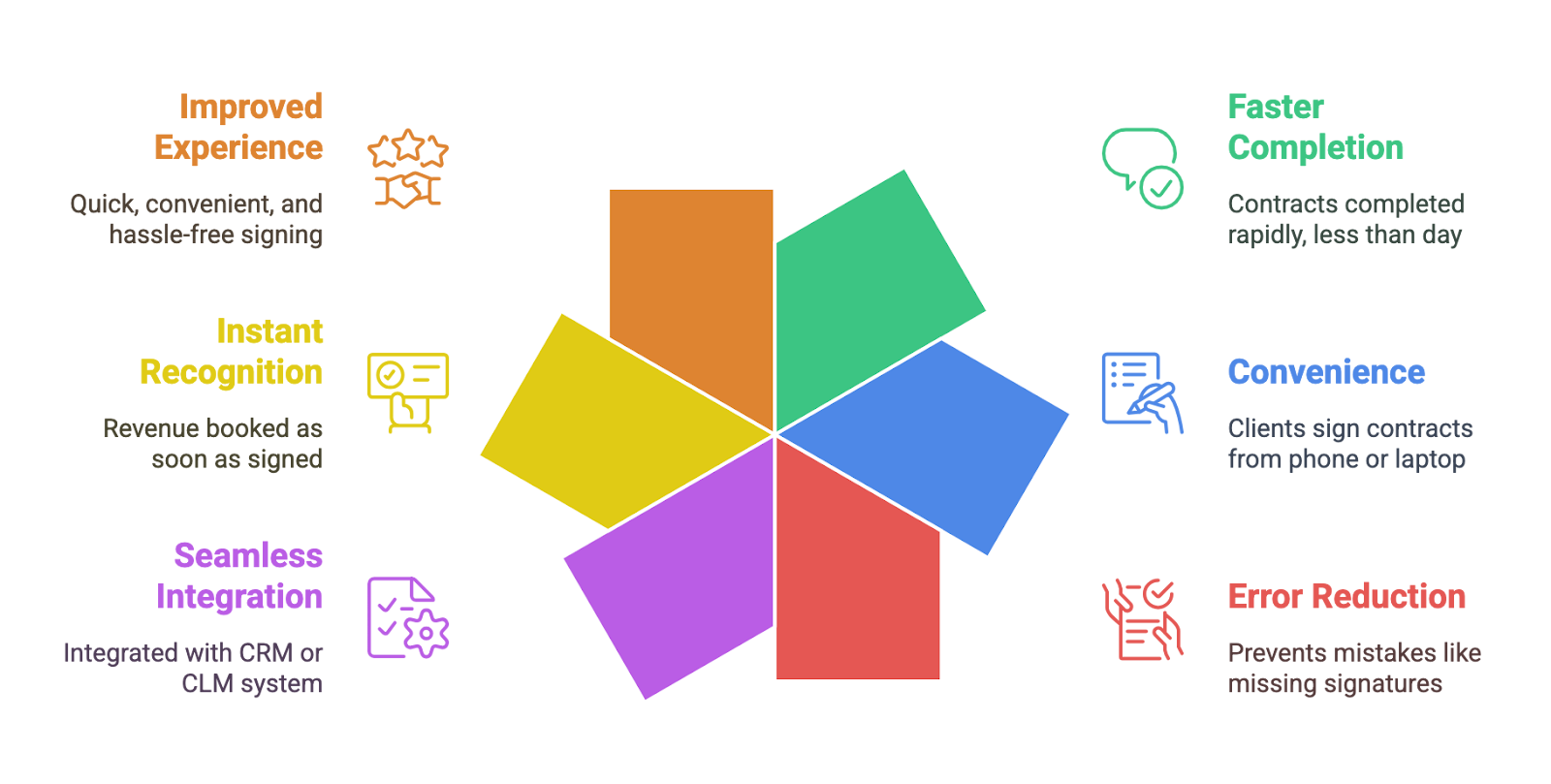
Switching from ink-and-paper to electronic signatures is one of the fastest ways to compress the contract process. For sales teams, that single change removes most of the delay that comes with manual signing. The benefits:
- Faster completion. 80% of contracts signed electronically close in under a day — 44% in under 15 minutes. No waiting on physical signatures, no mailing delays.
- Convenience for customers. Counterparties sign from a phone or laptop in seconds, with no appointments or paperwork to send back. Momentum stays with the deal.
- Fewer mistakes. E-signature platforms guide signers through every required field, preventing missing signatures and incomplete forms.
- Seamless workflow integration. Tie e-signatures into your CRM or CLM, and a signed contract can automatically mark the deal closed, file itself, and kick off the next steps — a welcome email, or the start of fulfillment.
- Immediate revenue recognition. No waiting on scanned paper. Revenue is booked the moment the digital signature lands, so teams hit their targets sooner.
- A better buyer experience. Quick, convenient, hassle-free signing makes the whole close feel effortless for the customer.
Metrics and KPIs worth tracking
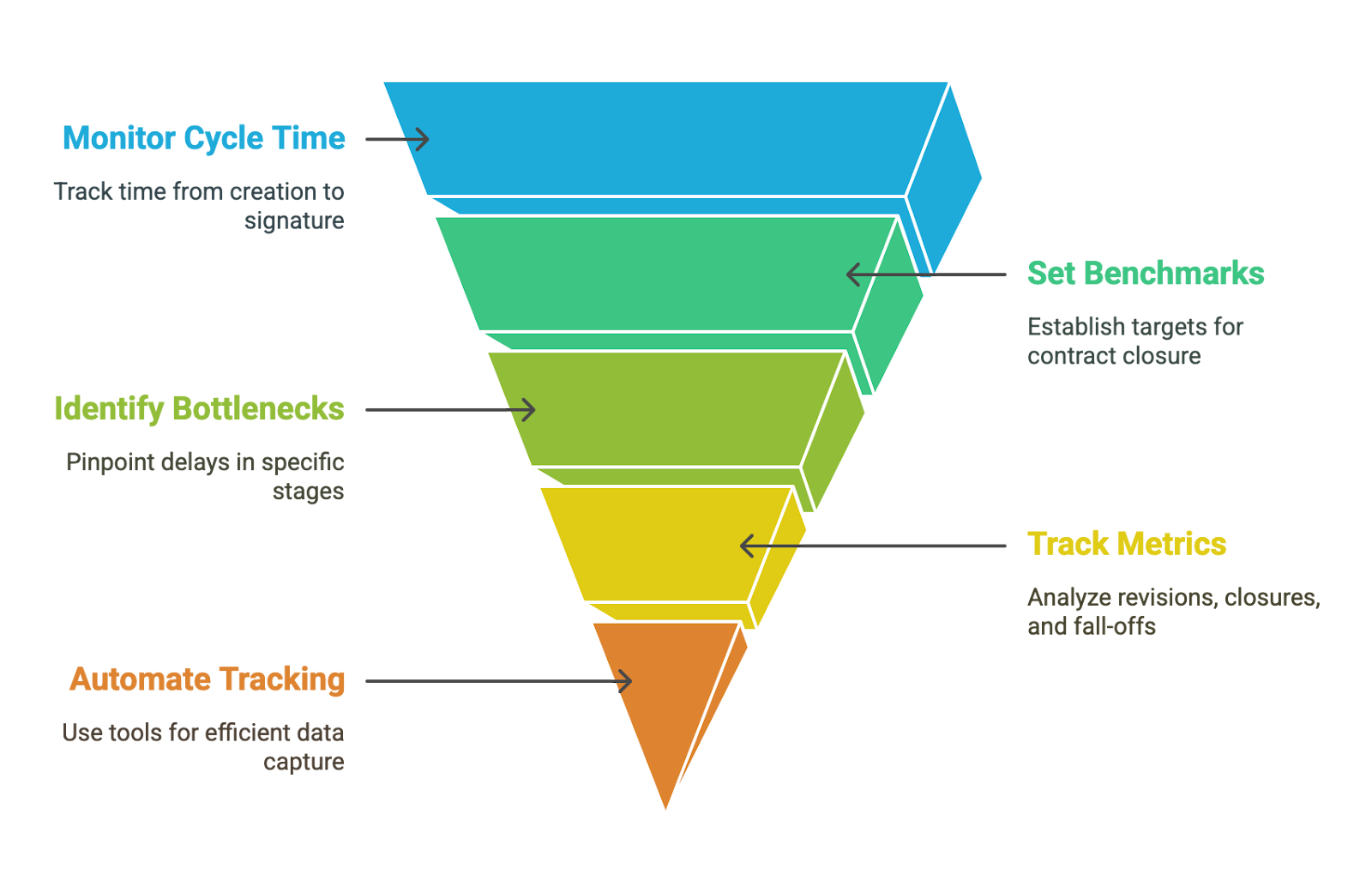
You can't improve what you don't measure, and that's doubly true for contracts. Leading sales teams track KPIs to find exactly where contracts get stuck and act on it.
- Contract cycle time. Measure how long it takes from creation to final signature, broken down by phase (legal review, negotiation, customer signing) so you can see precisely where the delays sit.
- Benchmarks. Set clear targets — "standard deals should close within X days" — and track performance against them.
- Phase-specific bottlenecks. When contracts sit too long in legal review or wait on the customer to sign, the data shows you where to act, whether that's streamlining approvals or adding e-signatures.
- Other critical metrics. Number of contract revisions, share of deals closed by quarter-end, percentage of contracts that stick to standard templates, and fall-off rate (deals that die during the contract phase).
- Tools that track automatically. Modern CLM systems capture figures like time-per-step and document-version counts on their own, so no one has to log them by hand.
Best practices for continuous improvement
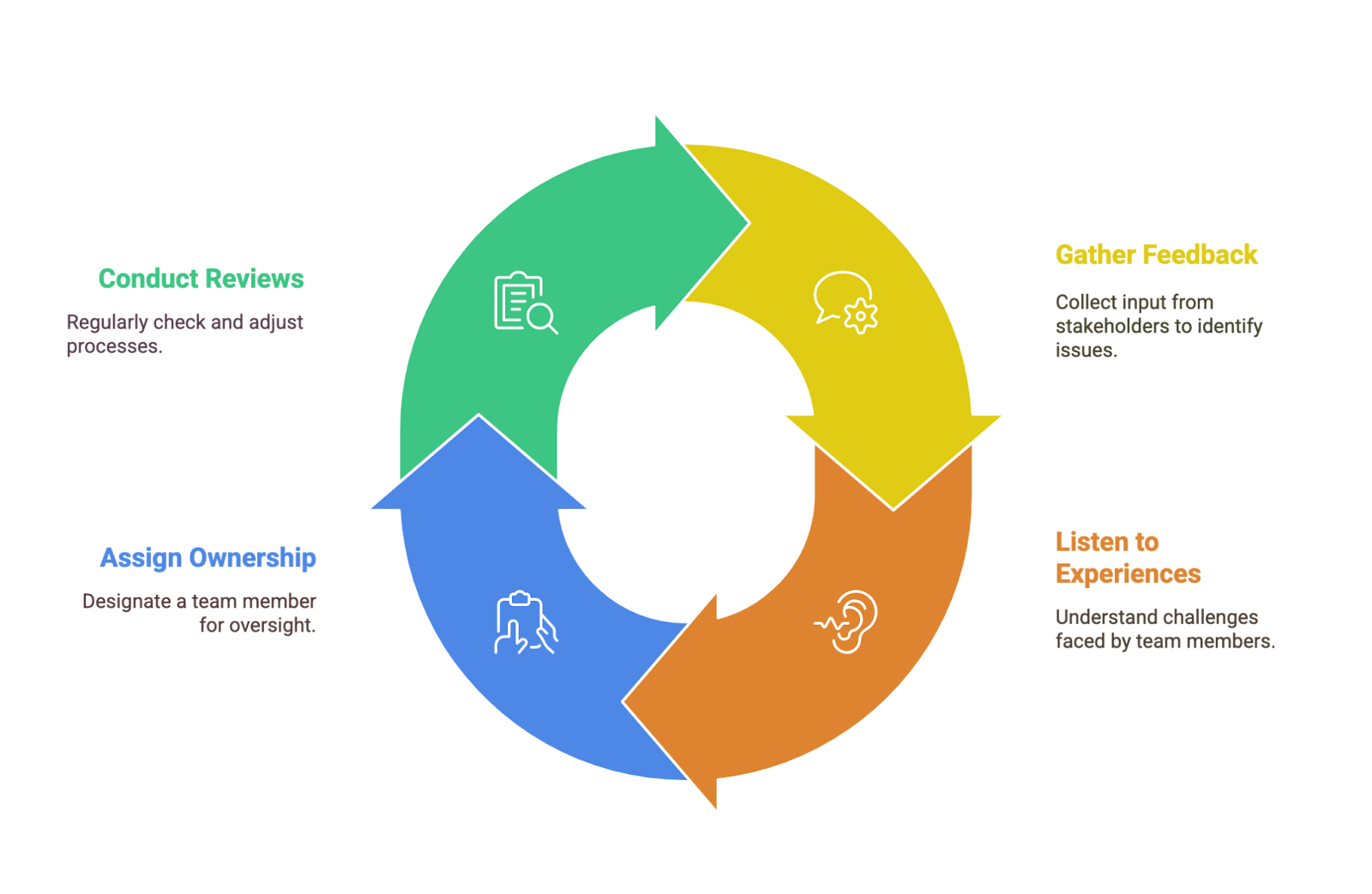
A contract process only stays fast if you keep tuning it. Sales teams should review their process regularly to make sure it stays effective as the business changes.
- Gather feedback. Collect regular input from the people who live in the process — sales, legal, and operations — to surface pain points and inefficiencies.
- Listen to the front line. Understanding the obstacles your team actually hits keeps your changes practical rather than theoretical.
Clear ownership keeps the whole thing consistent:
- Assign responsibility. Name a person or role that owns contract-process improvements and makes sure changes are documented and communicated.
- Review on a cadence. Regular reviews and adjustments, driven by team feedback and performance data, keep the process efficient and aligned with company goals.
Get these habits in place and you compound the gains: faster deals, smoother handoffs, and a contract process that's a genuine sales-efficiency advantage rather than a tax on every close.
Frequently asked questions
Why do contracts take so long to get signed in sales?
Usually it's a mix of four things: sales depending on legal to review every contract, documents being edited and chased by hand, slow multi-department internal approvals, and customers dragging on signing. Each adds days, and together they can push a ready deal past a quarter-end.
How can sales teams speed up contract approval?
Give reps pre-approved templates and a clause library so routine contracts skip legal review, bring legal in early only for non-standard deals, and automate approval routing so contracts go to the right approver instantly instead of sitting in an inbox. Adding e-signatures removes the final signing delay.
What contract KPIs should a sales team track?
Track contract cycle time (broken down by phase), the share of deals closed by quarter-end, the number of revisions per contract, the percentage of contracts that use standard templates, and the fall-off rate — deals that die during the contract phase. Together these show exactly where deals get stuck.
Ready for the next step?
Book a demo with our team and see top.legal in action