
A practical guide to resolving contract disputes — from negotiation and mediation to arbitration and litigation — with the trade-offs of each path.
Contracts are an essential part of the business world, as they set the terms and expectations of a deal. However, despite all efforts to make them clear and comprehensive, disagreements can still arise. Contract disputes can be expensive, take time, and have a negative impact on business relationships.
Contract disputes are a reality that many businesses prefer to ignore, but the truth is they're often inevitable. No matter how carefully the terms are crafted, issues like missed deadlines, unclear clauses, or parties failing to uphold their obligations can arise. Unfortunately, many organizations delay addressing potential disputes until it's too late, relying on informal agreements or vague communication. The result? What could have been a manageable issue quickly escalates. It's time to confront this reality and take proactive steps to mitigate risks before they lead to costly conflicts.
This article looks at the importance of effectively resolving contract disputes, describes the different types of disputes that may arise, and provides tips for resolving them successfully.
What Are Contract Disputes?
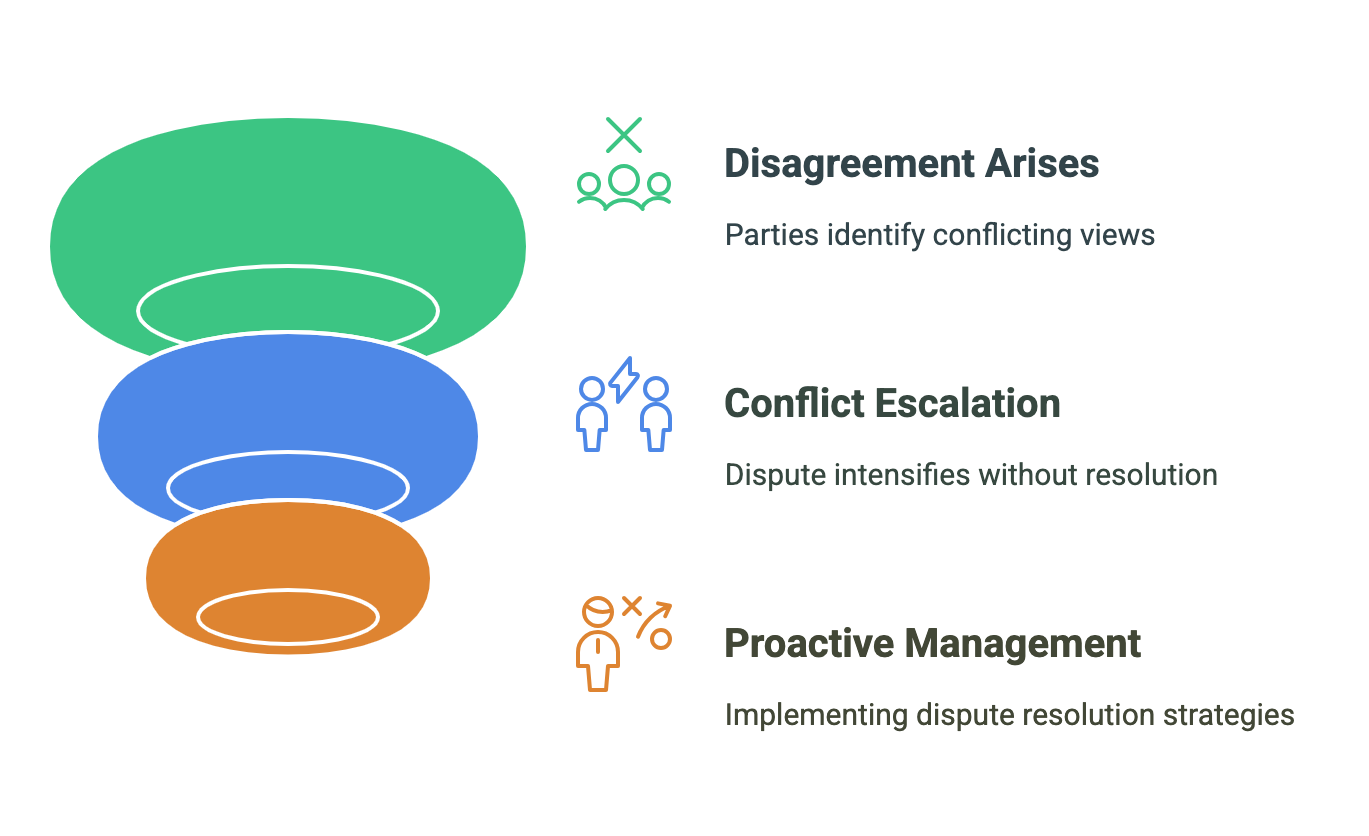
A contract dispute arises when one or more parties to a contract disagree on its meaning or believe that others haven't met their obligations. This can lead to conflict over what was promised, what was delivered, or how certain terms should be interpreted.
Disputes can occur in any type of agreement — between companies, between businesses and consumers, or even between private individuals. Left unresolved, they can lead to financial penalties, legal liabilities, and reputational damage. That's why it's essential to handle contract disputes proactively, with a clear process and expert support when needed. A dispute is often the downstream consequence of a breach of contract — and how you respond determines whether it stays contained or escalates.
Common Types of Contract Disputes
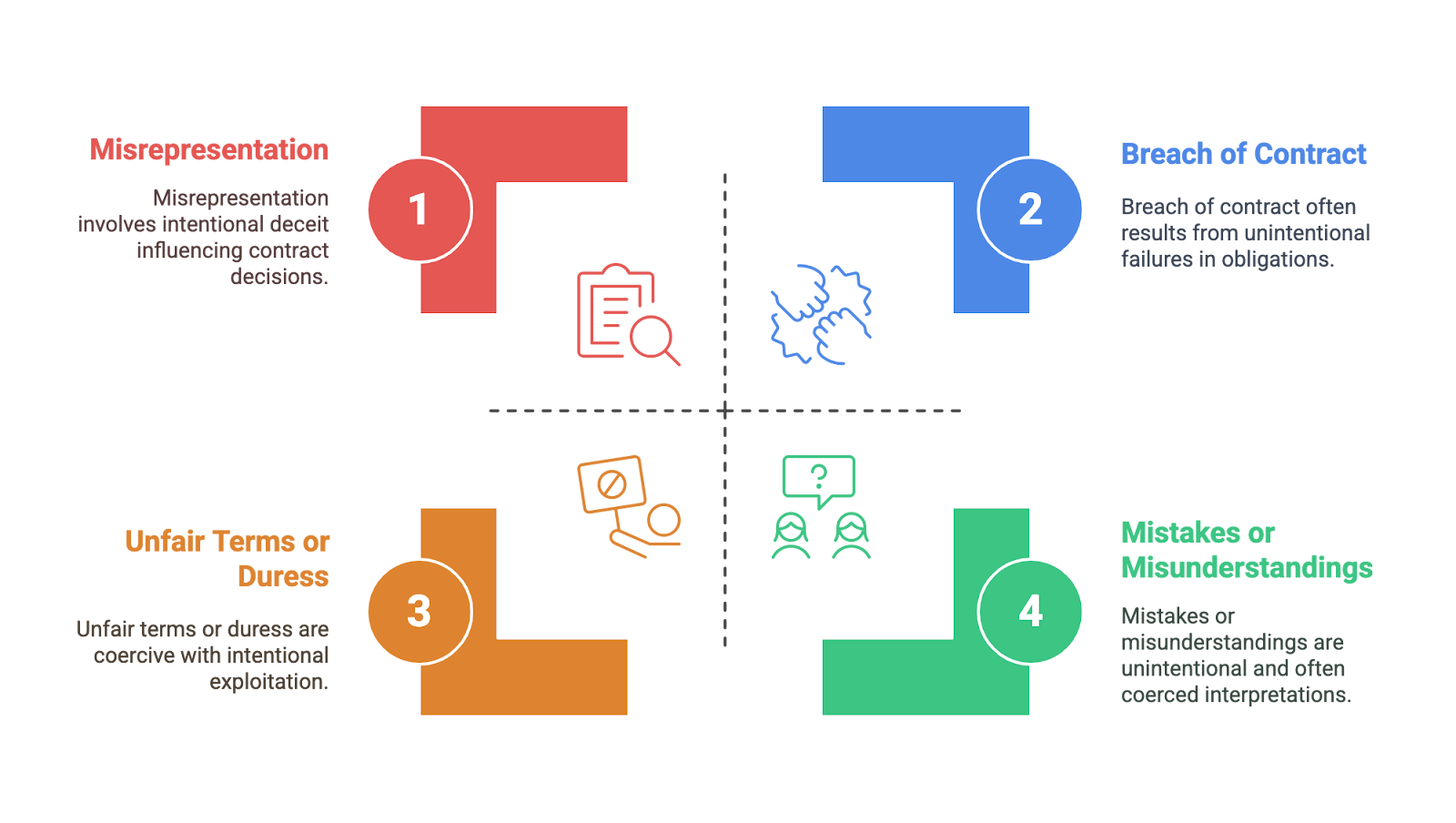
- Breach of contract — This is one of the most common issues, occurring when one party fails to meet its obligations as outlined in the agreement. Examples include missing deadlines, failing to deliver goods or services, or not making payments as agreed. The non-breaching party can seek remedies such as financial compensation, legal enforcement of the terms, or, in some cases, cancellation of the contract.
- Misrepresentation — A dispute may arise if one party provides false, misleading, or incomplete information that influences the other party's decision to enter into the contract. Misrepresentation can be intentional (fraudulent), negligent, or innocent. Depending on its nature and impact, the contract may be voided, or the misrepresenting party may be required to pay damages.
- Unfair terms or duress — Sometimes a contract may be challenged if it contains highly one-sided or exploitative terms, or if one party was coerced into signing. This could involve pressure tactics, an imbalance in bargaining power, or a lack of clear understanding of the agreement's consequences. Courts may invalidate such contracts or modify unfair clauses.
- Mistakes or misunderstandings — Conflicts can occur when contract language is ambiguous or when the parties interpret key terms differently. Disputes over what was agreed upon often require reviewing the context — such as prior communications, industry standards, or typical business practices — to determine the original intent and resolve the misunderstanding.
Steps Before Initiating a Dispute Resolution
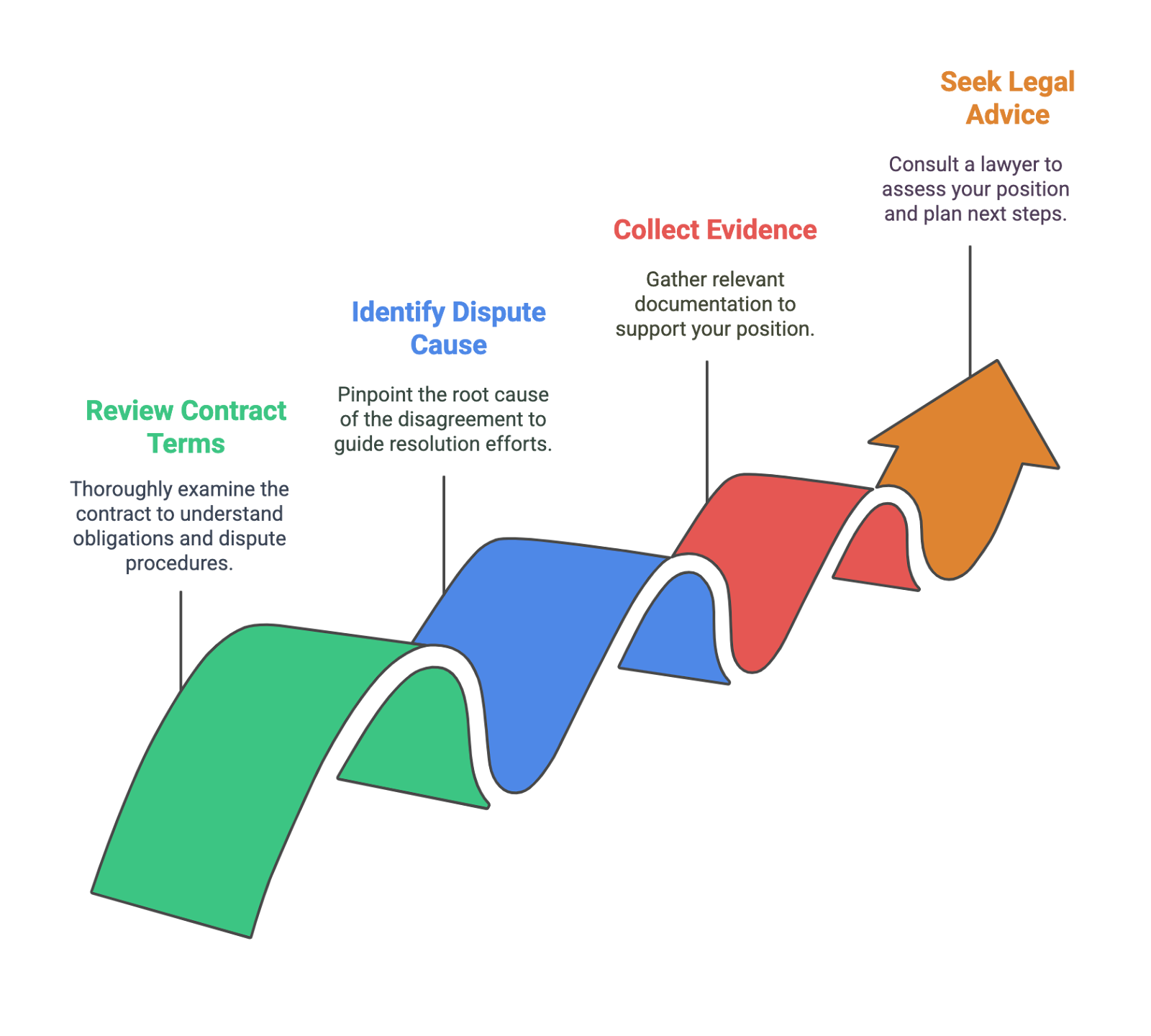
Contract disputes can be complex, time-consuming, and costly if not handled carefully. Taking the right steps before launching formal dispute resolution proceedings can help reduce risks, clarify misunderstandings, and improve the chances of a successful outcome. Here are the key steps to take:
- Carefully review the contract terms. Start by thoroughly examining the contract to understand the specific obligations, rights, and responsibilities of each party. Pay close attention to clauses that relate to the dispute, such as payment terms, performance requirements, limitation of liability, and any dispute resolution procedures (for example, mandatory mediation or arbitration). This review will help identify potential breaches and provide context for negotiations or legal action.
- Identify the root cause of the dispute. Clearly define what the disagreement is about. Is it a failure to deliver a service, a delay in payment, or conflicting interpretations of contract terms? Pinpointing the source of the issue not only guides how to resolve it but also helps prevent similar problems in the future by uncovering systemic issues or recurring misunderstandings.
- Collect relevant evidence and documentation. Supporting your claims with strong evidence is critical, whether you're negotiating informally or preparing for legal action. This may include emails, invoices, delivery records, meeting notes, change orders, or any other documentation that demonstrates how each party has performed under the contract. Clear evidence can strengthen your position, clarify the facts, and often lead to faster, more amicable resolutions.
- Seek legal advice early. Consulting a lawyer experienced in contract law can provide invaluable insights. Legal counsel can help assess the strengths and weaknesses of your position, interpret complex clauses, and recommend appropriate next steps — whether that's informal negotiation, mediation, arbitration, or litigation. Early legal involvement often leads to smarter strategies and fewer missteps.
Why These Steps Matter
Taking a structured and informed approach before initiating a dispute doesn't just help you build a stronger case. It can also save time, money, and relationships. Many disputes are resolved before they escalate simply because one or both parties take the time to fully understand the contract, the facts, and their legal standing.
The Methods of Dispute Resolution
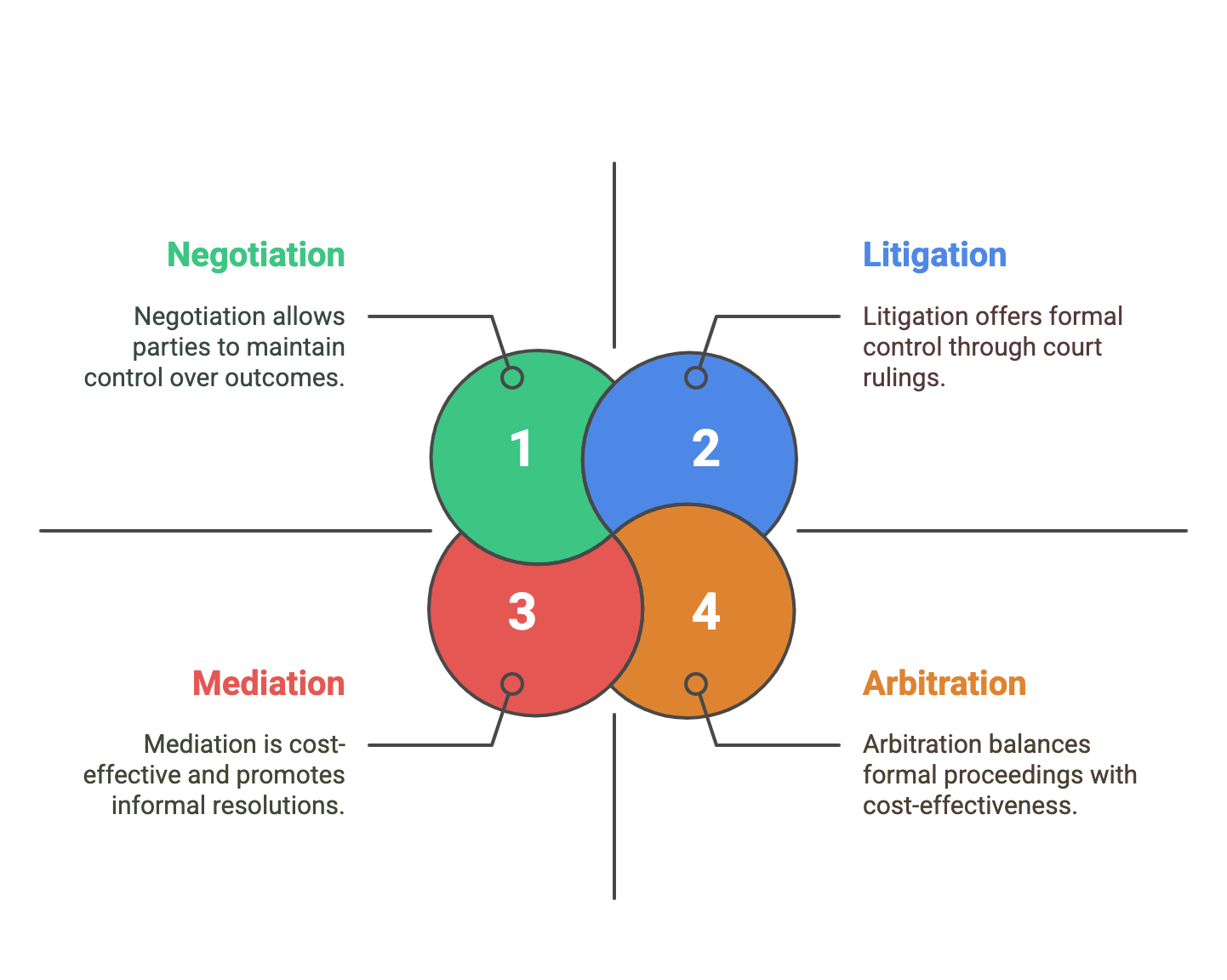
When a contract dispute arises, there are several ways to resolve it, ranging from informal discussions to formal legal proceedings. The method chosen often depends on the nature of the dispute, the relationship between the parties, and the desired outcome.
Negotiation
Negotiation is often the starting point for resolving a contract dispute. Both sides meet for talks and strive to reach an agreement that is satisfactory for everyone involved. Because it is less formal, less time-consuming, and less costly than litigation, negotiation is generally preferred over other methods of dispute resolution.
Benefits of negotiation
- Cost-effective: Generally cheaper than arbitration or court proceedings, since there are no court or arbitration fees and often no lawyers involved.
- Time-saving: It's faster because no court proceedings are required.
- Maintains control: The parties decide the outcome themselves rather than relying on a judge or arbitrator.
- Preserves relationships: Working together toward a mutually beneficial agreement often fosters a positive business relationship.
- Flexible: Negotiations can be tailored to the parties' needs — in timing, place, and format.
Strategies for a successful negotiation
- Preparation: Understand the issues, the interests at stake, and the legal and factual background of the dispute.
- Communication: Active listening and clear communication help the parties understand each other's point of view and avoid misunderstandings.
- Focus on interests: Look beyond stated positions to each party's underlying needs and concerns to find a mutually beneficial solution.
- Perseverance: Stay resolute and keep working toward a solution, even when progress is slow.
Mediation
Mediation is a form of alternative dispute resolution in which a neutral third party — the mediator — helps the parties find a mutually acceptable solution. It is often used in contract disputes because it is cost-effective and efficient and can make formal court proceedings unnecessary.
The role of the mediator
A mediator is a neutral third party who facilitates communication and helps the parties reach a shared solution based on their interests and concerns. The mediator cannot impose a solution or make decisions for the parties. Their most important duties include:
- creating a safe and respectful environment for communication between the parties
- encouraging the parties to actively listen to one another and consider the other side's point of view
- helping the parties identify their respective interests and concerns
- facilitating the exchange of information between the parties
- guiding the parties toward a mutually acceptable solution
- ensuring the parties understand the terms of any agreement reached
- maintaining confidentiality throughout the mediation process
Advantages of mediation
- Cost-effective: Generally less expensive than arbitration or court proceedings.
- Efficient: Often completed more quickly than a court case.
- Control: The parties have more influence over the outcome, since they are responsible for reaching the agreement.
- Confidential: A private procedure in which the details of the dispute are not made public.
Disadvantages of mediation
- Not legally binding: Unlike arbitration, the outcome of mediation is not automatically legally binding.
- Imbalance of power: If one party has more power or resources than the other, reaching a fair agreement can be difficult.
- No guarantee of success: Mediation does not always lead to a resolution; the parties may have to fall back on other methods.
Arbitration
In arbitration, the parties to a contract dispute agree to submit their case to a neutral third party — the arbitrator. The arbitrator hears both sides, examines the evidence, and then makes a final, binding decision known as the arbitral award.
The arbitration process
The process usually comprises the following steps:
- Arbitration agreement: The parties agree to submit their dispute to arbitration, either through a clause in their contract or a separate agreement.
- Selection of the arbitrator: The parties select an arbitrator together, or each party names an arbitrator, and those two then choose a third, presiding arbitrator.
- Preliminary hearing: The arbitrator sets the rules and procedures, including the timetable for presenting evidence and arguments.
- Evidence and arguments: The parties present evidence and arguments to the arbitrator, who may ask questions and request additional evidence.
- Arbitral award: The arbitrator issues a written decision — the arbitral award — which is binding on the parties and enforceable in court.
Litigation
In the context of contract disputes, litigation is the formal legal process for resolving a dispute through the courts. If a party believes the other has breached the contract, it can file a lawsuit to seek compensation or performance of the contract.
The court process for contract disputes
The following is a general overview of court proceedings in contract disputes:
- Pleadings: The plaintiff files a statement of claim setting out its claims against the defendant, who must respond with an answer that may include counterclaims.
- Discovery: The parties exchange information about the case. This can include requests for documents, written questions, and depositions (testimony under oath).
- Motions: Either party may file motions asking the court to decide a specific issue, such as the admissibility of evidence or the dismissal of certain claims.
- Trial: When the case is heard, the parties present evidence and arguments to a judge or jury, which then makes a final decision.
- Appeal: If a party is dissatisfied with the outcome, it can appeal the decision to a higher court.
Advantages and Disadvantages of Litigation
As a method of resolving contract disputes, court proceedings have several advantages and disadvantages.
Benefits
- Formal legal process: It provides a structured, formal process with clear rules and procedures that are enforced by the court.
- Powers of the court: Because litigation is a legal process, the court can compel the parties to comply with its orders, including paying compensation or fulfilling contractual obligations.
- Potentially high compensation: If the plaintiff succeeds in proving its case, it may be awarded a large amount of compensation, which can be a significant financial advantage.
- Setting precedents: A judgment can create precedents that guide future cases and clarify legal questions.
Drawbacks
- Time-consuming: It can be a lengthy process involving several phases of discovery, motions, hearings, and a potential trial.
- High costs: It can be expensive, given legal and court fees and the expenses of discovery and litigation.
- Lack of control: The parties may have only limited influence on the outcome, as it is ultimately decided by a judge or jury.
- Public character: Court proceedings are public, which can subject the parties and their companies to public scrutiny and potentially damage their reputation.
Differences between arbitration and litigation
The key differences between arbitration and court proceedings include:
- Choice of decision-maker: In a lawsuit, the decision-maker is a judge or jury; in arbitration, a neutral third party acts as arbitrator.
- Control over the process: In a lawsuit, the court controls the process; in arbitration, the parties have control, including the selection of arbitrators and the rules.
- Time and costs: Arbitration is usually faster and cheaper than court proceedings, because there are fewer formal steps and quicker scheduling.
- Appeal rights: The arbitral award is final and binding and can be appealed only to a limited extent, whereas in litigation the parties can usually appeal to a higher court.
How to Choose the Right Dispute Resolution Method
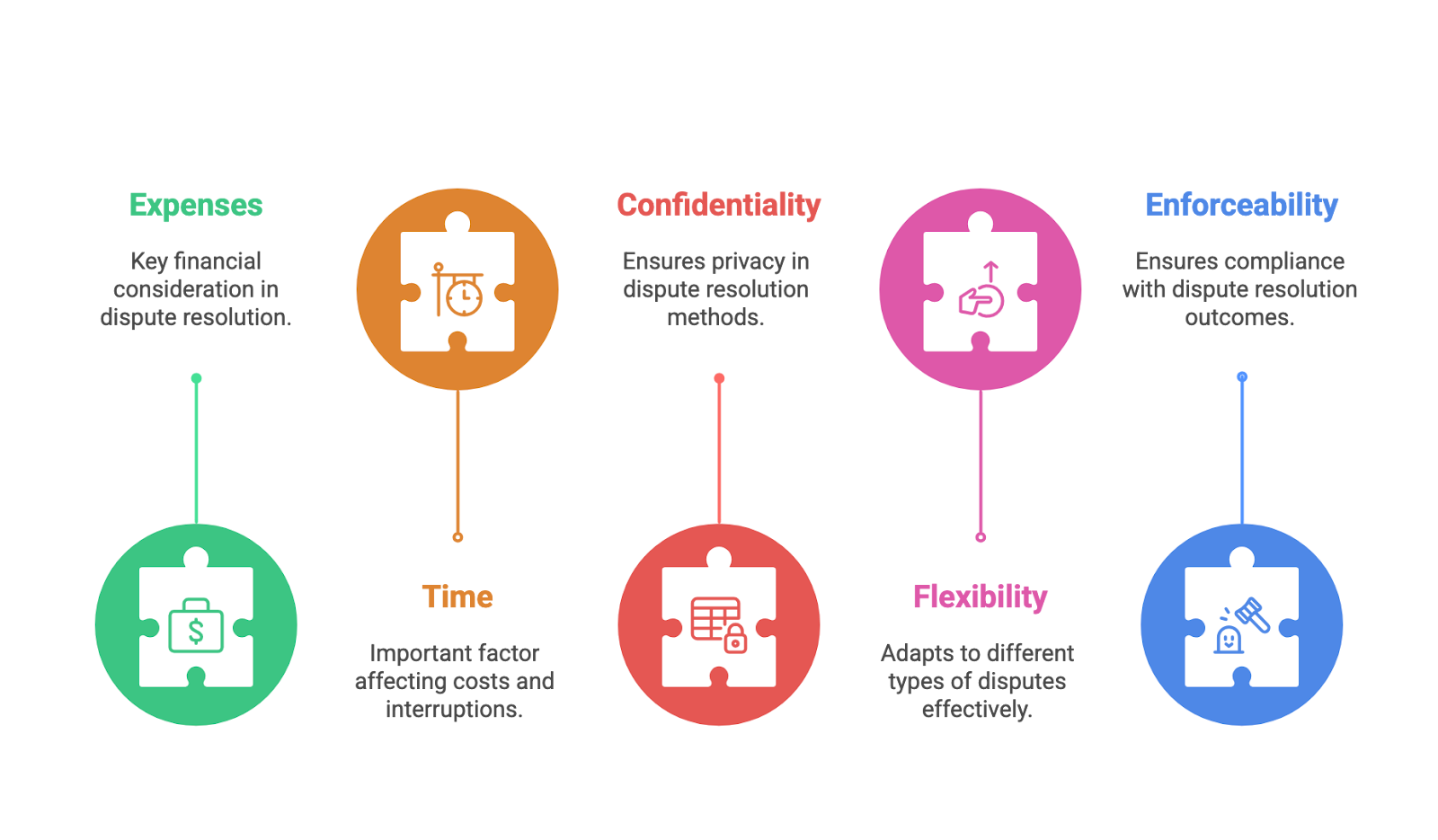
Factors to Consider When Choosing a Method
When choosing a procedure to resolve a contract dispute, several important factors come into play:
- Cost: A decisive factor, as it directly affects the financial resources of the parties involved.
- Time: Lengthy proceedings mean higher costs and greater disruption. Weigh the expected time each method takes against its pros and cons.
- Confidentiality: If the parties want to keep the dispute out of the public eye, they should choose a method that ensures confidentiality.
- Flexibility: Different disputes call for different paths. Some require a more structured, formal process; others a more flexible, creative approach.
- Enforceability: If the chosen method has no clear enforcement process, compliance with the terms can be difficult, leading to further disputes and costs.
The Role of the Dispute Resolution Clause in a Contract
As early as the drafting stage, a dispute resolution clause specifies how future disputes will be resolved. This clause deserves careful thought, as it can significantly influence the outcome of a dispute. When drafting it, consider:
- selecting the appropriate method based on the type of contract and the disputes that may arise
- defining the jurisdiction and governing law for any dispute resolution proceedings
- establishing procedural rules and guidelines for dispute resolution
Adapting the Procedure to the Dispute
The parties should tailor the chosen dispute resolution method to the specific circumstances of their dispute, taking into account each party's needs and objectives, the complexity of the dispute, the number of parties involved, and any other relevant factors. Tailoring the process to each dispute increases the chances of a satisfactory resolution and avoids unnecessary delays and costs.
Tips for Successful Dispute Resolution
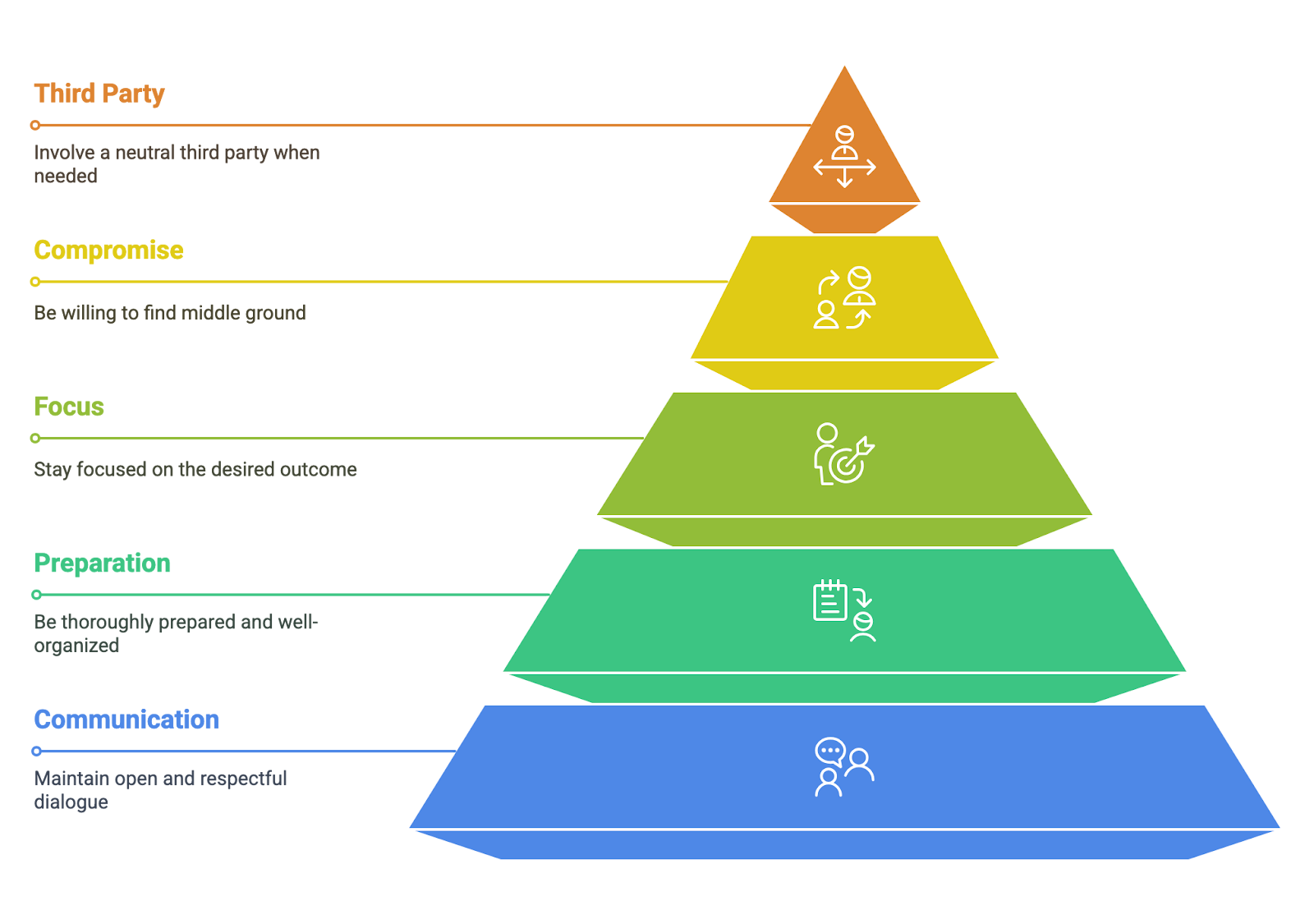
- Maintain open and respectful communication. Effective dispute resolution starts with clear, respectful dialogue. Actively listening to the other party — not just to respond, but to truly understand their concerns — can uncover underlying issues that might not be immediately visible. Avoid assumptions or snap judgments. If a misunderstanding arises, address it early before it escalates. The sooner issues are clarified, the easier it is to preserve trust and find common ground.
- Be thoroughly prepared and well-organized. Before entering any discussion or negotiation, gather all relevant information, documentation, and evidence that supports your position. Understand your rights, obligations, and the potential legal implications. The more informed you are, the stronger your ability to argue your case or assess settlement options. Keep a clear record of all communication — emails, meeting notes, contracts, and agreements — so you have a reliable trail to refer back to if needed.
- Stay focused on the desired outcome. It's easy to get caught up in emotions, especially in disputes that feel personal or high-stakes. But staying calm, composed, and focused on the bigger picture helps guide the discussion toward resolution. Always ask yourself: what is the outcome we're aiming for? Approach the situation with a problem-solving mindset. Flexibility, creativity, and emotional control are essential to making progress without letting tensions derail the process.
- Be willing to compromise. Rarely does one side walk away with everything it wants. Successful resolution often involves give-and-take. Identify your non-negotiables, but also be clear about where you can be flexible. Finding common ground — even if it means making concessions — can lead to a solution that's acceptable to everyone. Remember: a fair compromise today may preserve a valuable relationship tomorrow.
- Involve a neutral third party when needed. Some disputes are too complex, sensitive, or emotionally charged to resolve independently. In these cases, bringing in a neutral third party — such as a mediator, arbitrator, or conciliator — can be invaluable. An impartial expert helps shift the dynamic from confrontation to collaboration by facilitating discussion and guiding both parties toward a fair resolution. Choose someone with the right skills, experience, and understanding of the relevant legal or industry context to ensure credibility and effectiveness.
Ready for the next step?
Book a demo with our team and see top.legal in action