
Learn how to excel at internal contract negotiations: who is involved, how to align on goals and priorities, and which tools make internal approvals faster.
Have you ever tried to get everyone at work aligned on the same deal? Negotiation is more than a skill for high-stakes moments; it is woven into the daily work of any business, especially when a contract has to be agreed internally before it goes to an outside party. From project timelines to budget allocations and supplier agreements, internal negotiations significantly influence a company's trajectory.
In this article, we take a closer look at how to optimize the internal negotiation of contracts—a process that can feel daunting but is relatable to anyone who has ever had to collaborate with colleagues to get things done. We explore the common challenges, the key players involved, and the strategies and tools that help streamline the process.
This article covers internal alignment before signing. For negotiation as a general skill, read our guide to negotiating effectively; for the flow of a negotiation with the other side, see the contract negotiation process.
Understanding the Basics of Internal Contract Negotiations
Internal negotiation is when different parts of a company discuss and agree on what to include in a contract before finalizing it with an outside party. This step is crucial: it keeps everyone in the company on the same page and ensures the contract reflects the company's needs and goals. These discussions can cover everything from how much funding is allocated to how long a project should take and what each team needs to do.
Who is involved in internal contract negotiations
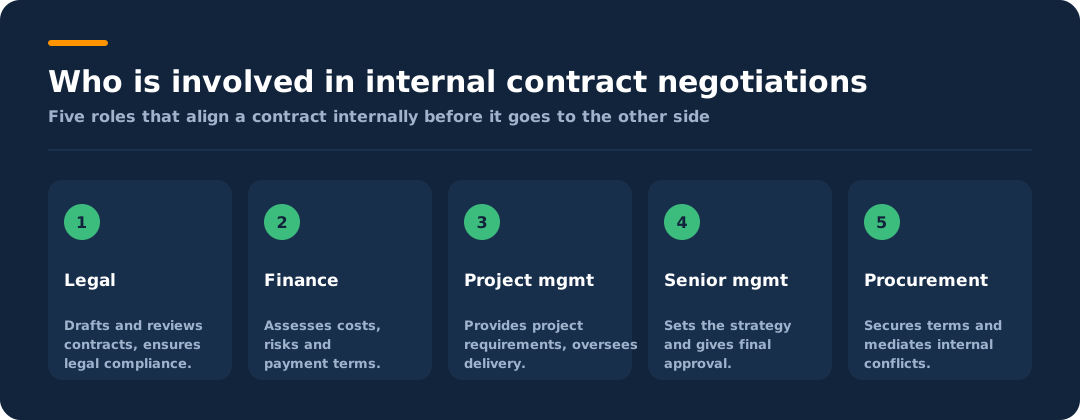
Several critical roles take part in an internal contract negotiation, each bringing a unique perspective and expertise so the contract is comprehensive and serves the company's best interests. Here are the five key players:
1. Legal team
The legal team makes sure a contract is legally sound and beneficial for the organization. It drafts and reviews contracts to prevent future legal problems and ensures agreements comply with laws and regulations.
Legal experts explain the complicated parts of a contract so everyone understands their responsibilities and rights. They negotiate the best possible terms and handle any issues that come up during discussions.
The legal team also works closely with finance and operations so the contract aligns with the company's goals and policies. It smooths out disagreements, keeps everyone on the same page, and maintains all contract documents—updating them as needed. This careful management helps the organization avoid mistakes and stay organized.
2. Finance department
The finance team handles all the money-related details to make sure a contract makes financial sense. It reviews costs and potential earnings and evaluates the financial risks involved, showing how the contract might affect the company's financial health.
Working with other departments, finance helps manage the budget effectively and ensures the contract terms don't commit the company to spending more than it can afford. During negotiations, the team focuses on the best financial terms possible—such as favorable payment schedules that protect cash flow and stability.
The finance team also checks that all financial terms are accurate and follow standard accounting rules. Once a contract is in place, it keeps an eye on payments to ensure they are made on time and according to the agreed terms.
3. Project management
Project managers provide crucial information about the project: what it entails, what resources are required, and how long tasks will take. Their experience lets them identify and address potential issues early, reducing the risk of future problems.
They collaborate with legal and finance so the contract aligns with the project's operational needs, and they advocate for terms that support success—flexible provisions for managing changes, strategies for handling risks, and payment terms that reflect project milestones.
Project managers also negotiate technical details with contractors and suppliers so the contract meets the project's specific requirements, which takes strong communication and a deep understanding of the technical aspects. After signing, they oversee implementation, keep the project on schedule and within budget, and address issues as they arise.
4. Senior management
Senior managers assess how important a contract is to the company's long-term plans. They typically get involved in major contracts that carry significant financial commitments or crucial partnerships. Their insight and final approval are needed to proceed with contracts that could significantly affect the company's direction.
Senior managers also set the negotiation strategy. They decide what the company can and cannot compromise on, guiding the negotiating team on priorities and limits. This direction helps the team hold a strong position and reach outcomes that align with company objectives.
Finally, before a contract is finalized, it needs senior management's review and approval. They confirm the contract meets the company's strategic, financial, and legal standards. Their sign-off is essential, as it commits the company to follow through on the agreement and integrate it into operations.
5. Procurement team
The procurement team is essential to smooth internal negotiations around purchasing. Its main job is to secure the best possible deals on the goods and services the company needs to operate. Acting as the go-between for the company and its suppliers, it applies its skills in sourcing, bargaining, and managing relationships to get the best results.
During internal negotiations, procurement works closely with finance, operations, and legal so everyone's needs and goals are considered. It studies market trends, supplier capabilities, and company needs to build negotiation plans that fit the situation. When conflicts arise, procurement steps in to smooth things over, find solutions, and keep communication flowing between different parts of the company.
Setting the Stage for Successful Negotiations
Negotiation is a skillful art—essential in business deals, diplomacy, and everyday disagreements alike. While some see it as a battle, adept negotiators treat it as a collaborative effort to find mutually beneficial solutions. Let's look at the components that set the stage for productive negotiations.
1. Clear communication and preparation
Effective collaboration within internal teams begins with clear communication and meticulous preparation. Communication is the cornerstone of successful teamwork: it fosters understanding and trust. By openly discussing goals, expectations, and potential constraints up front, teams build a solid foundation and minimize the risk of misunderstandings later.
Preparation matters just as much. It means conducting thorough research and gathering relevant information—market trends, industry standards, and any applicable policies or procedures. Armed with this knowledge, team members can approach the work with confidence, make well-informed decisions, and present compelling arguments when needed. Anticipating potential challenges also lets teams develop strategies to address them proactively, increasing the likelihood of a successful outcome.
2. Establishing objectives and priorities
Clear objectives and priorities steer your efforts and keep the team focused and aligned on common goals.
First and foremost, your objectives should follow the SMART criteria—specific, measurable, achievable, relevant, and time-bound. This keeps your team's goals practical and in line with your overarching objectives, and lets you track progress, evaluate outcomes, and make informed decisions along the way.
Priorities are your compass, showing which aspects of the project matter most. By determining what can be negotiated and what must remain non-negotiable, your team allocates time and resources more efficiently—and stays adaptable enough to adjust strategies without losing sight of the overarching objectives.
3. Creating a negotiation checklist
A negotiation checklist is like a step-by-step guide that ensures every important part of a negotiation is handled properly. We've already covered setting goals and gathering information—here is what else belongs on the list:
- Perspective analysis: Encourage team members to critically assess their own viewpoints, biases, and priorities within the project's context. Useful questions: What are our individual interests and priorities? Why are we working together on this project? What unique skills or resources does each member bring? Clarifying individual objectives helps align efforts toward shared goals.
- BATNA (Best Alternative to a Negotiated Agreement): Determine the best alternative course of action if the collaboration fails to meet expectations. Understanding the team's BATNA provides leverage and guides decision-making, because it makes the value of potential outcomes tangible.
- Roles and responsibilities: Clearly define who is responsible for specific tasks, decisions, and communication channels. This clarity streamlines workflow and prevents misunderstandings or duplicated effort.
- Timeline: Set a realistic timeline with deadlines for key milestones, allowing enough time for discussion, deliberation, and decision-making to manage expectations and stay on track.
Want to reach an outcome faster? Our walkthrough of fast and efficient negotiations in 9 steps complements this checklist. For purchasing, the supplier negotiation checklist helps.
Strategies for Effective Internal Negotiations
Clear communication channels are essential so all members share the same understanding of the negotiation's objectives, constraints, and desired outcomes. This clarity prevents misunderstandings and ensures everyone works toward a common goal.
Understanding each team member's interests and concerns is key to finding solutions that meet everyone's needs. Actively listening to different perspectives and empathizing with colleagues' viewpoints can uncover common ground and lead to mutually beneficial agreements.
A collaborative atmosphere encourages brainstorming, constructive feedback, and open dialogue. By inviting participation and valuing everyone's input, teams tap their collective expertise and creativity to find innovative solutions to internal challenges.
Flexibility is also crucial, because circumstances change and new information emerges. Being willing to adapt strategies, explore alternatives, and make concessions when necessary shows a commitment to finding workable solutions and moving the process forward.
Finally, professionalism and respect preserve relationships within the team. Emotions can run high, but maintaining a respectful, constructive dialogue—even in disagreement—is crucial for keeping trust and fostering a positive team dynamic.
Tools and Technologies to Enhance Negotiation Processes
1. Electronic signatures
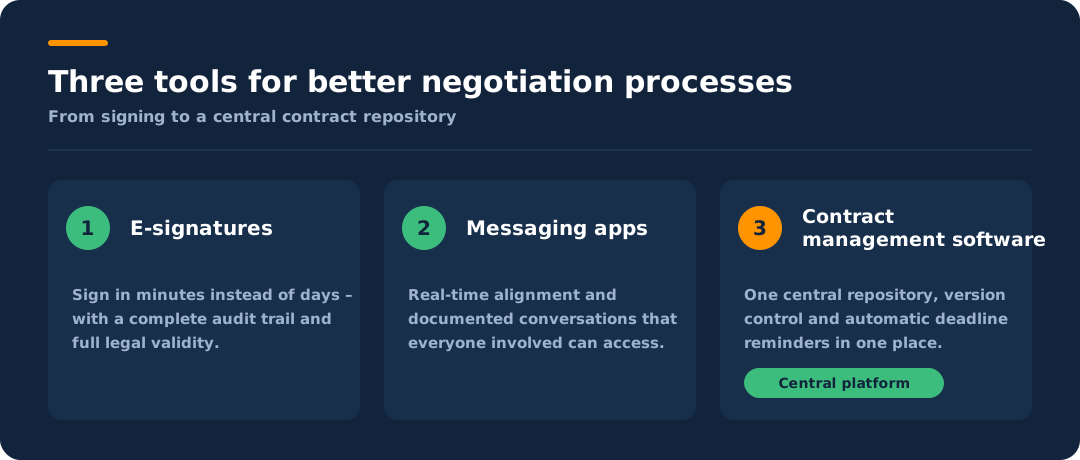
E-signatures are the digital equivalent of traditional handwritten signatures. They authenticate electronic documents and indicate the signer's consent to the contents. Legally binding in many countries, they are widely used across industries for signing contracts, agreements, and forms. Their benefits:
- Convenience: E-signatures remove the need for physical presence or paper, letting parties sign from anywhere with an internet connection. This saves time and resources by eliminating printing, scanning, and mailing.
- Efficiency: The signing process speeds up significantly. Documents can be signed and returned in minutes rather than days, reducing bottlenecks in the negotiation process.
- Security: E-signatures are often more secure than traditional signatures, because they can be protected with additional layers of authentication such as passwords or biometric data.
- Audit trail: Solutions record every step of the signing process—who signed, when, and from which location. This enhances transparency and accountability, which is especially valuable in legal and regulatory contexts.
- Legal validity: E-signatures are recognized in many jurisdictions, provided certain requirements are met. Laws such as the ESIGN Act in the United States and the eIDAS Regulation in the European Union ensure the enforceability of electronically signed documents.
- Flexibility: Solutions support a wide range of file types, including PDFs, Word documents, and image files, and work across computers, tablets, and smartphones.
2. Messaging apps
Communication and messaging apps open the door to smoother conversations and better teamwork. They are essential for sharing ideas and reaching agreements quickly. Here is how they improve negotiations:
- Instant communication: Apps such as Slack and Microsoft Teams enable real-time conversations, so teams respond promptly, maintain momentum, and prevent delays.
- Documented conversations: These platforms provide a written record, ensuring clarity and accountability. Slack archives conversations for easy reference, and WhatsApp offers chat export for documentation purposes.
- Accessibility: Teams can join discussions from anywhere with an internet connection, regardless of location. Apps like Telegram and Signal are known for accessibility across devices and operating systems.
- Group collaboration: Many apps support channels and group chats that make focused discussions easy within specific project teams or negotiation groups.
- Media sharing: Documents, presentations, and images are easy to share. Slack and Microsoft Teams also integrate seamlessly with storage services like Google Drive and Dropbox.
3. Contract management software
Contract management software is a digital tool that streamlines and automates the stages of contract management. It serves as a central platform for creating, storing, tracking, and managing contracts throughout their lifecycle. Why it helps with negotiation:
- Centralized storage: A central repository makes important documents easy to access and reference at any time. It eliminates searching through scattered files and ensures everyone works from the latest version.
- Collaborative features: Teams work together in real time, share comments, and track changes—streamlining the negotiation process and promoting transparency.
- Version control and tracking: A complete audit trail records all changes, revisions, and approvals. This ensures version control and helps prevent disputes by providing a clear history of every modification.
- Deadline management: Features for tracking key dates—such as renewal or termination deadlines—with automated reminders keep parties informed so no deadline is missed.
Our contract management software leverages advanced AI to detect deadlines automatically. Learn more about this feature.
How Modern Businesses Leverage Technology in Negotiations
The impact of video conferencing on modern business dealings
Negotiating deals has taken on a new form. The days of purely face-to-face meetings are gone; technology has ushered in an era of digital negotiations, with video conferencing tools like Zoom leading the charge.
Traditionally, negotiations happened in person, where body language and subtle cues played a big role. With video conferencing, negotiations can now happen from anywhere with an internet connection—what experts call "e-negotiation," conducted entirely online.
This changes business negotiations in several ways:
- Accessibility: Geographical barriers disappear, travel becomes unnecessary, and the pool of potential negotiators widens.
- Efficiency: Real-time negotiations shorten scheduling and speed up decisions. Non-verbal cues remain visible, though to a lesser extent.
- Recording: Discussions can be captured for later review—useful for clarifying agreements and ensuring accountability.
- Global reach: Negotiating across time zones opens new opportunities for partnerships.
At the same time, security and privacy remain paramount: keeping discussions confidential and protecting sensitive information is essential in virtual negotiations.
Source: Brill
Ready for the next step?
Book a demo with our team and see top.legal in action