
A practical guide to the supplier contract management process — the six steps, the KPIs to track, common risks, and best practices for managing vendor contracts.
Buying goods and services from outside vendors looks simple on the surface. Managing the contracts behind those relationships is not. Supplier contract management — the discipline of creating, negotiating, executing, and monitoring the agreements you hold with your vendors — is where cost savings, delivery reliability, and compliance are either won or lost.
This guide walks through the supplier contract management process step by step: what it is, why it matters, the six stages every company should run, the KPIs worth tracking, and the best practices that keep the process working as your supplier base grows.
What is supplier contract management?
Supplier contract management (also called vendor contract management) is the end-to-end process of creating, negotiating, executing, and maintaining the contracts between a company and its suppliers. It covers setting clear terms, monitoring and evaluating supplier performance, and making sure both sides honour what they agreed.
Done well, it prevents risk, reduces procurement costs, strengthens supplier relationships, and keeps the company compliant with legal and regulatory requirements. It sits within the wider discipline of contract management — but with a specific focus on the buy side and the supply chain.
If you are still defining the fundamentals — what a supplier contract is, which clauses it should contain, and how it differs from other agreements — start with our guide to the supplier contract itself, then come back here for the process.
Why managing supplier contracts matters
Managing supplier contracts lets companies keep their vendor relationships healthy while making sure deliveries arrive on time, at a fair price, and with the follow-up service the business needs. Clear, well-managed agreements also give you protection when something goes wrong — a missed delivery, a quality defect, or a dispute over what was actually promised.
Neglecting the process is common, and the cost is bigger than most teams assume: research by World Commerce & Contracting puts the value lost to poor contract management at an average of 9.2% of annual revenue — leaking away through missed renewals, unenforced terms, and compliance penalties. On the buy side, that risk falls into three categories:
- Financial risk. Lost savings from weak negotiation, price creep, and auto-renewals that slip through unnoticed. Cost reduction is one of the biggest payoffs of good supplier contract management, and it disappears without a process to negotiate and enforce favourable terms.
- Compliance risk. Supplier contracts carry legal, regulatory, and SLA obligations. Without proper management those get missed — and fines or penalties follow.
- Operational risk. Late deliveries, product defects, contract disputes, and even supplier insolvencies — each of which can translate into real financial loss and disruption to the business.
Two knock-on effects compound all three: administrative drag — manual data entry, tracking, and dispute resolution pull resources away from higher-value work — and reputational damage, since when suppliers fail to meet expectations, or their actions put you out of compliance, it reflects on your own business.
Common challenges as your supplier base grows
A handful of supplier contracts are easy to manage from a spreadsheet and an inbox. The process breaks down as volume grows — and the failure points are predictable:
- No single source of truth. Contracts scattered across drives, inboxes, and desks make it impossible to answer basic questions: who signed what, on which terms, and until when.
- Renewals and deadlines slip. Auto-renewal and notice windows pass unnoticed, locking you into another term or forfeiting the right to renegotiate.
- Obligations go untracked. Payment schedules, delivery milestones, service levels, rebates, and volume discounts are buried in the contract body and never actively managed — so the value you negotiated quietly erodes.
- Version and access confusion. Without version control it is unclear which draft is final; without role-based access the wrong people edit terms and the right people cannot find them.
- Performance stays invisible. With no structured monitoring, an underperforming supplier surfaces only once something has already gone wrong.
Each of these is a symptom of the same root cause — managing contracts reactively instead of running a defined process. The six steps below fix that.
The supplier contract management process, step by step
Here is the process from contract creation through performance monitoring and beyond, in the six stages most procurement and legal teams follow.
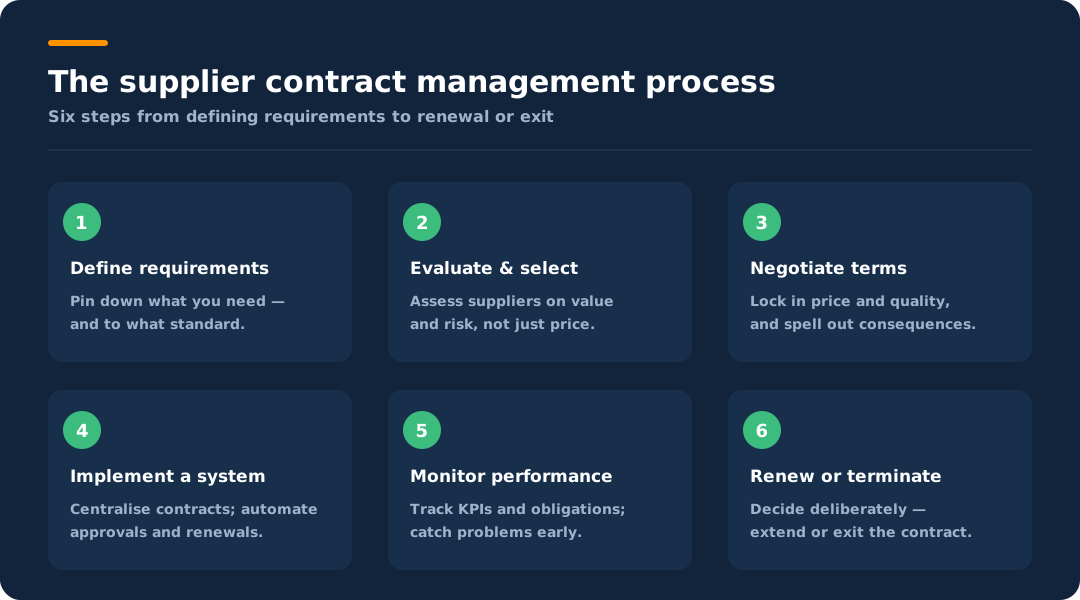
1. Define your supplier requirements
This is the foundation. Understanding exactly what goods or services you need — and to what standard — lets you select the right suppliers and shape contracts that actually meet the business's requirements. Skip it, and you can't reliably identify the vendors who offer the best value for your specific needs.
2. Evaluate and select suppliers
Assess potential suppliers against your requirements and against the risks of working with them — financial stability, capacity, quality history, and compliance track record. The goal is to choose the vendors who deliver the best overall value, not simply the lowest headline price.
3. Negotiate contract terms
Effective contract negotiation secures the best available pricing, locks in the quality and consistency you need, and closes off the risks in the relationship. It is also where you set concrete performance expectations and spell out the consequences if they aren't met. A supplier negotiation checklist helps you walk into those conversations prepared.
4. Implement a contract management system
A dedicated contract management system simplifies the whole process by automating the heavy lifting — creation, approval, and renewal of contracts. The result is less admin, higher efficiency, and fewer errors. Just as important, you get a single view of your contract portfolio, so key milestones like expiry and renewal dates are tracked automatically instead of living in someone's memory. A good system pushes graduated reminders — for example at 120, 90, 60, and 30 days before a renewal or notice deadline — so there is always time to review, renegotiate, or exit before the window closes. For procurement and sourcing teams specifically, top.legal's procurement contract management brings supplier contract creation, approvals, deadline tracking, and AI risk analysis into a single place.
5. Monitor and manage supplier performance
Monitoring is where the value is protected. Tracking supplier performance against the contract confirms obligations are being met and surfaces problems early — while you can still take corrective action rather than react to a crisis. Regular reviews, backed by open communication and transparency, also build closer supplier relationships and better outcomes for both sides.
Monitoring is not only about performance scores, though — it is about tracking the concrete obligations buried in each contract. Payment schedules, delivery milestones, service levels, rebates, and volume discounts all carry deadlines and conditions that are easy to lose sight of. Actively managing those obligations is what stops the value you negotiated from leaking away over the life of the agreement.
Useful KPIs to track at this stage include:
- On-time delivery rate — the share of deliveries that arrive by the agreed date.
- Quality / defect rate — rejected or defective units as a proportion of the total.
- Compliance rate — adherence to the contract's regulatory and SLA obligations.
- Cost variance — actual spend against the negotiated terms.
- Contract cycle time — how long it takes to move a supplier contract from draft to signature.
6. Renew or terminate the contract
The final stage is a decision: extend or exit. If the supplier has met its obligations, renewing for another term keeps a working relationship going. If performance has been a persistent problem, terminating and sourcing a new supplier is often the better call. Handling contract renewals deliberately — rather than letting agreements auto-renew unnoticed — is one of the fastest ways to recover leverage and cost.
This is also where the link back to sourcing matters. Savings won at the negotiating table erode quietly if renewals happen on autopilot, without anyone checking performance or re-testing the market. Treating each renewal as a deliberate decision — not a default — is what keeps the value you originally sourced from slipping away term after term.
Best practices for supplier contract management
Beyond the core process, a handful of practices help companies get the full value out of their supplier relationships, keep risk down, and streamline the supply chain.
Standardise your contract templates
Standard contract templates save time when drafting new agreements and keep terms consistent and accurate across every supplier. They also strengthen your negotiating position and cut the risk of disputes over inconsistent wording.
Foster collaboration with suppliers
Solid communication channels and a collaborative approach improve your odds of successful negotiation and management. Open lines resolve problems faster, keep expectations aligned, and build the mutual trust that makes long-term relationships work.
Collaboration has to run internally, too. Supplier contracts touch Legal, Finance, IT, and the business units that depend on the goods or services. Involving those stakeholders early — instead of treating supplier contract management as a procurement-only task — keeps terms realistic and makes sure every obligation has a clear owner.
Use technology to do the heavy lifting
Contract management software and related tools sharply increase the efficiency and effectiveness of the process. They automate routine tasks, track contract milestones, and surface insight into supplier performance — which feeds better decisions and better results.
Review and update contracts regularly
To keep contracts relevant, accurate, and compliant, review the terms, performance indicators, risk strategies, renewal dates, and supplier performance on a schedule. Regular reviews let you spot improvement areas and emerging risks early and act before they escalate — keeping every agreement aligned with your business goals. A workable rhythm is to review supplier performance monthly or quarterly depending on how critical the contract is, and to run a full legal, financial, and compliance review once a year — and always at least 90 days before a renewal date, while there is still time to act on what you find.
See supplier contract management in action
The fastest way to understand what a modern process looks like is to see it running on real supplier contracts. In a free live demo, we walk you through templates, approvals, automated deadline tracking, and the built-in electronic signature.
See top.legal on your own supplier contracts — from template to renewal in a single platform.
Frequently asked questions
What is the supplier contract management process?
It is the end-to-end process of managing the contracts between a company and its suppliers, usually in six stages: defining requirements, evaluating and selecting suppliers, negotiating terms, implementing a contract management system, monitoring supplier performance, and renewing or terminating the contract.
What is the difference between supplier contract management and vendor contract management?
The two terms are used interchangeably. Both describe the process of creating, negotiating, executing, and monitoring contracts with the external parties that supply a company's goods and services.
Which KPIs should you track in supplier contract management?
The most useful ones are on-time delivery rate, quality or defect rate, compliance rate, cost variance against negotiated terms, and contract cycle time. Together they show whether suppliers are meeting their obligations and where the process needs attention.
Do you need software for supplier contract management?
Small portfolios can be run in spreadsheets, but as supplier numbers grow, contract management software pays for itself — it automates approvals and renewals, centralises the contract portfolio, tracks milestones automatically, and reduces both admin and risk.
What are the most common supplier contract management challenges?
The recurring ones are the lack of a single source of truth for contracts, missed renewal and notice deadlines, untracked obligations such as payment schedules and SLAs, version and access confusion, and no structured way to monitor supplier performance. They all stem from the same cause — managing contracts reactively rather than through a defined process and a central system.
Ready for the next step?
Book a demo with our team and see top.legal in action