
Contract negotiation step by step: the 6 stages of the process, practical tips, and when talks become legally binding — the complete guide.
Are you tired of facing obstacles and complexities when negotiating contracts? Do you find it challenging to navigate the intricacies of agreements and reach mutually beneficial terms?
Imagine that you have found the perfect business opportunity or a cooperation partner. The excitement is great when you imagine your plans becoming a reality. But one obstacle stands in your way — contract negotiations.
Even for experienced professionals, negotiating contracts can be intimidating. The complexity, the back-and-forth, and the uncertainty of reaching a fair agreement can overwhelm you.
In this guide, we'll simplify the art of contract negotiation and give you the knowledge and strategies you need to navigate this process safely.
This guide covers the process of negotiating a contract. If you want to improve your negotiation skills in general, read Negotiate Effectively: A Complete Guide With Checklist.
What is a Contract Negotiation?
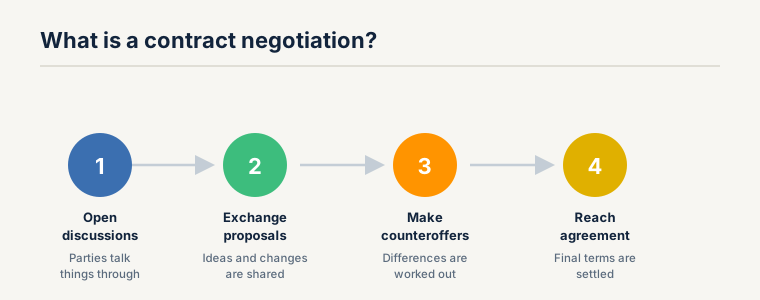
A contract negotiation is the process of discussing and concluding an agreement between two or more parties on the terms and obligations set out in a legal contract. It takes place whenever individuals, companies, or organisations enter into a business agreement, partnership, or other form of cooperation. Our companion guide shows how to run this process quickly and efficiently in nine steps.
Each party presents its desired terms — pricing, time frame, scope of work, responsibilities, intellectual property rights, termination clauses, and confidentiality. The parties then hold talks, exchange proposals, and often make counteroffers until they reach an agreement that works for both sides.
Why Are Contract Negotiations Important?
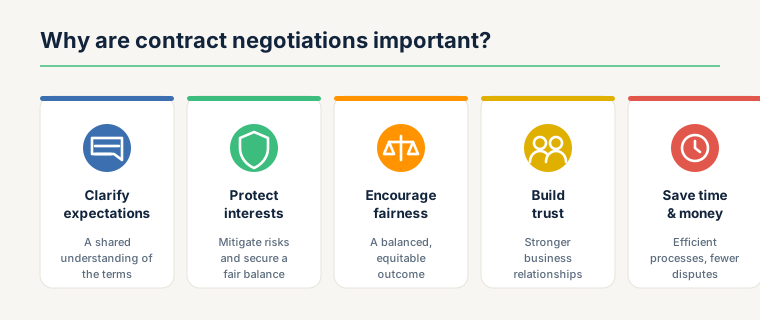
Contract negotiations are an indispensable part of business life and decisively shape operational success. They build mutual understanding between the parties and align expectations, responsibilities, and potential risks. Effective negotiations secure the greatest benefit from an agreement while minimising uncertainty and heading off disputes.
Concretely, well-run contract negotiations do the following:
- Clarify expectations: Both parties communicate openly what they expect. A shared understanding emerges — and the risk of later misunderstandings drops.
- Protect interests: Each party can stand up for its interests and guard against risks. Addressing concerns early creates a fair balance of rights and obligations.
- Encourage fairness: The give and take of negotiation produces a balanced outcome and avoids one-sided contracts that strain relationships.
- Build trust: Working together toward a solution creates trust — the foundation of any strong business relationship.
- Save time and money: Problems get resolved before they escalate, avoiding costly legal disputes and business interruptions.
- Set a performance framework: A well-negotiated contract sets clear expectations, deadlines, and deliverables.
- Ensure legal compliance: Negotiation makes sure the agreement aligns with applicable laws, avoiding legal complications and penalties.
Challenges in Contract Negotiations
Contract negotiations can run into a range of challenges because of the many factors involved. The most common are:
- Communication barriers: Different cultural, linguistic, or professional backgrounds easily lead to misunderstandings.
- Information imbalance: When one party knows more about market conditions, it gains a negotiating advantage.
- Different goals: Diverging priorities make it hard to find common ground.
- Time constraints: Market changes or legal deadlines increase the pressure to close quickly.
- Emotional factors: Ego, pride, or fear can drive irrational decisions — being aware of them makes for a more productive negotiation.
- Legal complexity: Legal jargon is hard for non-lawyers to parse and can cause delays.
- Lack of trust: Previous conflicts hinder open, transparent talks.
- Changing circumstances: Economic factors or unexpected events may force an adjustment of the terms.
- Sticking points: On issues like pricing, liability, or intellectual property, neither side may be willing to compromise.
- Aggressive tactics: Unethical behaviour disrupts the process and damages the relationship.
- Internal disagreements: In larger organisations, conflicting interests within a team can undermine a consistent negotiation strategy.
The Most Important Stages of Contract Negotiation
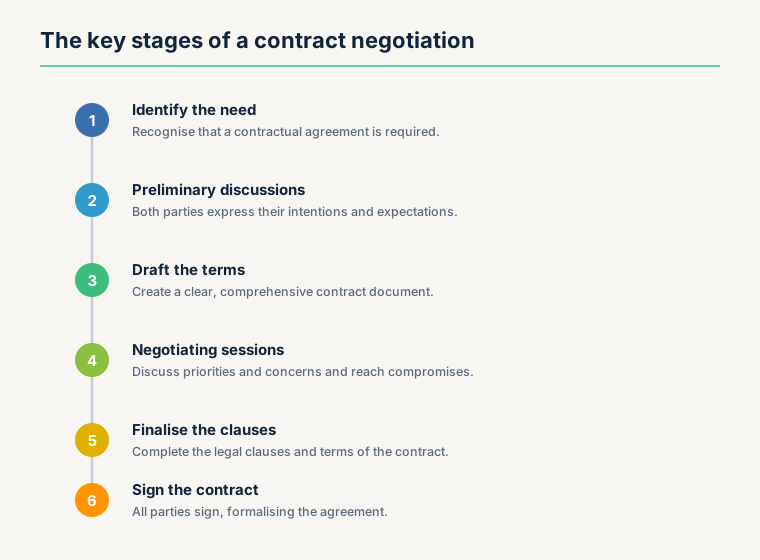
A contract negotiation between two companies usually follows six stages. Each requires careful consideration from both sides.
1. Identify the need. It starts with recognising that a contractual agreement is required — for a strategic partnership, the purchase of goods or services, or a joint venture, for example.
2. Preliminary discussions. Both parties express their intentions and expectations. These initial talks build mutual understanding and set the framework for the negotiation.
3. Draft the terms. Working together, the parties produce a clear, comprehensive document that sets out rights, responsibilities, and obligations.
4. Negotiating sessions. Representatives from both sides present their priorities and concerns and reach compromises. Every detail — from pricing models to delivery schedules — is examined until mutually agreed terms are reached. Open communication is critical at this stage.
5. Finalise the clauses. Once there is agreement, the contract language is finalised and the legal clauses tailored to the specific case are added.
6. Sign the contract. With the signature of all parties, the agreement is formalised. Legal advisors are often brought in to ensure compliance with applicable laws.
A well-executed contract negotiation therefore combines open communication, a willingness to compromise, and a thorough review of the terms — from the first conversation to the final signature. That keeps both companies' interests protected while laying the groundwork for a successful partnership.
Tips: How to Negotiate a Contract Successfully
The stages give you the structure — but how you run the negotiation is what decides the outcome. These tips have proven themselves in practice:
- Prepare thoroughly. Know your own goals, your walk-away point, and the likely interests of the other side before you come to the table. Negotiating unprepared is how you lose ground.
- Know your BATNA. Your Best Alternative to a Negotiated Agreement determines your leverage. The stronger your alternative, the more confidently you can hold your position.
- Negotiate interests, not positions. Focus on what each side actually needs, rather than defending fixed positions. That's how you find compromises that work for everyone.
- Put everything in writing. Capture interim agreements and settled points as you go, so there's no dispute later about what was agreed.
- Keep emotions in check. Time pressure, ego, and frustration lead to poor decisions. When a point gets stuck, take a break rather than forcing it.
- Work in a shared contract room. When drafts fly back and forth over email, versions and comments get lost. A single shared workspace keeps every change traceable.
When Does a Contract Negotiation Become Legally Binding?
A contract itself only becomes binding once both parties reach agreement — typically through a valid offer and its acceptance, backed by a genuine intent to be bound. Everything before that point is, in principle, still open.
That does not mean negotiations carry no legal weight. Under the good-faith and pre-contractual duties recognised in most jurisdictions, parties who enter negotiations take on certain obligations before any contract is signed. Common examples include:
- Breaking off talks in bad faith after the other side was reasonably led to expect a deal and has already incurred costs in reliance on it.
- Misrepresentation or failure to disclose material facts about the deal being discussed.
- Mishandling confidential information shared during the negotiation, especially where an NDA is in place.
Because of this, it is worth being precise about what is and isn't agreed. Mark preliminary documents clearly — a letter of intent (LOI) or memorandum of understanding (MOU) is usually non-binding, but specific clauses within it (confidentiality, exclusivity) often are. Phrases like "subject to contract" signal that no binding agreement exists yet. In short: even a negotiation that never closes should be conducted carefully, because assurances, disclosure, and the handling of confidential information can create liability before signature.
Frequently Asked Questions About Contract Negotiation
What is contract negotiation?
Contract negotiation is the process in which two or more parties discuss the terms and obligations of a contract and work toward an agreement that is acceptable to both sides. Typical points on the table include price, scope of work, timelines, liability, intellectual property rights, and termination clauses.
What are the stages of the contract negotiation process?
The process usually follows six stages: identify the need, preliminary discussions, draft the terms, negotiating sessions, finalise the clauses, and sign the contract. Each stage calls for open communication and a willingness to compromise on both sides.
What are the best tips for negotiating a contract?
Prepare thoroughly, know your best alternative (BATNA), negotiate interests rather than fixed positions, put interim agreements in writing, and keep emotions in check. Working in a shared contract room instead of email attachments keeps every change traceable.
When does a contract negotiation become legally binding?
The contract itself becomes binding only once both parties agree (offer and acceptance) with the intent to be bound. However, certain duties — such as acting in good faith, disclosing material facts, and protecting confidential information — can already apply during the negotiation and create liability before signature.
Is a letter of intent legally binding?
A letter of intent (LOI) or memorandum of understanding (MOU) is usually non-binding overall, but specific clauses within it — such as confidentiality or exclusivity — are often intended to bind the parties. Read each clause carefully and use wording like "subject to contract" to keep the rest non-binding.
To sharpen your negotiation skills more broadly, see our guide on negotiating effectively. For a concrete use case, take a look at the sales negotiation process. And when you negotiate with outside counterparties, our guide to contract collaboration with external partners shows how to run the process in one shared contract room instead of email attachments. For the drafting stage specifically, see how to redline a contract so every proposed change stays visible and agreed.
Ready for the next step?
Book a demo with our team and see top.legal in action