
eSignature vs. handwritten signature, compared side by side: see how electronic signatures cut printing, scanning and mailing — and close contracts in minutes instead of days.
Ever needed to get a contract signed and thought, This should only take a few minutes — only to end up waiting days? First you print it. Then you sign it. Then you scan it. Then you email it (or worse, mail it). And if someone forgets a signature? Back to square one.
It's a small task that somehow turns into a massive time-waster.
Now imagine this instead: you send a document, the recipient clicks to sign, and it's done. No printing, no scanning, no delays. That's the power of eSignatures. But do they really save that much time? Let's compare.
Understanding Traditional Signing
What Is Traditional Signing?
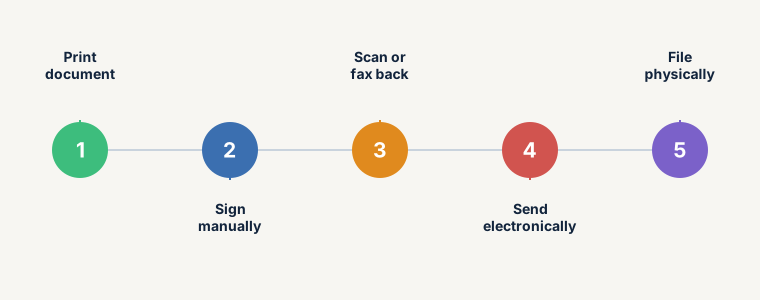
Traditional signing is the classic way of concluding contracts by putting pen to paper. While it's familiar, it also involves many small, time-consuming steps:
- Print the document.
- Sign it manually.
- Scan or fax it back.
- Send it to the recipient by email or post.
- File the signed document physically.
At first glance, this may not seem like a big deal. But when multiple people need to sign, or when documents need to be revised, these steps multiply and result in frustrating delays.
A survey by MSB Docs found that 65% of companies that rely on pen and paper report it takes an entire working day to obtain physical signatures.
The time-consuming challenges of traditional signing
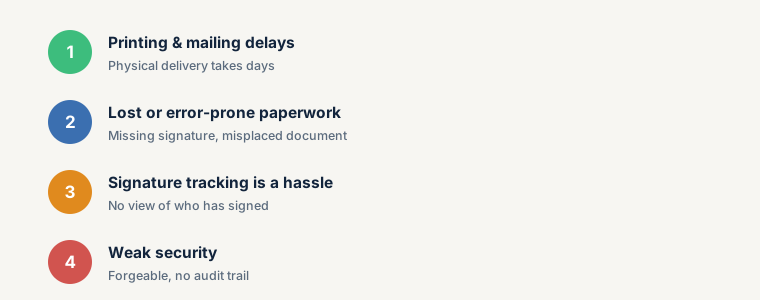
Although the traditional signature has been the norm for decades, it creates unnecessary bottlenecks:
- Printing, sending and scanning cause delays. Waiting for documents to be physically delivered, signed and returned can take days or even weeks.
- Paperwork gets lost or contains errors. A missing signature or misplaced document can set a deal back significantly.
- Tracking signatures is a hassle. There's no easy way to see who has signed and who hasn't without constantly chasing people.
- Security is weak. Paper documents can be forged, lost or damaged, and there's no built-in audit trail to verify authenticity.
What are eSignatures?
eSignatures (electronic signatures) are a digital alternative to handwritten signatures that let you sign documents quickly and securely — without printing, scanning or mailing. They streamline the entire signing process and make business transactions faster and more efficient.
How do eSignatures work?
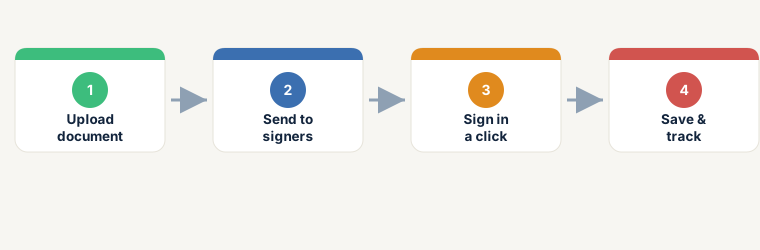
To sign a document electronically, you first receive an email from the sender. The exact steps may vary, but the process usually works like this:
- Upload the document to an eSignature platform.
- Send it electronically to the signer(s).
- Sign with a few clicks using a digital signature, a typed name or a stylus.
- Save and track it automatically for easy access.
This eliminates the back-and-forth of traditional signing and ensures documents are signed within minutes rather than days.
Are eSignatures legal?
Yes! eSignatures are legally recognized in most countries and represent a valid alternative to handwritten signatures. Governments around the world have adopted regulations to ensure their legality and enforceability, including:
- United States (ESIGN Act and UETA): These laws establish that electronic signatures carry the same legal status as handwritten signatures. They ensure digital contracts are valid as long as both parties agree to transact electronically.
- European Union (eIDAS regulation): eIDAS defines three levels of eSignature:
- Simple electronic signature (SES): basic digital signatures, such as a typed name or a scanned signature.
- Advanced electronic signature (AES): more secure, as it requires unique identification of the signer.
- Qualified electronic signature (QES): the highest level, backed by a state-certified provider and legally equivalent to a handwritten signature.
- Other regions: Many countries have introduced similar laws, such as the Electronic Transactions Act in Australia and the IT Act 2000 in India, ensuring global acceptance of eSignatures for business and legal purposes.
Beyond legality, eSignatures often offer more security than traditional paper signatures:
- ✅ Audit trails that track who signed, when and from where.
- ✅ Timestamps that ensure authenticity and prevent disputes.
- ✅ Encryption that protects documents from tampering or unauthorized access.
eSignatures vs. traditional signing: the time comparison
Now that we've covered the differences between traditional signatures and eSignatures, let's look at how they compare on efficiency. The overview below puts the electronic signing workflow directly against manual signing:
| Criterion | Handwritten signature | eSignature |
|---|---|---|
| Time to completion | Days to weeks | Minutes |
| Process steps | Print, sign, scan, send, file | Upload, send, click — done |
| Tracking | Manual follow-up | Automatic status and reminders |
| Security | No audit trail, easily forged | Encryption, timestamps, audit trail |
| Location independence | Physical presence required | Any device, anywhere |
| Cost per contract | Paper, postage, storage | Up to $36 cheaper on average |
It's obvious that the traditional signature can turn a simple task into an arduous process. With eSignatures, there's no need to print and send, and signing documents is quick and easy.
Key benefits of eSignatures for time savings
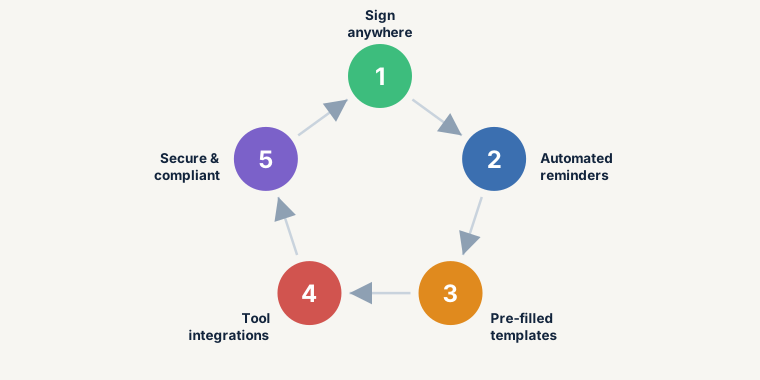
- Sign anytime, anywhere. When you rely on physical paper, expect logistical obstacles that delay signing, particularly when multiple parties are involved. eSignatures let users sign documents from any device, whether they're in the office, working remotely or traveling. This flexibility keeps approvals and agreements moving forward without delay.
- Automated follow-ups and reminders. One of the main reasons contracts stall is waiting for signatures. eSignatures automatically send reminders to signers, reducing the risk of documents being forgotten in an inbox or buried in email chains. This automation keeps workflows efficient, especially for teams that process a large volume of contracts.
- Pre-filled templates for repetitive documents. Instead of writing the same agreements over and over, eSignatures let companies create reusable templates with pre-filled fields. This is especially useful for frequently used documents such as sales contracts, NDAs and onboarding forms — saving time and minimizing errors.
- Seamless integration with business tools. eSignatures integrate directly with CRM systems such as Salesforce and HubSpot, contract lifecycle management (CLM) tools, and project management software such as Asana, Trello and Monday.com. This removes manual data entry, keeps contract records organized and ensures a smooth end-to-end workflow.
- Secure, compliant and legally enforceable. With eSignatures, companies eliminate the risk of lost, altered or forged documents. Each signed agreement is securely encrypted, tracked with a detailed audit trail and verified for authenticity — offering greater protection than traditional paper-based signatures.
Real-world scenarios: when time really matters
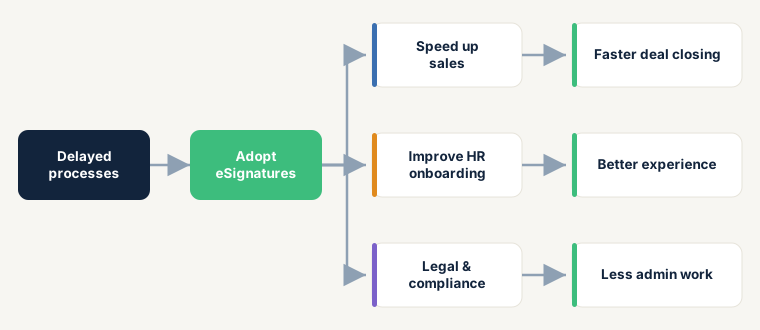
- Sales contracts: speed up deals and revenue growth. Sales teams depend on speed and efficiency. The longer a deal goes unsigned, the greater the risk of losing momentum — or worse, losing the customer to a competitor. Waiting for customers to print, sign, scan and return contracts slows everything down. With eSignatures, sales teams send contracts instantly, so customers can review and sign them from any device in just a few clicks. No more chasing signatures or wrestling with paperwork delays. Deals close faster, prospects stay engaged, and revenue arrives sooner.
- HR onboarding: reduce hiring delays and improve the candidate experience. A slow onboarding process frustrates new employees and creates unnecessary bottlenecks for HR. Waiting for signed documents to come back can push out the start date and disrupt staffing plans. With eSignatures, offer letters and employment contracts can be completed quickly and securely from any device. New hires sign in minutes, making a seamless and professional first impression. Faster onboarding means employees start contributing sooner, and HR teams can focus on people instead of admin.
- Legal and compliance: guaranteed accuracy and instant approval. Legal teams work with critical documents where accuracy, security and compliance are non-negotiable. eSignatures remove bottlenecks by enabling instant approvals while ensuring every document stays tamper-proof and verifiable. With built-in encryption, identity authentication and a full audit trail, legal teams get complete visibility and control over the signing process. This speeds up contract turnaround and reduces administrative overhead, freeing lawyers to focus on strategic priorities instead of chasing signatures.
Addressing common concerns about eSignatures
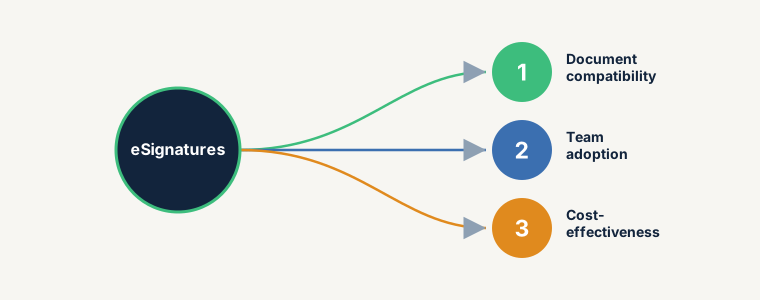
Are eSignatures suitable for all types of documents? Yes, eSignatures can be used for a wide range of documents, from sales contracts and NDAs to employment contracts and financial approvals. While most business documents can be signed electronically, certain legal or heavily regulated documents — such as wills, court orders and some real estate transactions — may still require a signature on paper, depending on the jurisdiction. That said, eSignature laws are constantly evolving, and digital signatures are quickly becoming the standard across many industries.
What if my team prefers signing on paper? Introducing eSignatures is easier than many teams expect. Change is sometimes met with hesitation, but modern eSignature solutions are designed to be user-friendly and require only minimal training. Most platforms offer step-by-step guidance, automated workflows and seamless integrations with existing tools such as email, CRM systems and contract management platforms. This makes the transition smooth and intuitive. Once teams experience signing a document in a few clicks — without printing, scanning or mailing — most find it hard to go back to traditional methods.
Are eSignatures cost-effective? Switching to eSignature isn't just convenient — it's a smart financial decision. Research shows companies can cut document processing costs by up to 85% by avoiding inefficiencies such as manual data entry and approval delays. On top of that, companies save an average of $36 per contract by eliminating the cost of shipping and storing physical documents.
Ready for the next step?
Book a demo with our team and see top.legal in action