
What is a franchise agreement? Learn which clauses matter, what obligations franchisors and franchisees carry, and how to avoid the legal risks of franchising — explained clearly and concisely.
Franchising is a proven way to grow a business and build a brand. From restaurants and gyms to service providers and retail stores, the franchise model gives entrepreneurs a tested route into running their own business. Behind every successful franchise, however, sits a clearly structured franchise agreement that keeps things running smoothly.
This article explains what a franchise agreement is, what it contains, and how to make sure you are protected before you sign. A franchise agreement is one of many types of contracts — and one of the more complex, because it bundles brand rights, ongoing payments and long-term operating duties into a single document.
What is a franchise agreement?
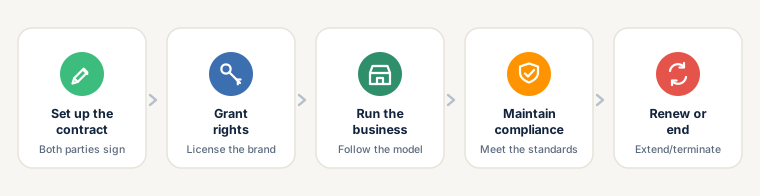
A franchise agreement is a legally binding contract between a franchisor (the brand owner) and a franchisee (the independent operator). It gives the franchisee the right to run a business using the franchisor's established brand, operating model and intellectual property — usually within a defined territory and for a set period.
At its core, then, a franchise agreement is a specialised form of licensing: in exchange for fees, the franchisee gains the right to use a complete business system. We explain how that licensing works in detail in our guide to licence agreements.
The fundamentals of a franchise agreement
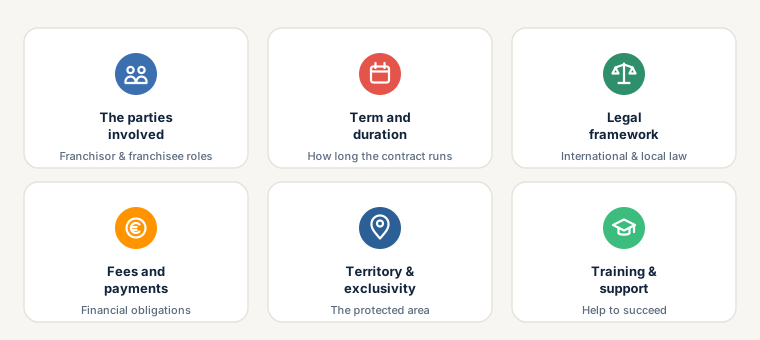
These fundamentals set the terms for how the franchise relationship works and what each party can expect from the other.
The parties involved
Every franchise agreement links two parties: the franchisor, who owns the brand, trademarks and proprietary business system, and the franchisee, an independent operator who pays fees to run a local outlet. The franchisor licenses its business model, while the franchisee agrees to uphold the brand's standards and operating guidelines.
Term and duration
Franchise agreements typically run for 5 to 20 years, with 10 years being the most common. Renewal options often allow extensions for similar periods. Important: align the term of the franchise agreement with your lease, so you don't end up paying rent for a location you can no longer use.
Legal framework (international and local law)
Franchise regulation varies worldwide. In the US, franchisors must provide a Franchise Disclosure Document (FDD) before signing; countries such as Canada and EU member states have their own disclosure and registration rules. Some countries rely on general contract law rather than dedicated franchise statutes. Advice from a local expert helps you stay compliant.
Fees and payments
Franchise agreements detail every financial obligation: the initial franchise fee, ongoing royalties based on revenue, and contributions to advertising or marketing funds. Clarity on these payments is essential to understanding the full cost of operating.
Territory and exclusivity
The agreement often defines a protected territory in which the franchisee can operate without competition from other franchisees or the franchisor. The scope and enforcement of territorial rights vary, so review the terms carefully to secure adequate market protection.
Training and support
Most franchisors provide initial training and ongoing support to help franchisees succeed. The agreement should clearly set out the scope and nature of this support — from operational guidance to marketing assistance.
Key clauses and components of a franchise agreement
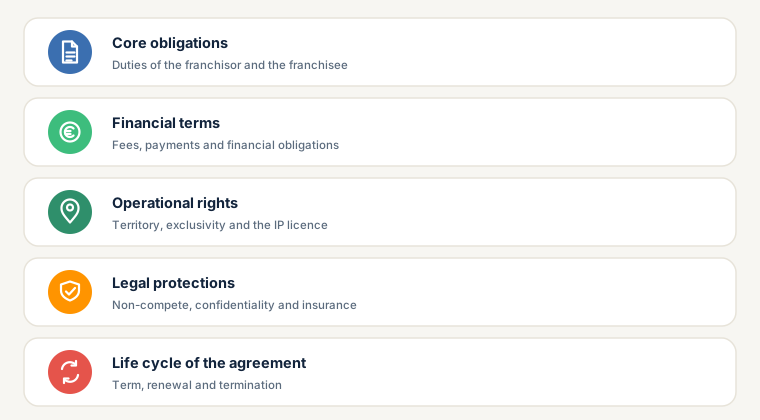
Franchise agreements are detailed documents. The most important sections and clauses usually include:
1. Grant of franchise and IP licence
The franchisor grants the franchisee a limited, non-transferable licence to operate a business under the franchisor's trademarks, service marks, logos, trade names and proprietary business system (“the Marks”) within the designated territory. The franchisee agrees to use the Marks only in the approved manner and to uphold the standards the franchisor sets.
2. Franchisee obligations
The franchisee is required to:
- pay all initial and ongoing fees under the agreement, including royalties and marketing contributions;
- open and operate the franchise business in line with the franchisor's standards and guidelines;
- use only approved suppliers, products and marketing materials;
- keep accurate financial records and provide the franchisor with regular sales and operating reports;
- comply with all applicable laws, regulations and the terms of the agreement.
3. Franchisor obligations
The franchisor is required to:
- train and support the franchisee and its staff in the initial phase and thereafter;
- provide the franchisee with an operations manual and its updates;
- offer guidance and support in marketing, advertising and operations;
- conduct regular inspections to ensure brand standards are met.
4. Fees and payments
The franchisee agrees to pay:
- an initial franchise fee on signing the agreement;
- ongoing royalties, calculated as a percentage of gross revenue and payable monthly;
- contributions to advertising and marketing funds as specified;
- any additional fees for technology, training or other services listed in the agreement.
5. Territory and exclusivity
The franchisee operates exclusively within the defined territory. The franchisor agrees not to grant other franchises or run company-owned outlets in that territory during the term — subject to the agreed terms and conditions.
6. Non-compete and confidentiality
During the term, and for a defined period after termination, the franchisee may not directly or indirectly engage in businesses that compete with the franchise business in the specified area. The franchisee agrees to keep all proprietary information confidential.
7. Term and renewal
The agreement runs for an initial fixed term, with the option to renew for further years by mutual consent and subject to meeting the renewal conditions.
8. Termination
Either party may terminate the agreement for a material breach — such as non-payment of fees, violation of operating standards or insolvency. The franchisor gives written notice and an opportunity for the franchisee to cure the breach. On termination, the franchisee stops using the Marks and meets all post-termination obligations.
9. Dispute resolution
Any disputes arising from the agreement are resolved through arbitration or mediation, in line with the agreed rules and the governing law.
10. Insurance and indemnity
The franchisee maintains the required insurance at its own expense, including general liability, property and workers' compensation cover. The franchisee indemnifies the franchisor, its affiliates and staff against any claims arising from operating the franchise business or from a breach of the agreement.
Common mistakes and risks
New franchisees frequently overlook contractual risks. The key pitfalls include:
Unclear or ambiguous provisions
Vague wording causes problems later: if terms aren't precise, each side interprets them differently. An imprecise territory description, for example, could let the franchisor place new outlets too close together. Always ask for clarification or amendment where clauses are unclear. Courts generally read ambiguous wording in favour of the party that did not draft the agreement — often the franchisee.
No exit strategy
Some franchisees get stuck because they never planned an exit. If you later want to sell the business or retire, the agreement should allow a transfer to an approved buyer. Make sure exit and resale procedures are clearly set out — otherwise you risk losing your investment or being forced to close.
Unbalanced obligations
Many franchise agreements heavily favour the franchisor. If the franchisor's duties — on support, marketing and training — are weak or one-sided, your business suffers. Watch for clauses that impose burdens on you without a corresponding commitment from the franchisor (for instance, costly technology upgrades with no promise of ongoing training). A lawyer helps you spot such one-sided terms early.
Hidden fees and costs
Franchise agreements often carry fees beyond the initial franchise fee and royalties: marketing fees, technology costs, renewal fees or required purchases from specific suppliers. Overlooking these extra costs threatens your profitability. Review the fee structure carefully.
Restrictive operating controls
Consistency matters in franchising, but overly tight control limits your flexibility in the local market. Some agreements set rigid rules on suppliers, pricing, hours or product offerings. Make sure these controls are reasonable and leave you room to adapt without breaching brand standards.
Reviewing and negotiating a franchise agreement
The importance of legal advice
Because franchise agreements involve significant financial commitments and complex obligations, an experienced franchise or business lawyer should review the contract before you sign. Legal counsel helps you understand confusing clauses, spot unfair or one-sided provisions, and confirm the agreement complies with the relevant local laws. That expertise is invaluable for protecting your investment and avoiding costly disputes.
Checklist: what to look out for
| Topic | What it covers (franchisor's view) | What to watch for (franchisee's view) |
|---|---|---|
| Territorial rules | Defines your exclusive area of operation | Make sure the territory is clearly mapped and can't be changed without your consent |
| Fees & payments | Covers upfront fees, royalties and ongoing payments | Watch for hidden costs such as mandatory upgrades, training or marketing contributions |
| Termination | Sets out how and when the agreement can be ended | Check notice periods, cure periods and the chance to fix breaches first |
| Renewal & exit | Governs renewing or selling the franchise | Secure fair renewal terms and flexible exit or resale options |
| Training & support | Describes the help you get at launch and in operation | Confirm ongoing support and system updates are clearly promised — not just one-off |
| Use of the brand | Allows use of the franchisor's branding and materials | Understand the restrictions to avoid penalties for accidental misuse |
| Operational oversight | Enforces consistency through audits and performance checks | Clarify how often you're assessed and the consequences of failing |
| Supply & purchasing | May require sourcing from approved vendors | Assess the cost impact and check for alternatives if prices rise |
| Insurance & risk | Sets liability and required insurance | Clarify your responsibilities to avoid unforeseen liabilities |
| Confidentiality & competition | Limits information sharing and competing activity | Note restrictions that apply even after the agreement ends |
| Dispute resolution | Sets out how conflicts are handled (court or arbitration) | Make sure the process is fair, transparent and not overly burdensome |
FAQ – Common questions about franchise agreements
Can I terminate a franchise agreement?
Termination is only possible under specific conditions, usually for a breach. Franchisees can often sell or transfer with approval, but cannot cancel at will.
Is a franchise agreement legally binding?
Yes. Once signed, both parties must abide by all terms — so review them carefully before you commit.
How long do franchise agreements run?
Typically 5 to 20 years, often with renewal options. Always check the term and renewal conditions.
What fees should I expect?
Expect an upfront fee, ongoing royalties, marketing contributions and possible extra costs such as training or technology fees.
What support can I expect from the franchisor?
Usually training, marketing help and operational guidance. Check the agreement to see exactly what is included.
Can I sell or transfer my franchise?
Most agreements allow transfers, but require the franchisor's consent and certain conditions.
What happens if the franchisor changes the terms?
Some agreements let franchisors update rules or fees. Find out how changes are communicated and what rights you have.
Ready for the next step?
Book a demo with our team and see top.legal in action