
Manage contract renewals effectively: why deadlines get missed, how poor renewal management costs revenue, 5 best practices, plus evergreen clauses and software for reliable deadline and renewal management.
One phase of the contract life cycle that is often neglected is contract renewals. The conclusion of the contract is at the heart of many management instruments or strategies. What comes after that is just as important as the contract itself.
Dealing with contracts is part of everyday business. But without proper planning, renewing contracts poses a host of problems, including:
- Expensive, unwanted automatic renewals
- No central record of all contracts and deadlines
- Loss of knowledge when management changes
- Friction in hand-offs between teams
A renewal deadline is easily missed — especially when your company is growing and managing ever more complex contracts. Following a handful of best practices lets you set priorities and allow enough time for renewal, so no opportunity to renegotiate is lost.
This guide is your central entry point to the topic. It shows why deadlines get missed, how poor management costs revenue, and which five best practices and software help you steer renewals with confidence. For deeper dives, see:
- Automatic contract renewals: how to stay in control
- Contract renewal vs. contract extension: the difference
- How to build an effective contract renewal strategy
- Contract renewal checklist: a step-by-step guide
- Renew or switch? A contract extension decision guide
What is a Contract Renewal? Why is it Necessary?
In the context of contract management for companies, contract renewal means the extension or renewal of an existing contractual agreement between two or more parties beyond its original term. This can happen for a variety of reasons and often involves renegotiating certain terms of the agreement.
Contract renewals are an important aspect of business processes as they offer continuity and predictability in business relationships that go beyond short-term agreements. They offer both parties a range of benefits, such as stability, lower costs associated with initiating new contracts, clearly defined expectations and obligations, and greater trust between the parties involved.
How Does Poor Contract Renewal Management Lead to a Loss of Revenue?
Revenue losses are unintentional, often undetected, yet avoidable losses of business income. Much like a leaking pipe, money drains away bit by bit. Even when the amounts are small in each case, they add up over time and have a noticeable impact on the bottom line.
Poor contract renewal management drains revenue in several ways. First and foremost, contracts expire without proper renegotiation or updating — so opportunities for additional revenue are lost. On top of that, misunderstandings easily arise between the parties over payment terms or delivery expectations, straining the relationship and hurting future business prospects.
According to the Harvard Business Review Inadequate contract management, in particular errors in manual contract review, results in a loss of 5 to 40% of the contract value. Manual contract verification is susceptible to inaccuracies when performed by a human eye. It is a time-consuming task that requires attention to special features, such as important due dates, automatic renewal periods, and contract keywords.
Reasons Why Contract Renewals Are Missed
Organizations often miss deadlines for contract renewals due to various factors that impact their contract management processes. One of the main reasons why companies are struggling to comply with their renewal contracts is poor contract management practices. Ineffective communication, lack of transparency and accountability, and disorganized systems are some of the factors that contribute to exceeding deadlines.
In addition, the inadequate use of modern technologies and automation tools plays a crucial role in reducing the effectiveness of the renewal process, leading to delays or missed deadlines. Companies that still rely on manual processes or legacy systems are more susceptible to errors or obstacles in meeting their contractual obligations.
5 Best Practices for Contract Renewal
Effective contract renewal management is essential, as 60 to 80 percent of all transactions revolve around contracts. The following five best practices help your organization maximize the value of its contracts and reduce risk.
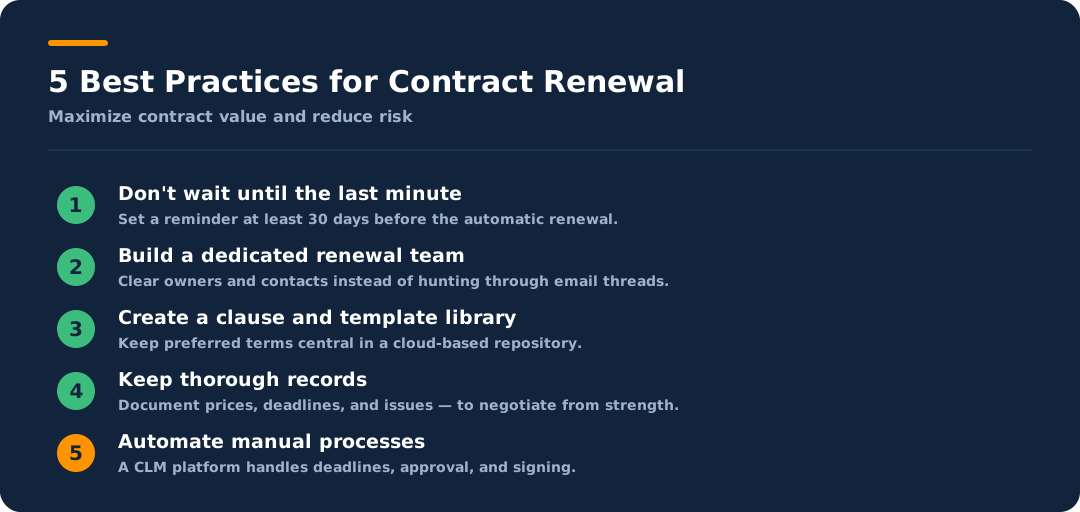
1. Don't put off reviewing and renewing contracts until the last minute
Legal teams often underestimate the time and effort required to review and renew contracts. A good rule of thumb is to set a reminder at least 30 days before the automatic renewal. That leaves enough time to assign owners, organize documentation, and agree on what — if anything — needs to change. Many companies keep a spreadsheet or a deadline calendar and review it regularly.
2. Build an effective contract renewal team
When you're juggling hundreds of documents and tight deadlines, you shouldn't have to hunt for contacts, email addresses, and old message threads every time. Clear responsibilities save time whenever you need to gather feedback on a draft or send a document out for signing.
3. Create libraries of preferred clauses, terms, and templates
If the original contract is favorable, keeping its terms speeds up the renewal process — though that's a challenge for companies that rely on hard copies. Those using a cloud-based repository can build a library of preferred contract terms along with templates. Such clause and template libraries also speed up the drafting of new business contracts.
4. Keep thorough records
Someone in the company should be responsible for documenting suppliers' prices and terms and researching comparable goods and services on the market — so you can negotiate from a position of strength. The same goes for recording delays, disagreements, mistakes, and other issues: they provide the basis for well-founded decisions at renewal time.
5. Free yourself from the hassle of manual processes
Reliably tracking renewal deadlines simply isn't feasible with manual processes alone. Automation lets you eliminate manual steps and improve transparency. A CLM platform replaces manual tracking and data entry, and typical renewal activities such as approval and signing can also be automated — preventing errors and duplicated work.
What are automatic contract renewals (evergreen clauses)?
Automatically renewing contracts are one way to avoid a cumbersome renewal process. With this structure, contracts renew automatically after a predetermined term, with no further action required. As long as neither party cancels, the contract stays in force.
The underlying provision is often called an evergreen or self-renewal clause. In a business context, it typically appears in service and loan agreements.
Convenient as that sounds, these clauses are exactly what cause the expensive, unwanted renewals from the list above whenever no one is watching the cancellation deadline. To learn how to make evergreen clauses enforceable and keep deadlines under control, read our article on automatic contract renewals. For the distinction between renewal and extension, see contract renewal vs. contract extension.
Are Contracts With Automatic Renewal Enforceable?
When evaluating a specific automatic renewal contract, it is important to consult local laws and case law, as some jurisdictions impose restrictions on automatic renewal clauses and/or stricter notification requirements in specific contexts (such as consumer contracts, residential rental agreements, and collective agreements). However, according to the usual contract rules, automatic renewal clauses in service contracts are generally enforceable.
What software supports contract renewal management?
Contract management software is typically adaptable, intuitive to use, and covers the entire contract life cycle. The following features support your renewal process directly:
- Optimized document storage, retrieval, and versioning through secure, cloud-based contract repositories
- Automatic notifications about upcoming renewals, expiration dates, milestones, and commitments
- Improved security through audit trails, permissions-based access, and more
- Monitoring and reporting so you can keep an eye on the status of all renewals
- Built-in electronic signatures for quick signing on any device
- Integration with a wide range of other business solutions and software applications
This is exactly where top.legal comes in: deadlines, approvals, clause libraries, and electronic signatures all come together in one place, so no renewal ever slips by unnoticed.
Ready for the next step?
Book a demo with our team and see top.legal in action