
Contract workflow automation routes contracts through drafting, review, approval and renewal automatically. See the stages, the 5 benefits, and where to start.
As companies digitise their legal and sales operations, contract workflow automation has moved from a nice-to-have to a competitive necessity. Marketing, production, and finance were all streamlined years ago — yet in many organisations, contracts still move by email, spreadsheet, and manual follow-up. That gap is exactly where deals stall.
This guide explains what contract workflow automation is, the stages it covers, and the five benefits that make it worth adopting.
What is contract workflow automation?
A contract workflow is the sequence of steps a contract moves through from request to renewal. Contract workflow automation uses software to move contracts through those steps automatically — routing documents to the right people, applying pre-approved templates, triggering approvals, and capturing every action — instead of relying on manual hand-offs.
The goal is simple: make the whole process faster and more reliable while freeing your legal team and other stakeholders to focus on higher-value work rather than chasing signatures and re-reviewing the same boilerplate.
The stages of an automated contract workflow
Most contract management workflows follow the same core stages. Automation adds rules, triggers, and routing to each one:
- Initiation — a request is submitted through a standard intake form so nothing starts by ad-hoc email.
- Drafting — the contract is assembled from pre-approved templates and clause libraries.
- Review and negotiation — the right reviewers are notified automatically, with fallback positions and alternative clauses built in.
- Approval — the contract is routed to approval groups in the correct order, and can't advance until each condition is met.
- Execution — the finished agreement is signed electronically by internal and external parties.
- Storage and renewal — the signed contract is stored centrally, and renewal or expiry dates trigger reminders automatically.
The benefits of contract workflow automation
1. More reliable contracts through standardised, pre-approved templates
Your legal team can keep contract and clause template libraries up to date as legal requirements change, so every author always uses the most current, approved wording. Automated workflows also enforce the company's preferred positions and pre-cleared fallback options during negotiation.
The result: you can rely on the legal quality of an agreement regardless of who drafts it. Deals move faster, and lawyers no longer re-review the same basic wording over and over.
2. Automatic routing and parallel approvals
With automated contract workflows, no time is wasted searching inboxes for the latest version or chasing colleagues by email. Hand-offs are standardised, and contracts are forwarded to the responsible reviewers the moment they're ready.
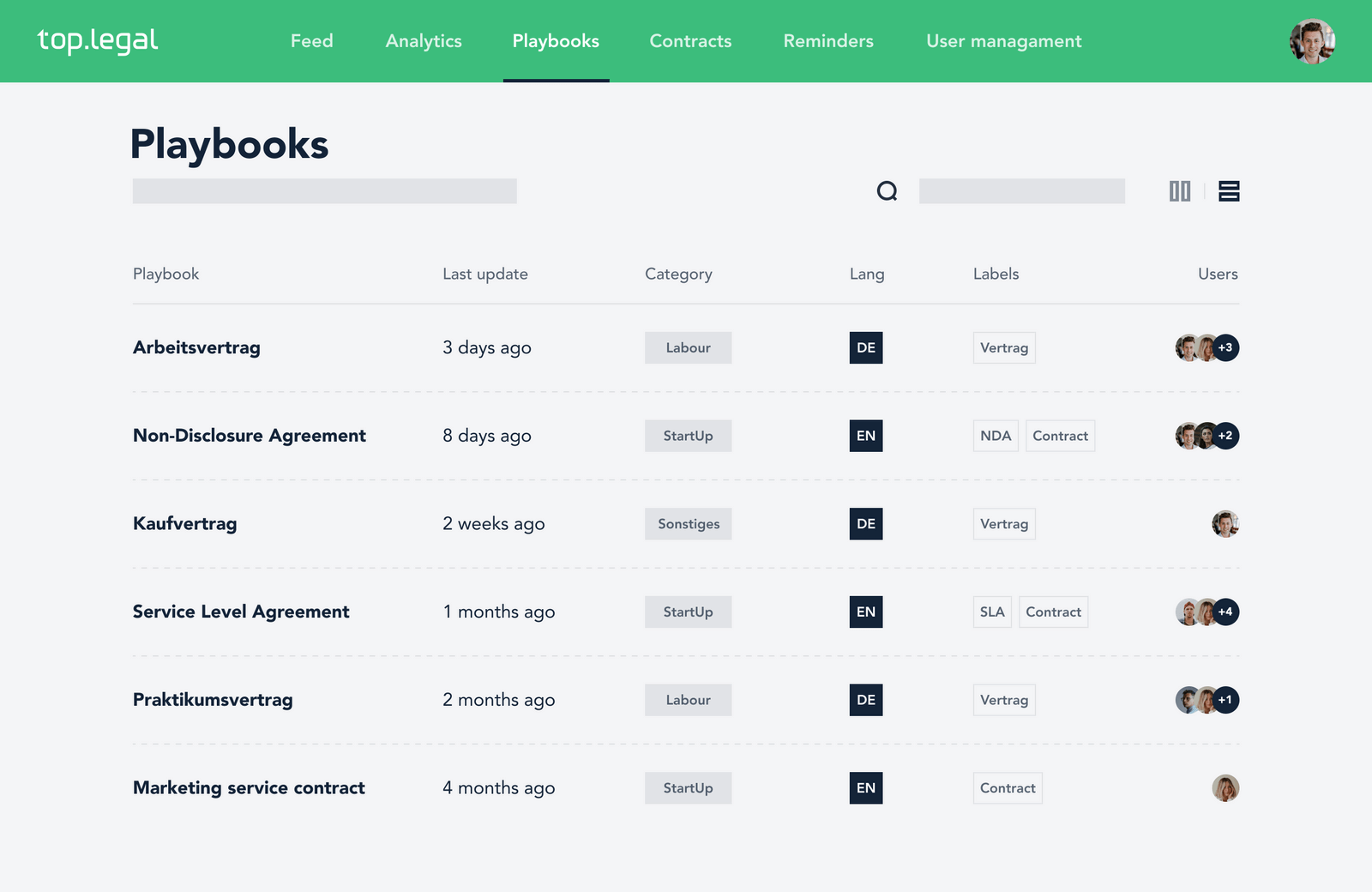
top.legal lets your whole team — and external partners — collaborate on and execute contracts in one place. When a single approver risks becoming a bottleneck, you can define multiple approval groups within a workflow phase so reviews run in parallel instead of holding up the deal.
3. Corporate governance and compliance become much easier
You can build business rules and policies directly into the workflow. For example, a routing workflow can block final approval until every edit and open issue is resolved and all required sign-offs are captured. On-demand audit trails and dashboard views let you monitor compliance at every stage.
4. Full transparency through audit logs and analytics
Because the system records every action every user takes across the contract lifecycle, an administrator can see exactly who did what on any contract — and those records can't be altered. That transparency sharply reduces risk when something doesn't go to plan. The same data feeds analytics that keep teams current on every contract and surface bottlenecks and areas to improve.
5. Time, effort, and cost savings for legal teams
Automating the contract workflow lets legal teams spend their time on value-adding work rather than administration. According to Aberdeen Research, implementing automation reduces contract-related administrative costs by 25–30%.
The aim of a contract management solution is to improve process efficiency across the board. Replacing manual drafting with a clause generator, for instance, dramatically speeds up how quickly your organisation can produce and process agreements — clearing away the administrative tasks that quietly drain productivity.
Where to start with contract workflow automation
You don't need to automate everything at once. Pick one high-volume, repetitive contract type — an NDA, a sales agreement, or a supplier order — and map its stages end to end. Then automate its templates, routing, and approvals, measure the time saved, and use that win to expand automation to the rest of your contract portfolio. For the bigger picture of how these pieces fit together, see our contract automation guide.
Ready for the next step?
Book a demo with our team and see top.legal in action