
Your contract volume has become unmanageable? This guide shows how to organize a large number of contracts, keep control and bring order to a growing portfolio – from the first inventory to the right system.
A single contract is easy to organize. The trouble starts around number fifty: contracts from different customers, suppliers and partners sit in email inboxes, on network drives, in filing cabinets and in the cloud – and no one is quite sure which version is valid or when the next deadline falls. Anyone trying to organize their contracts rarely struggles with a single document; the real problem is the creeping loss of control over a growing contract portfolio.
This guide shows how to structure a large number of contracts, keep control and bring lasting order to your portfolio – from the first inventory through a single storage location to automatic deadline monitoring.
Why organizing a large number of contracts is so hard
As long as a company only has a handful of contracts, one folder is enough. Growth tips that over: volume and complexity rise, contracts arrive from different sources and departments, and teams increasingly work in distributed locations. Traditional storage on paper or in nested folder structures does not scale with that – it is time-consuming, error-prone, and leads to missed deadlines, duplicate versions and contracts that no one can find when it matters.
Organizing contracts therefore means more than filing them neatly. It means knowing at any moment which contracts exist, where they sit, which version is current and which deadlines are coming up. These four questions get harder to answer as volume rises – and that is exactly where good organization starts. Modern contract management tools help bring the entire portfolio together in one place, make it searchable and keep deadlines in view automatically, instead of relying on memory and luck.
The typical problems with a large contract portfolio

Before you organize your contracts, it pays to understand where things actually break down. The volume and complexity of contracts often overwhelm administrative teams. Ensuring accuracy, staying compliant and reducing risk become pressing concerns, and a heavy workload leads to mistakes or omissions that can turn into legal problems or financial consequences.
When managing a large contract portfolio, companies typically face these challenges:
- Standardizing contracts: When you deal with many contracts, especially from different providers or customers, you inevitably run into different formats, terms and structures. This diversity creates inefficiencies when processing, reviewing and comparing contracts, and increases the risk that important clauses deviating from your corporate standard slip through unnoticed.
- Data extraction and analysis: Each contract holds essential data points – the parties involved, the contract value, the term, termination clauses and penalties. Across a large number of contracts, extracting this information by hand is both time-consuming and error-prone, and analyzing it for trends, risks and opportunities becomes a daunting task.
- Internal policies and external regulations: Organizations operate under a combination of internal policies and external regulations set by governing bodies. Across many contracts it is hard to ensure every single one meets these differing standards, and non-compliance can result in serious legal consequences, significant financial setbacks and reputational damage.
- Managing renewals and expirations: Every contract moves through phases from initiation to termination – its life cycle – with milestones such as performance reviews, delivery due dates, potential renegotiations and renewal deadlines. Miss one, such as a forgotten renewal date or an overlooked expiration, and you risk unintended service interruptions, financial losses or missed opportunities. The more contracts you manage, the harder each milestone is to track.
- Storage and retrieval: Contracts are important documents that require orderly, secure storage – all the more so at volume. Systematic storage protects them against loss or damage and keeps them accessible for reference or audit. As volume grows, physical filing or simple digital folders become inadequate, making it slow to locate a specific contract or clause.
- Negotiation: Successful negotiations demand careful attention to specifics, a thorough understanding of particular needs and alignment with overarching strategic goals. A large number of contracts can overwhelm available resources, lengthen the procurement process and cause delays that hurt overall efficiency.
- Collaboration between stakeholders: Managing the involvement of legal, procurement, finance and operations across many contracts is difficult. Bringing these teams together requires clear communication, smooth collaboration and quick approvals – and without that, delays and misunderstandings pile up.
Bring order to your contract portfolio in four steps
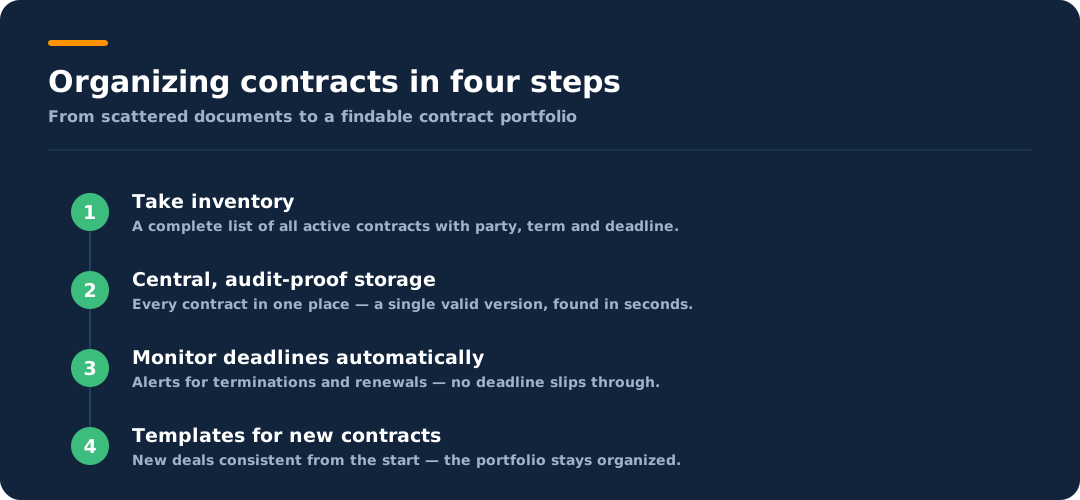
Organizing contracts works most reliably in a fixed order: first know what you have, then bring it all into one place, then make it searchable, and finally let deadlines be monitored automatically. The four building blocks below build on one another.
1. Take inventory: get an overview
Before you reorganize anything, you need a complete list of all active contracts – including counterparty, term, value and notice period. This contract overview is the foundation of any organization: only once you know which contracts exist and where they sit can you create order. Many teams start here with a spreadsheet and quickly hit its limits – a fine starting point, but not a lasting solution.
2. Central, audit-proof storage
The second step is to stop scattering copies and bring every contract into one place. A structured contract repository ensures there is exactly one valid version of each contract, that older versions remain traceable, and that anyone authorized can find the right contract in seconds. That resolves the core problem of a large portfolio – "Where is the current contract?".
3. Monitor deadlines and renewals automatically
The more contracts you manage, the easier it is for a termination or renewal deadline to slip. Systematic deadline management with automatic reminders prevents contracts from renewing unintentionally or renegotiation windows from passing. If you want not just to store the portfolio but to actively steer it, add tracking that surfaces milestones and obligations across every contract.
4. Templates for consistent new contracts
Order is not only created retroactively but also at the point of entry: standardized templates ensure newly signed contracts are consistently structured from the start and easy to file. That speeds up drafting and keeps the portfolio consistent over time – an often underestimated lever for keeping a large number of contracts organized for good.
Which tools and technologies help you organize contracts?
1. Contract lifecycle management software
Contract Lifecycle Management (CLM) software is a powerful digital solution for monitoring the entire course of a contract, from initial drafting and negotiation through final execution and possible renewal. It provides a central hub for managing every aspect of a contract efficiently.
One of the most important features of CLM software is document storage and retrieval. It acts as a secure repository where all contract-related documents and data live, making contracts easy to access, organize and manage. It also streamlines the whole process through automated workflows, reducing manual work and human error, and sends alerts about critical dates such as renewals so important events are never overlooked. On top of that, these platforms often include analytics that provide insight into contract performance and compliance, enabling data-driven decisions.
A study by Goldman Sachs suggests that using a contract management system could save around 20% of the time spent on contracts. It also found that companies typically spend around 5% of their revenue managing contracts after they have been signed.
2. Standardized templates
Managing a large number of contracts efficiently is a common challenge, and standardized templates are one of the most effective answers. They provide a structured framework for common contract types with predefined clauses, terms and sections. Instead of starting from scratch, users only fill in the details specific to each contract, saving time and effort while keeping format and language consistent with legal standards, industry regulations and internal policies.
3. Contract databases and trackers
With databases and trackers, users can search for specific contracts, retrieve information quickly and keep contracts up to date. This improves organization, strengthens compliance and reduces the risk of missing critical deadlines or overlooking important details. By consolidating all contract-related documents in one place, managing contracts with top.legal becomes far simpler for legal teams, procurement and anyone responsible for contracts – and built-in alerts help you track milestones and obligations before they turn into a breach.
When contract software is worth it
Spreadsheets and shared folders are enough while the portfolio is small and few people are involved. It becomes critical once several departments access the same contracts, deadlines regularly get tight, or no one can say for certain which version is valid. That is the point where a dedicated solution organizes a large number of contracts far more reliably than manual filing ever could.
Which system is right depends on your volume, budget and the teams involved. For a structured comparison of the options – from free entry-level tools to full CLM platforms – see our contract management software comparison and the overview of what modern contract management software can do today. Above all, choose a system that grows with your company, fits your existing tools and automates deadline monitoring – so your portfolio stays organized as it keeps growing.
Ready for the next step?
Book a demo with our team and see top.legal in action