
Learn the most important clauses in employment contracts to protect your rights and obligations.
Have you ever felt uncertain about the terms of your employment contract? Whether you're an employer or an employee, the right details can make the difference when it comes to creating a positive, stress-free work experience
Starting a new job involves a lot of excitement — and a whole lot of paperwork. One of the most important documents is the employment contract, which sets out the conditions for the position, from salary and benefits to working hours and termination requirements. Signing on the dotted line may seem like a routine step, but what is in this contract can have long-term consequences.
This guide details the key clauses that should be included in every employment contract, why they're important, and what you need to pay attention to. Whether you're reviewing an offer or drawing up contracts for your company, knowing these details will help you avoid unnecessary problems.
What Is an Employment Contract?
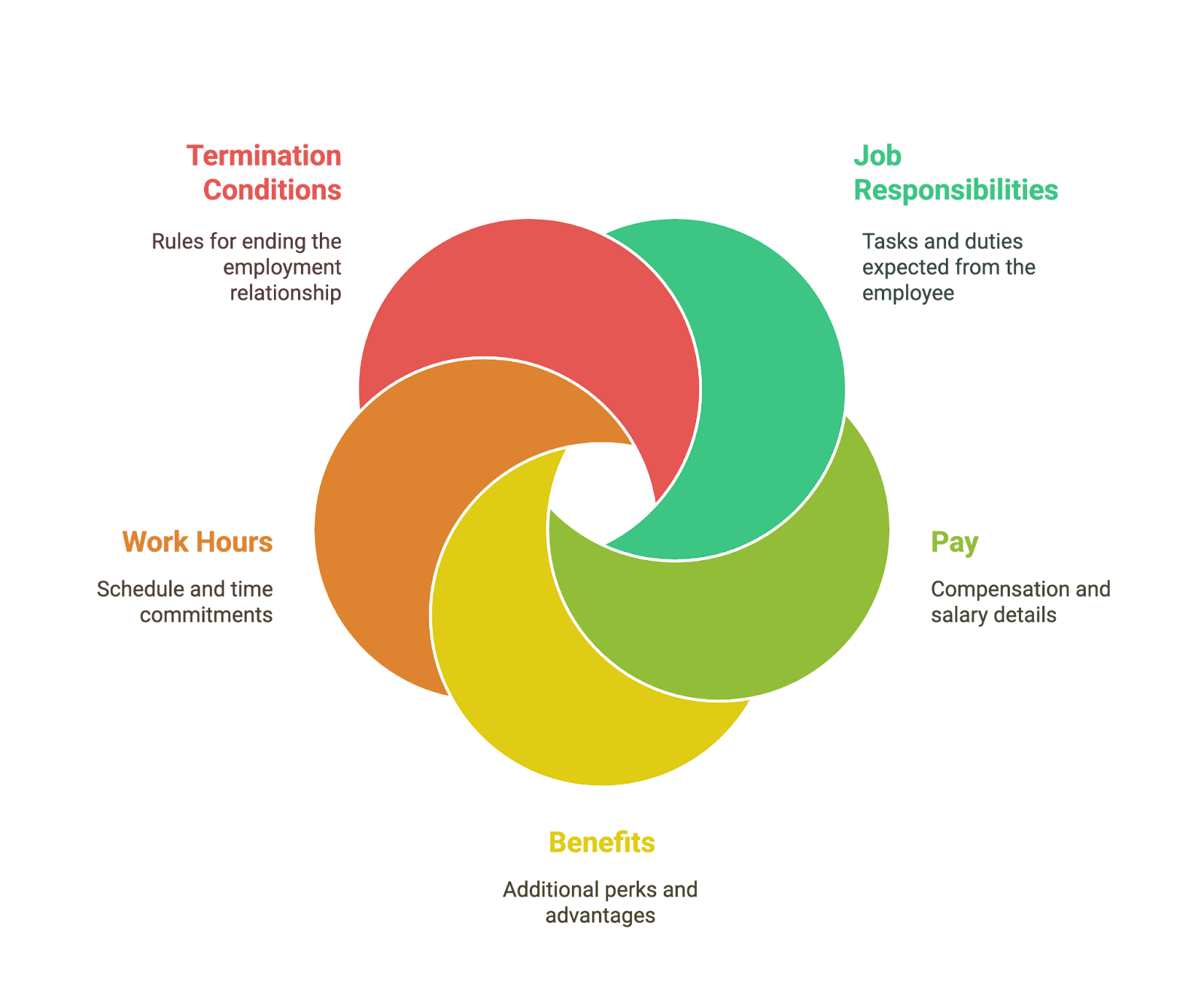
An employment contract is a legally enforceable agreement that sets out the conditions for employment. It determines what an employer expects from an employee and what the employee can expect in return. This includes duties, compensation, benefits, working hours and the conditions for termination of employment. A written contract helps prevent disputes because it ensures that both parties are on the same page from the start.
While some agreements can be made verbally, a written employment contract offers much more clarity and legal protection. It serves as a point of reference in case of disagreement and helps employers and employees solve problems without unnecessary conflicts.
Types of Employment Contracts
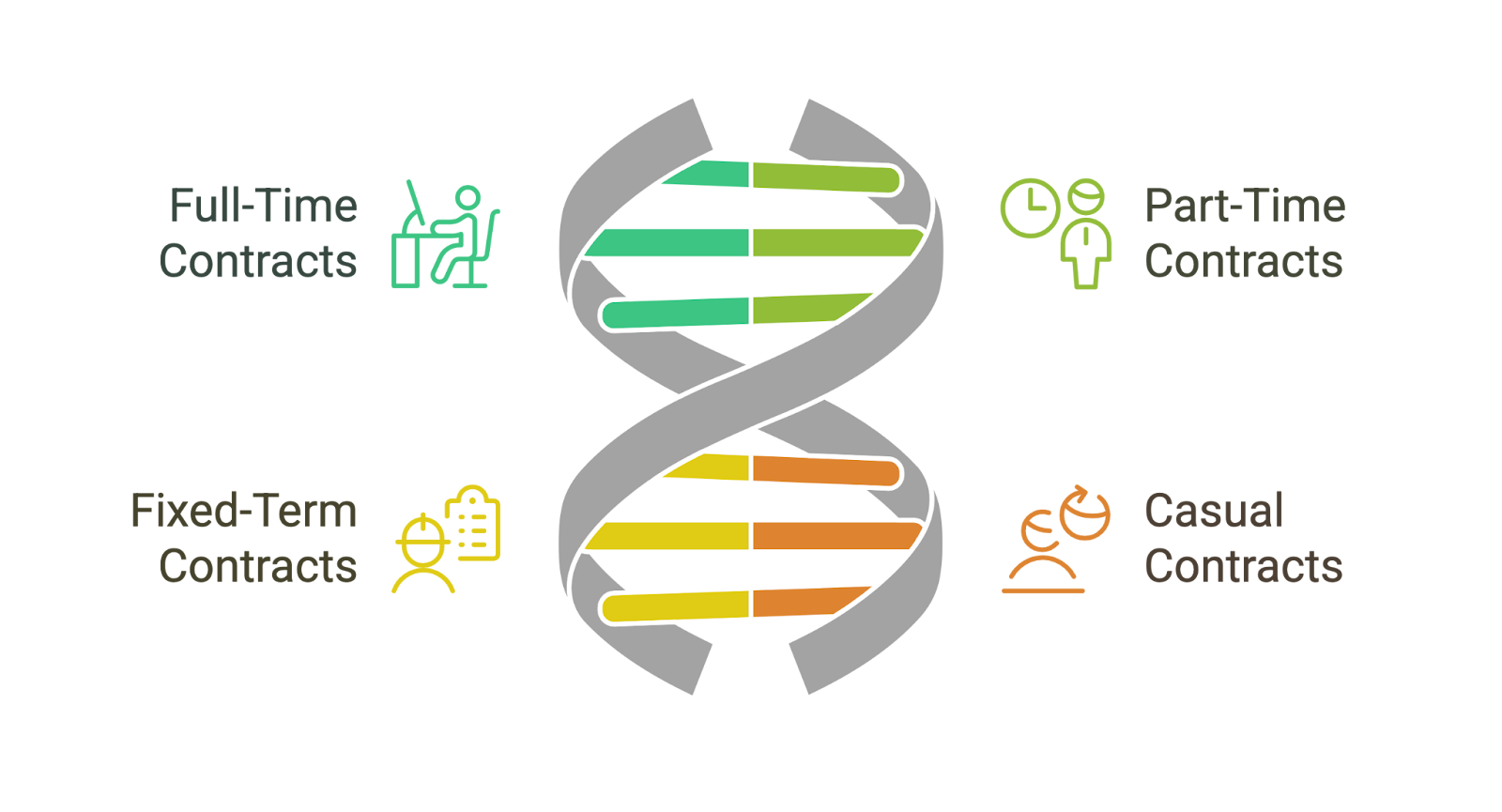
Employment contracts are not a one-size-fits-all solution: depending on duration, hours and flexibility, different forms apply — from the open-ended standard case through fixed-term and part-time contracts to casual and agency work. Each form comes with its own rules and clauses.
For a full comparison of the contract forms with their advantages and drawbacks, see our overview of the types of employment contracts. In this article we focus on the clauses that play a role in nearly every one of these contracts.
Why Are Contract Clauses Important in Employment Contracts?
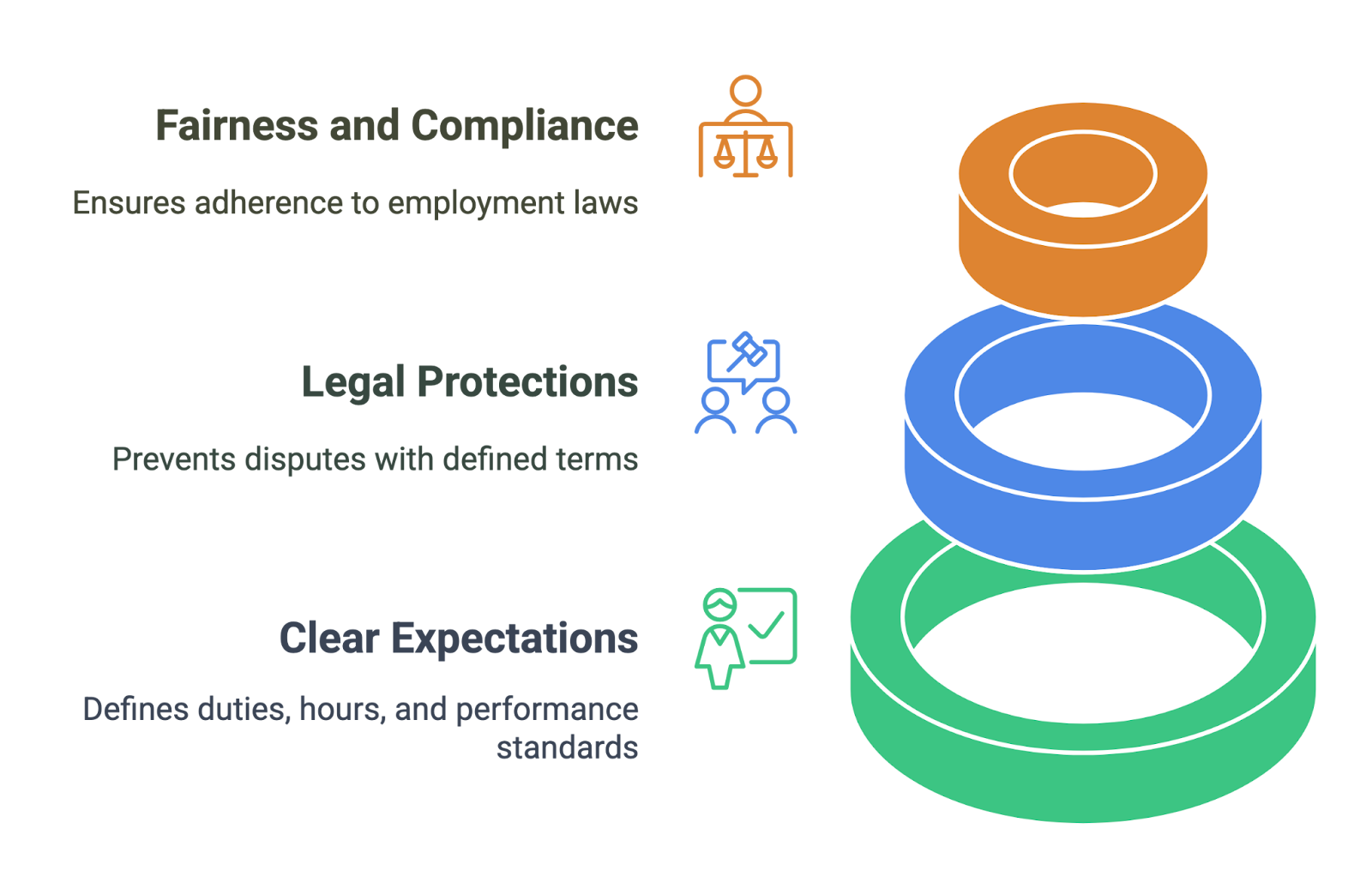
An employment contract is only as strong as the clauses it contains. Without clear and well-structured clauses, both employers and employees can get misunderstandings, disputes or even legal problems. Here's why contract clauses are so important:
- They set clear expectations – Imagine starting a job where you're told to "help with marketing" but get no detail on what that means. Are you responsible for social media? Writing blog posts? Managing ads? A contract with clearly defined tasks removes the guesswork, so both employer and employee know exactly what is expected. The same goes for working hours, pay, benefits and performance standards — setting them out precisely avoids surprises later.
- They protect the employer from legal problems – An unclear contract is fertile ground for a dispute. Without clearly defined terms, an employee could claim they were promised certain benefits, dismissed unfairly, or made to work unpaid overtime. Strong clauses help avoid such disputes by setting out the key details — how termination works, how pay is structured, and what happens when an employee leaves. If proceedings ever arise, a clear contract can be decisive.
- They protect employees from unfair treatment – Conversely, a contract with weak clauses can leave employees exposed. Without specific clauses, an employer could suddenly change an employee's schedule, cut their pay, or dismiss them without proper notice. Strong clauses secure a stable job, fair pay and guaranteed rights such as paid sick leave and overtime compensation. In short, a good contract isn't just a formality — it's a safeguard.
- They keep things fair and lawful – Employment laws exist to protect both companies and workers, but complying with every rule can be hard. A solid contract ensures that pay, benefits, working hours and termination rules meet legal requirements, so no one is caught off guard. It's not only about avoiding fines or legal trouble, but about creating a workplace where everyone knows their rights and is treated fairly.
Key Clauses in an Employment Contract
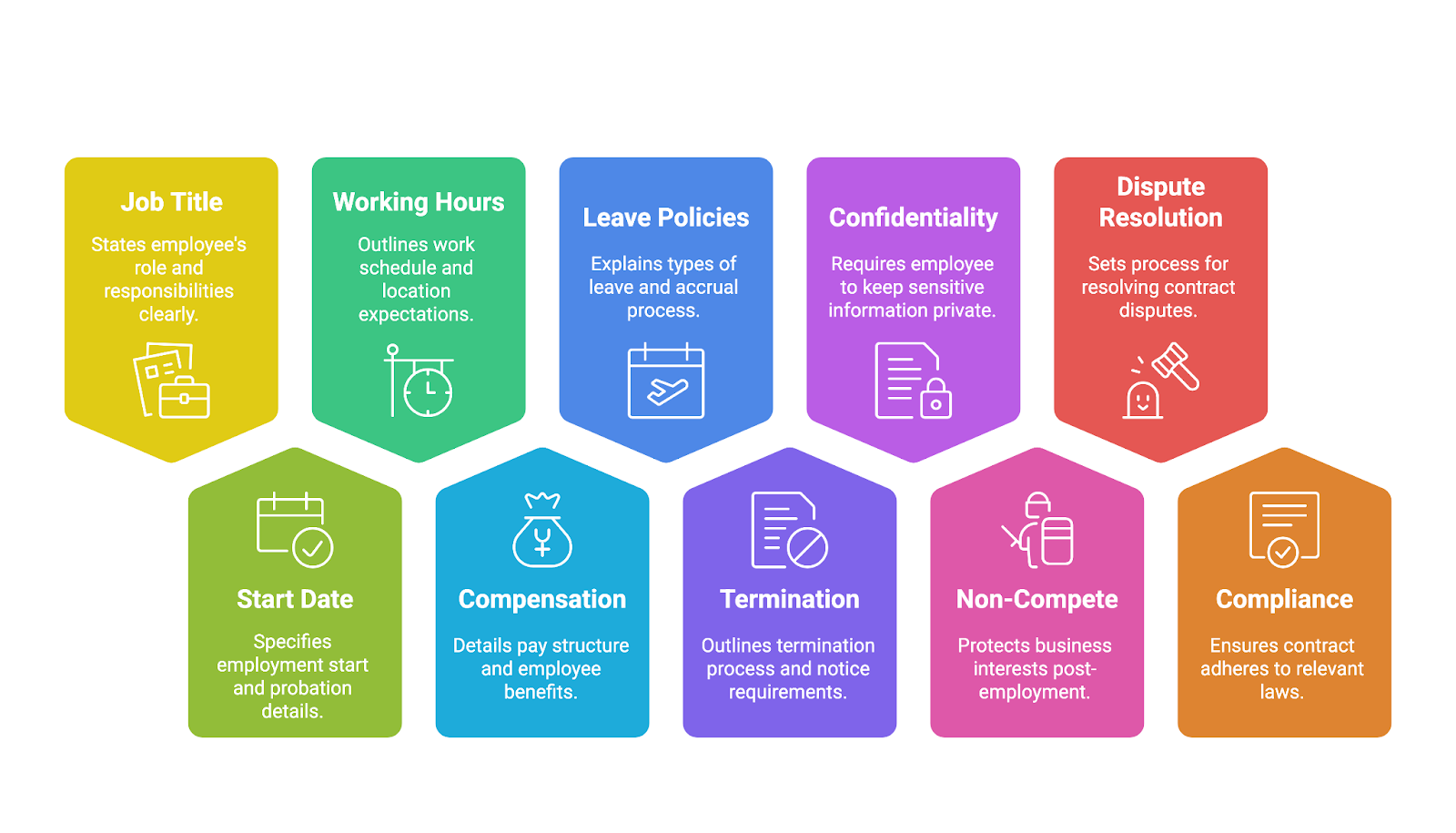
Each clause plays an important role in ensuring that both the employer and the employee are clearly aware of their rights and obligations. Here are the key elements that every contract should include:
-
Job title and description – This clause clearly states the employee's role and the main tasks attached to it. It helps everyone understand what the job actually involves — so there's no guesswork or misunderstanding about the day-to-day work expected.
Example: Position: Marketing Coordinator. The employee is responsible for managing the company's social media channels (Facebook, Instagram, LinkedIn), coordinating with creative teams to run advertising campaigns, evaluating campaign performance via monthly analytics reports, and contributing to new marketing strategies. Specific duties include scheduling posts, engaging with the community, and maintaining the brand's presence across all digital platforms.
-
Start date and probationary period – This section specifies exactly when the employee starts and whether a probationary period applies at the outset. A probationary period gives both sides time to assess fit without an immediate long-term commitment. It should state how long the period lasts and on what terms the relationship can end during it.
Example: The employment relationship begins on 1 July 2025. A six-month probationary period applies, during which performance is assessed against criteria such as reliability, creativity and teamwork. During this period either party may terminate the contract in writing on two weeks' notice.
-
Working hours and place of work – Here the contract sets out when and where the work is performed. It covers regular hours, any overtime or flexible arrangements, and whether the work can be done remotely. This clause is crucial for setting clear boundaries so both sides know the expected hours and location.
Example: Standard working hours are Monday to Friday, 9:00 a.m. to 5:00 p.m. The employee is expected to attend the company's main office unless remote work has been agreed in advance. At peak times, additional hours may be required, which are compensated accordingly or offset by time off.
-
Compensation and benefits – This part sets out the pay structure, including base salary and any bonuses, commissions or other forms of compensation. Additional benefits such as a retirement plan or paid leave are also listed here. A clearly defined compensation clause ensures there are no surprises over pay and benefits, and states exactly what the employee is entitled to.
Example: The employee receives a competitive annual base salary, paid in monthly instalments. In addition, an annual performance bonus of up to 10% of the base salary applies, subject to meeting defined targets. Benefits include a contribution to a retirement plan and a generous annual paid-leave entitlement.
-
Leave entitlements – This clause defines the types of leave available — such as annual leave, paid sick leave and parental leave — and explains how entitlements accrue and are managed. Transparency matters here, so the employee knows exactly how much leave they have and how to request it.
Example: The employee is entitled to a defined number of paid annual leave days. Paid sick leave is provided in line with statutory requirements. In addition, parental leave may be taken under applicable law, with the employee giving the required advance notice.
-
Termination clause – This section sets out how either party can end the relationship. It covers the required notice period, acceptable grounds for termination, and any severance arrangements. By describing the exit process clearly, this clause helps manage expectations and reduce conflict on separation.
Example: Either party may terminate the contract in writing on the applicable statutory notice. In the event of gross misconduct, immediate termination for cause is possible. Any severance follows applicable law and any individual agreement.
-
Confidentiality and non-disclosure – To protect sensitive business information, this clause requires the employee to keep certain information confidential. Trade secrets, customer lists and other protected data may not be disclosed during or after employment. This is important for preserving the company's competitive advantage and integrity.
Example: The employee agrees to keep all protected information — including trade secrets, customer lists and strategic plans — confidential during and after employment. Any unauthorised disclosure or misuse of confidential information may result in legal action and claims for damages.
-
Non-compete and non-solicitation – This clause aims to protect the employer's business interests after the employee leaves. It typically prevents the employee from joining a competitor or soliciting customers for a defined period. Note that in many jurisdictions a post-contractual non-compete is only enforceable if it is reasonable in scope and the employer provides compensation for the restricted period.
Example: For 12 months after termination, the employee agrees not to work for a direct competitor within a defined area, and not to solicit the company's customers or employees, in return for the compensation required by applicable law.
-
Dispute resolution – Even with a clear contract, disputes can arise. This clause sets out how conflicts are to be resolved — often requiring the parties to attempt negotiation or mediation before litigation. This lets disagreements be settled efficiently and keeps lengthy proceedings to a minimum.
Example: In the event of a dispute arising from this contract, the parties agree first to attempt to resolve it through informal negotiation. If no resolution is reached within 30 days, the parties will pursue mediation. Should mediation fail, the dispute will be resolved under the agreed arbitration rules or before the competent courts.
-
Compliance with laws – This final clause ensures that every part of the contract complies with the applicable laws. It ensures all provisions — whether on pay, benefits or termination — are legally enforceable and current with the relevant regulations. This protects the company and ensures employees receive the rights and protections the law affords them.
Example: This agreement complies with all applicable employment laws, including standards on pay and working time, anti-discrimination law, and workplace safety regulations. Any changes to those laws are deemed incorporated into the contract as required, ensuring ongoing compliance.
Common Mistakes to Avoid in Employment Contract Clauses
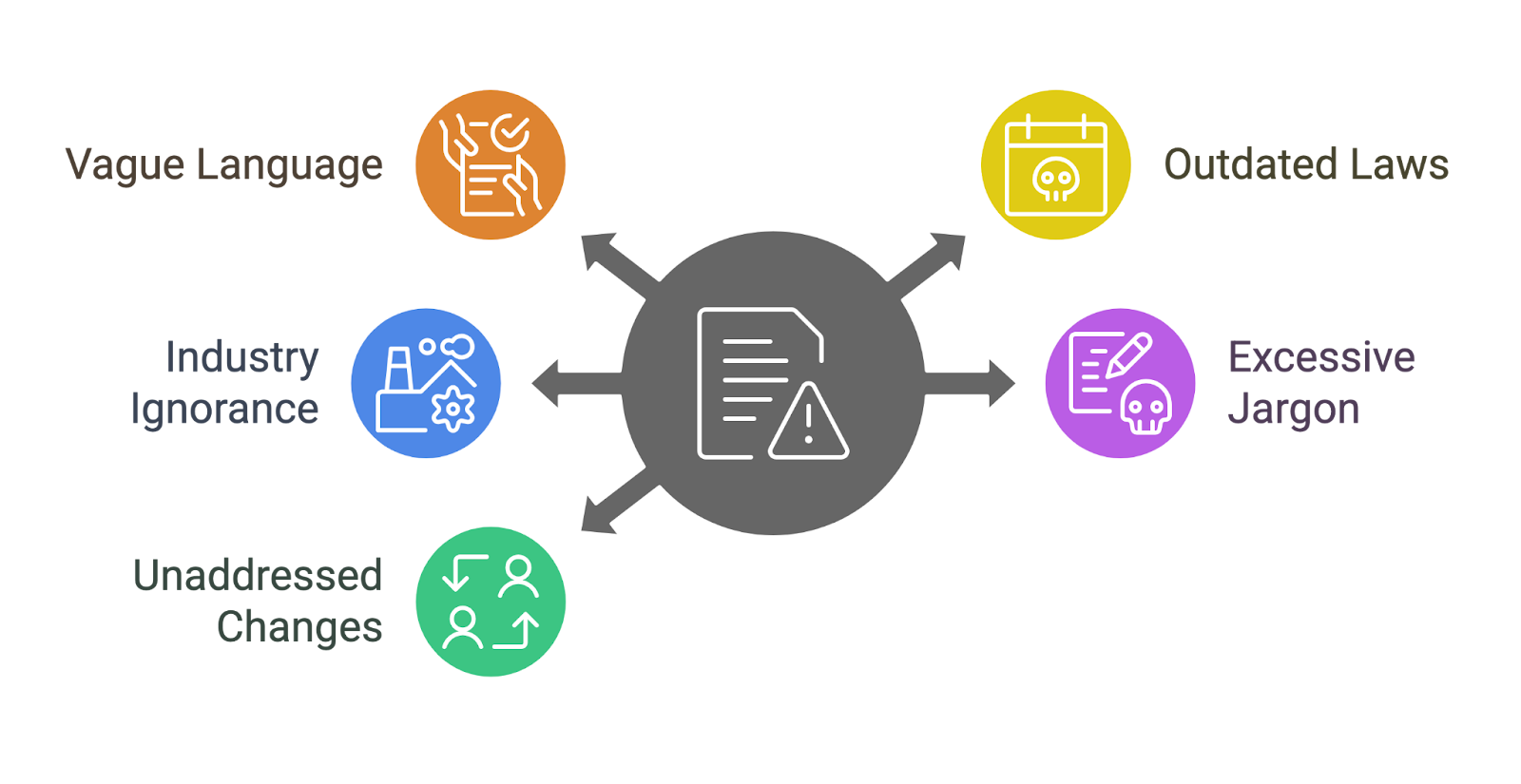
Even the best intentions can lead to problems if an employment contract is not carefully formulated. Here are a few common pitfalls to watch out for:
- Vague or overly broad wording – When clauses aren't specific, they leave too much room for interpretation. Terms like "reasonable notice" or "reasonable compensation" may seem fine at first glance, but without clear definitions they lead to confusion and disagreement over what is actually meant. Precise wording ensures employer and employee share the same understanding from the start.
- Failing to update contracts as employment law changes – Employment laws and regulations change over time, and what was acceptable in an older contract may no longer be compliant. If contracts aren't reviewed regularly, both parties risk legal exposure and penalties. Review and revise the contract text periodically to reflect new legal standards.
- Ignoring industry-specific requirements or standards – Different industries often have their own practices and legal requirements. A healthcare contract may include specific clauses on overtime and liability, while a technology contract focuses on intellectual property rights. Overlooking these specifics produces contracts that miss important aspects of the work — risking disputes and non-compliance with industry norms.
- Overloading with unnecessary jargon – Contracts must be legally sound, but too much technical language makes the document hard to follow. Dense legal terms confuse employees and leave them unclear about their rights and obligations. Aim for clear, straightforward language that still meets legal requirements.
- Not accounting for changes in role or organisation – Organisations evolve, and so do roles. A common mistake is omitting provisions for possible changes to duties or organisational structure. Without clear rules on how changes are handled and communicated, both sides face uncertainty when the role shifts significantly over time.
Real Case of an Employment Contract Gone Wrong
Non-compete clauses are meant to stop employees from handing valuable company knowledge straight to a competitor. But when these clauses are too broad or unreasonable, they can carry serious legal and reputational consequences.
In a widely reported 2018 case in New York, an experienced sales manager at a financial services firm signed an employment contract containing a non-compete clause. The clause barred her from working for a competitor within a 50-mile radius for two years after leaving. Non-competes are intended to protect businesses, but this restriction was excessive: it effectively prevented her from working in her industry across the entire metropolitan area.
When she resigned and took a role at a competing firm, her former employer sued to enforce the clause, arguing she had access to confidential customer lists and strategic sales data. The case went to court, where the judge ruled the non-compete unreasonably restrictive and a severe limit on her ability to find comparable work. The court stressed that while companies may protect trade secrets, they may not impose blanket bans that effectively shut employees out of their profession.
Impact:
- Legal costs – The dispute dragged on for months and cost both sides substantial legal fees.
- Reputational damage – The case drew media attention, and industry observers criticised the company for overly aggressive employment practices. Prospective candidates were deterred, fearing similar restrictions.
- Policy changes – After the ruling, the company had to revise its employment contracts to make non-competes more reasonable and in line with industry norms.
Takeaway: Employers must ensure non-competes are specific, reasonable and enforceable. Overly broad restrictions can backfire — leading to litigation, loss of talent and reputational harm. Courts are increasingly sceptical of excessive non-competes, and it's often wiser to rely on confidentiality agreements than on outright restrictions on working.
Source: Bloomberg, "Non-Compete Clauses Trap Too Many American Workers", 2018
How to Draft and Negotiate Employment Contract Clauses
For Employers: the Basis for a Fair and Lawful Contract
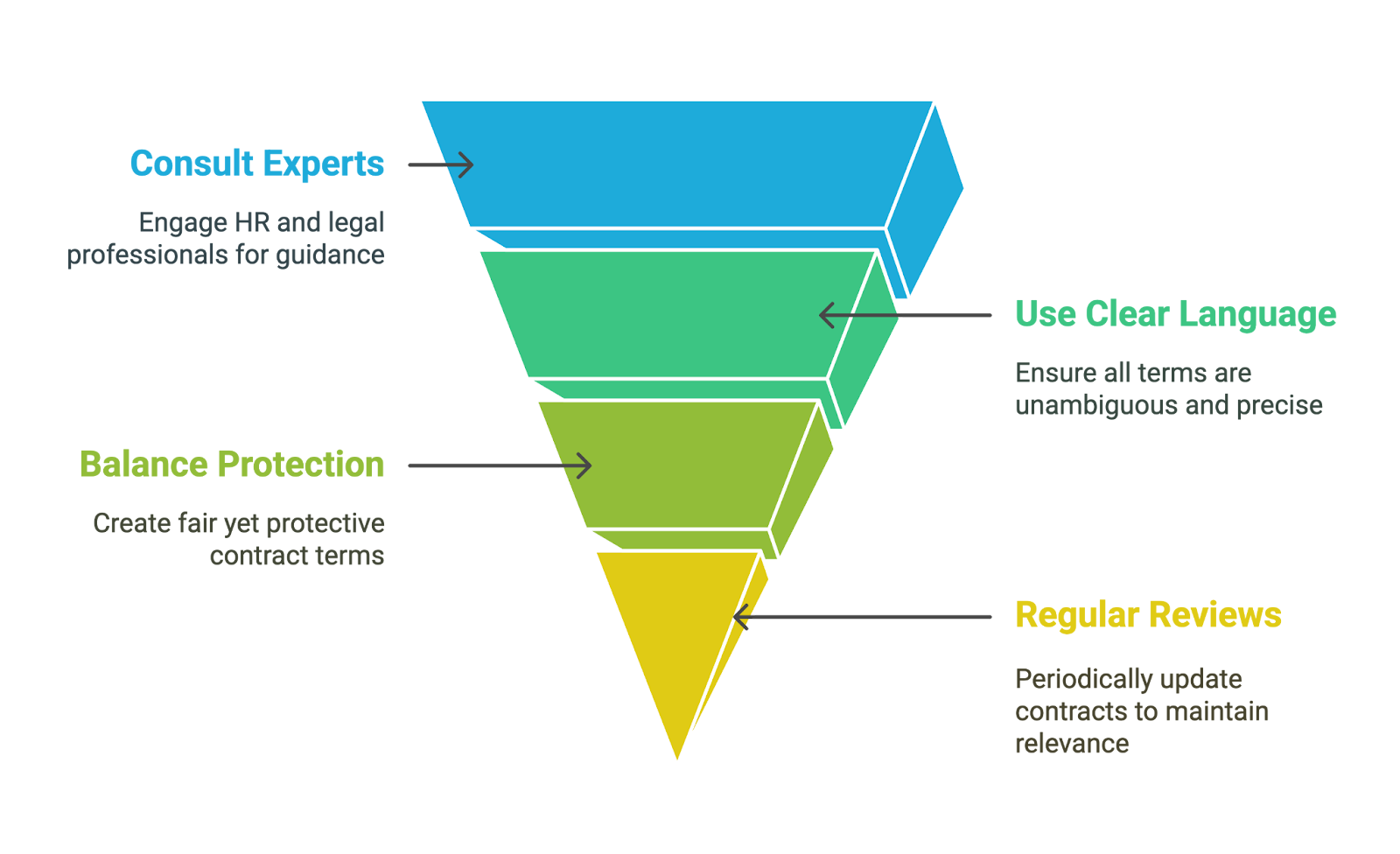
- Work with HR and legal experts – Contracts must comply with the applicable employment law and industry standards. Involving legal and HR experts ensures the terms are enforceable and the company isn't exposed to unnecessary risk.
- Use clear, specific language – As noted, ambiguity quickly leads to disputes. Define duties, compensation, benefits, working hours, termination terms and any restrictions such as non-competes clearly. Avoid vague phrasing that could be misread.
- Balance protection and fairness – Employers may protect the company's interests, but overly restrictive clauses — such as broad non-competes — can be challenged in court. Where restrictions are necessary, they should be reasonable in scope, duration and geographic reach.
- Review and update contracts regularly – Employment law evolves, and so do company policies. Review contracts periodically to keep them aligned with legal changes and business needs. Failing to update them invites compliance problems and disputes.
For Employees: Understanding and Negotiating the Terms
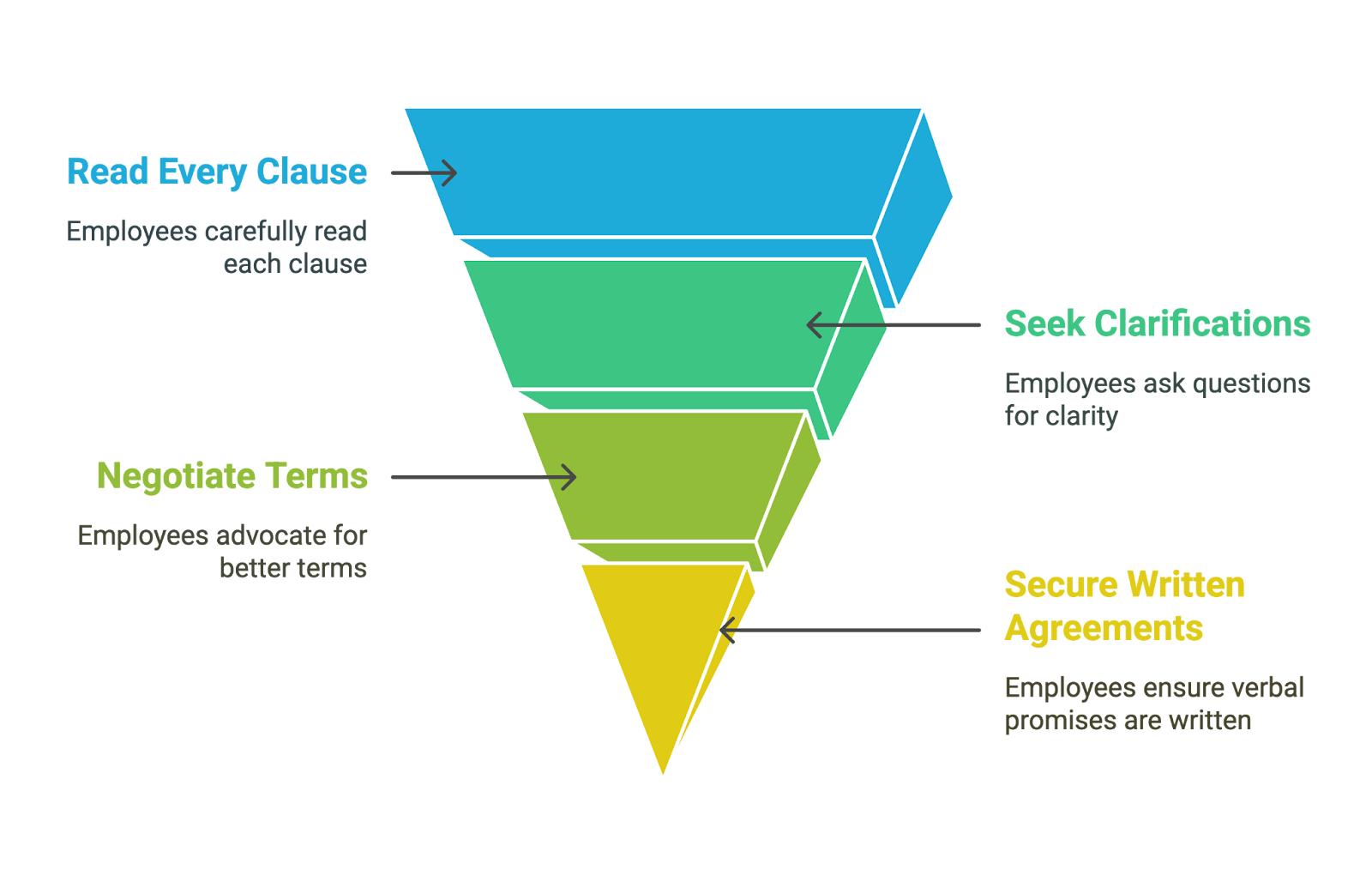
- Read every clause carefully — assume nothing – Never assume contract terms are standard or non-negotiable. Each clause can affect your rights, job security and future career options.
- Ask questions and seek clarification – If a clause is unclear, vague or seems overly restrictive, ask for an explanation. Advice from a lawyer or HR professional helps you avoid signing an unfair agreement.
- Negotiate where you can – Pay, benefits, duties and even restrictive clauses like non-competes can often be adjusted. Push for terms that fit your needs and career goals.
- Get everything in writing – Any verbal promises made during hiring — future pay rises, flexible arrangements, bonuses — should go into the contract. What isn't in writing is hard to enforce.
Examples of Industry-Specific Clauses
Different industries have unique requirements, which means standard employment contract clauses often need adjusting to fit the specifics of the role and sector. The following examples show how industry-specific requirements shape contract clauses:
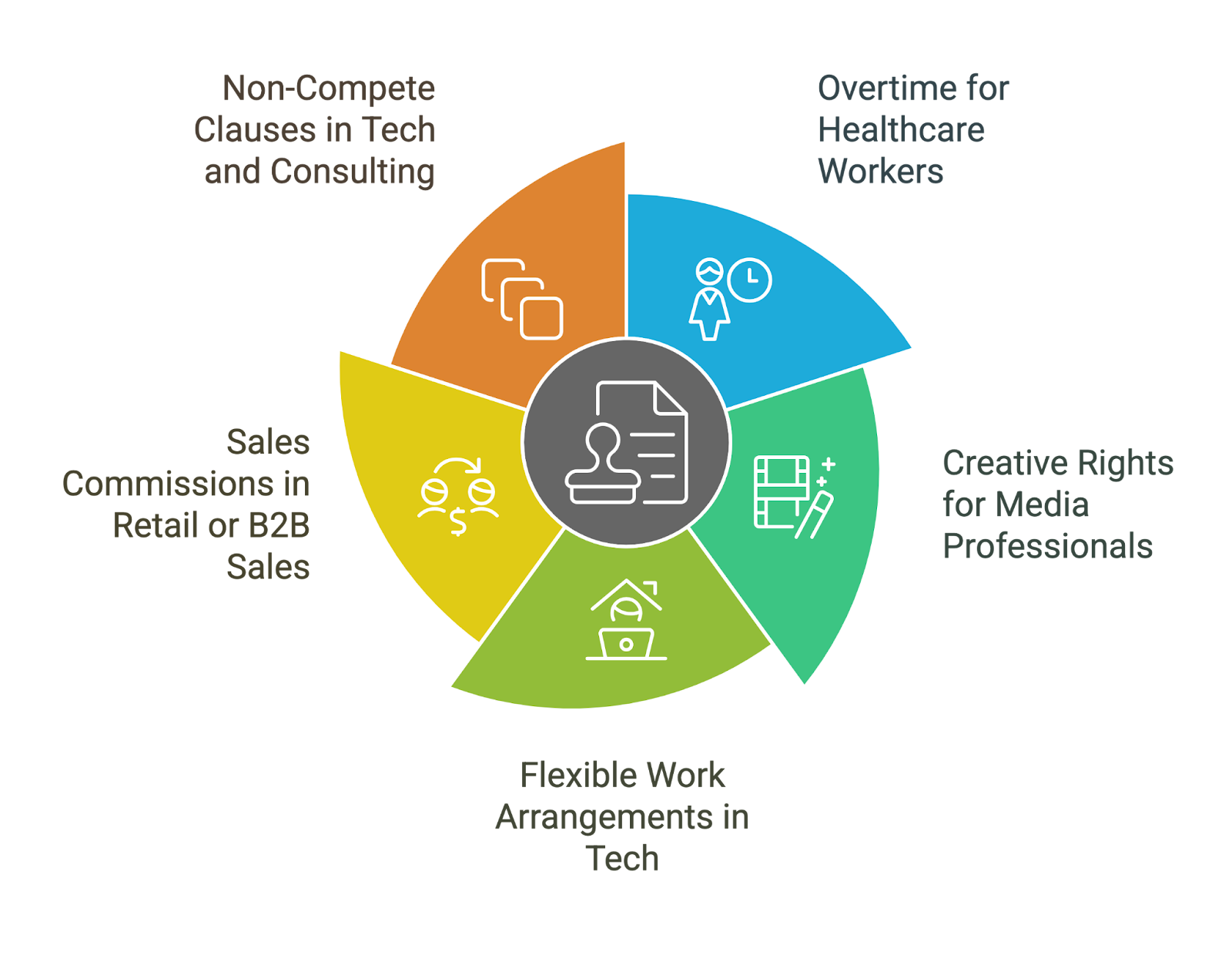
- Overtime for healthcare workers – In sectors such as healthcare, employees often work outside typical office hours, which makes overtime clauses particularly important. These clauses can provide compensation for hours beyond a set threshold — through overtime pay or time off in lieu. A hospital contract might state, for example, that staff working above a certain weekly threshold are entitled to premium pay, with special rules for shift and on-call work.
- Creative rights for media professionals – In media and entertainment, intellectual-property clauses are essential. They clearly define who owns the IP created during employment, including rights to scripts, designs and music. A production company might specify that all original content an employee creates during employment belongs to the company, unless otherwise agreed.
- Flexible arrangements in tech – With the rise of remote work, especially in tech, contracts often include clauses on remote-work expectations, equipment provision and flexible hours. A software company might let employees work from home and supply the necessary equipment, while still requiring a minimum level of availability during core hours (say, 10 a.m. to 3 p.m.).
- Sales commissions in retail and B2B sales – For sales-oriented roles, a clear compensation structure is crucial. A retail or B2B sales contract often includes clauses setting out commission rates, bonus structures and the conditions for earning them. A car-dealership salesperson might receive a 5% commission per vehicle sold — but only after the customer signs and pays.
- Non-competes in tech and consulting – In technology and consulting, non-compete clauses commonly bar employees from joining a direct competitor for a set period after leaving. A tech consultant might be restricted from working for a competing firm for up to a year after their employment ends. To be enforceable, such clauses must be reasonable in scope and duration.
How Industry Standards Shape Standard Clauses
Industry norms significantly influence the clauses contracts contain. Companies in sectors like technology and finance tend to include restrictive clauses such as non-compete and non-solicitation, because the work is sensitive and the market is competitive. In sectors like hospitality, by contrast, the focus is often on compensation and scheduling flexibility, reflecting the seasonal nature of the work.
As these examples show, Contract Clauses should not be generalized. Instead, they should be tailored to the specific needs of the company and the sector in which it operates. It is crucial that these clauses are not only legally compliant, but also fair and reflect the special conditions faced by employees in their functions.
Ready for the next step?
Book a demo with our team and see top.legal in action