
Who can sign an NDA, what to check before you do, how to spot red flags and how to sign one digitally. A practical checklist for signing a non-disclosure agreement with confidence.
A non-disclosure agreement commits you not to disclose certain confidential information, often for several years and with real consequences if you breach it. So before you sign, you should know exactly what you are agreeing to, who is actually allowed to sign, and where the agreement binds you more than you expect.
For a foundational explanation of what the abbreviation means and how a confidentiality agreement works, see the guide What is an NDA?. This article is the practical checklist for the moment before you sign: review, assess, then sign.
Who can sign an NDA?
An NDA must be signed by someone with authority to bind the party they sign for. For a company, that means an authorised officer or a person acting under a valid delegation of authority.
Whoever signs on behalf of a company must have the authority to do so, otherwise the agreement's binding effect can be challenged. Authority typically rests with:
- company officers or directors by virtue of their role,
- employees acting under an express authorisation or power of attorney for the specific contract or contract type,
- an authorised signatory named in the company's signing policy.
An employee without signing authority should not execute an NDA in the company's name; when in doubt, obtain written authorisation or have the authorised signatory sign. As an individual, you sign for yourself. Make sure both parties sign, too, a version signed by only one side often does not take full effect.
What to check before you sign
Six points decide whether an NDA is fair and workable: the definition of confidential information, whether the obligations are symmetric, the duration, the remedies, the use-and-return rules, and any hidden extra obligations.
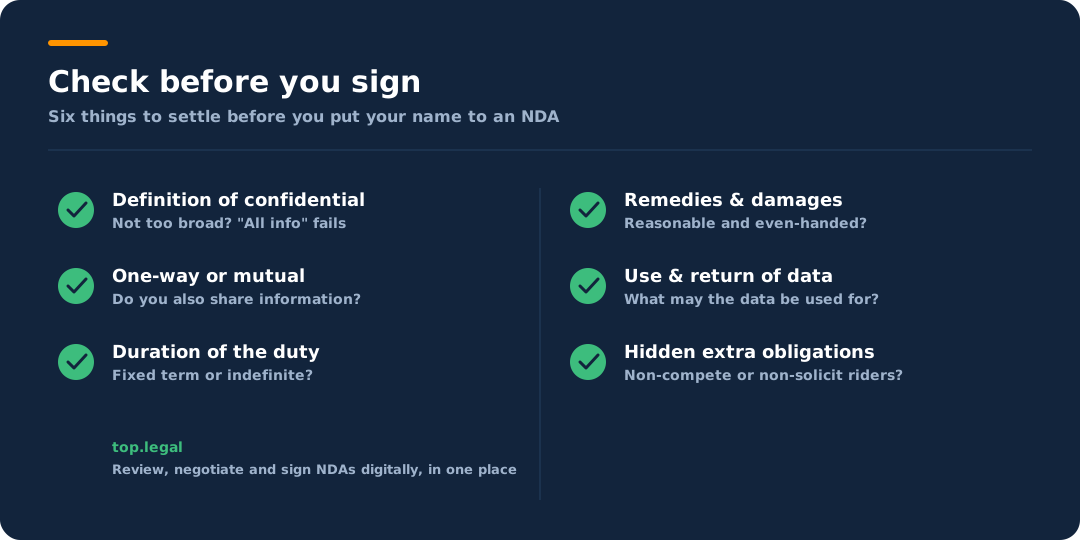
1. Definition of confidential information. Check exactly what counts as confidential. A definition that sweeps in "all information" is not only impractical but often unenforceable, because a court will not accept that genuinely everything is secret. A specific, positive list is better.
2. One-way or mutual. Does information really flow in only one direction? If you also contribute sensitive information, insist on a mutual (bilateral) NDA, otherwise you carry every obligation while the other side is free to use what it learns from you.
3. Duration of the obligation. Three to five years after the end of the relationship is common. An indefinite term is only justified for genuine trade secrets. If no duration is stated at all, ask why.
4. Remedies and damages. Look at whether the remedy is reasonable and applies to both sides. Injunctive relief should be available so a leak can be stopped fast; a fixed liquidated-damages figure is enforceable only if it is a genuine pre-estimate of likely loss, not a penalty.
5. Use and return of data. What may the information be used for, and what happens at the end of the relationship? A good NDA covers return or destruction of materials, with written confirmation.
6. Hidden extra obligations. Some NDAs smuggle in non-compete or non-solicitation clauses. These go well beyond confidentiality and you should be aware of them before you sign.
For the full set of seven essential clauses an enforceable NDA needs, see the guide to the clauses a sound NDA must contain.
Red flags: how to spot a problematic NDA
Most problematic NDAs share four patterns: a one-sided allocation of duties, a boundless definition of confidential information, an indefinite term with no reason, and hidden restrictive covenants.
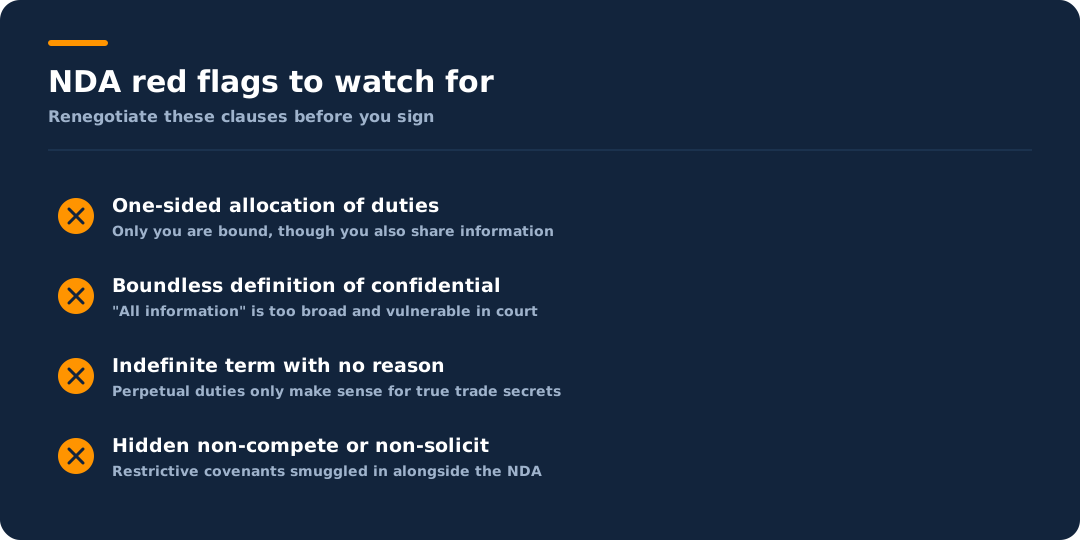
A single red flag is not a reason to refuse to sign, but it is a reason to renegotiate. Come back with concrete counter-proposals: a mutual rather than one-way obligation, a positive list rather than "all information", a fixed term rather than an open-ended one, and a remedy proportionate to the real risk. Reasonable counterparties respond constructively to sensible edits.
How to sign an NDA digitally
In most jurisdictions an NDA has no mandatory form requirement, so it can be signed electronically. An electronic signature is generally enough, and it improves the audit trail by recording who signed and when.
Most NDAs do not require a handwritten signature, so you can sign one electronically. That speeds up execution and improves provability, because the time and identity of each signer are recorded. For standard NDAs a standard or advanced electronic signature is usually sufficient; for especially sensitive agreements, a qualified electronic signature (QES) can be worthwhile.
On a platform like top.legal, both parties review, negotiate and sign the same version digitally, with no printing, scanning or email attachments. That removes a common source of error and ensures everyone signs the final version rather than an outdated draft.
What happens after you sign
Once signed, the confidentiality obligation begins to run. If a party breaches it, the injured side can, depending on the agreement, seek injunctive relief to stop further disclosure, claim damages, and recover any agreed liquidated damages. Keep the signed version stored securely and track who has access to what.
Enforcing confidentiality obligations is part of clean contract management; for the wider picture, see What is an NDA? and the guide to the clauses a sound NDA needs.
Frequently Asked Questions
Who is allowed to sign an NDA for a company?
Only someone with authority to bind the company: an officer or director by virtue of their role, or an employee acting under an express authorisation or power of attorney. Someone without signing authority should not execute an NDA in the company's name.
What does it mean to sign an NDA?
By signing, you commit yourself to keep the defined confidential information secret and to use it only for the agreed purposes. A breach can trigger injunctive relief, damages and any agreed liquidated damages.
Can you sign an NDA electronically?
Yes. Because most NDAs have no mandatory form requirement, they can be signed electronically. A standard or advanced electronic signature is usually enough; for highly sensitive agreements a qualified electronic signature is preferable.
Should I sign a one-way NDA if I also share information?
Only with care. If you also contribute confidential information, insist on a mutual NDA, otherwise only you are bound while the other side can use your information more freely.
What happens if I breach an NDA I signed?
Depending on the agreement, you may face injunctive relief, damages and any agreed liquidated damages. If further disclosure is threatened, the other side can also obtain a court order to stop the breach immediately.
Ready for the next step?
Book a demo with our team and see top.legal in action