
Ensure contract compliance: best practices and a 9-point checklist — from a standardized contract playbook to an automated approval workflow.
The reputation of companies is likely to suffer if they do not comply with compliance standards. Contract compliance promotes trust, which ultimately leads to more favourable conditions.
Contracts are fundamental and can bring huge benefits to companies. You define your company's relationships with suppliers, customers, and other business partners. Drafting, negotiating and revising contracts often takes a lot of time and effort. All of this is done to ensure that the contract adequately reflects the relationship desired by the parties.
On the other hand, contracts can be a source of risks, inefficiencies, and delays if not managed carefully. Compliance with contracts must be considered at every stage of the contract process to get the most benefit from contracts.
What is Contract Compliance?
Contract compliance is an important process that all companies must follow to avoid risks such as breaches of confidentiality agreements or licensing agreements. Since a contract is a legally binding agreement between two or more parties, the contract performance process ensures that the terms set out in the contract are met by both parties.
Compliance with contracts includes all principles and guidelines that must reconcile the company's contracts — and contract processes — with predefined principles and guidelines. All of this is to maximize the value of every contract while minimizing risks.
Why is Contract Compliance Important?
Contracts are the backbone of a company. They give both parties a sense of stability and security. Contracts should be clear, concise, and easy to understand so that there is no confusion between the two parties involved. This is where contract compliance comes into play.
According to Aberdeen Research, the best companies achieve up to 80% more savings than others through a clearly defined process for contract compliance.
Regulatory compliance is essential to any contract strategy. To understand why this is the case, consider the following consequences of non-compliance:
Reputational damage. Your reputation could suffer if you don't comply with essential standards. It can damage the trust you've earned so hard and destroy the business relationships you've built.
Financial setbacks. Fines and penalties may be imposed for failure to comply with laws or breach of contractual agreements.
Wasted time. The contract compliance process takes a lot of time. You may need to spend more time correcting errors or dealing with legal difficulties if you fail to comply with contractual or legal obligations.
Best Practices for Contract Compliance
We recommend that you use these best practices for contract compliance to simplify the compliance process and achieve your goals.
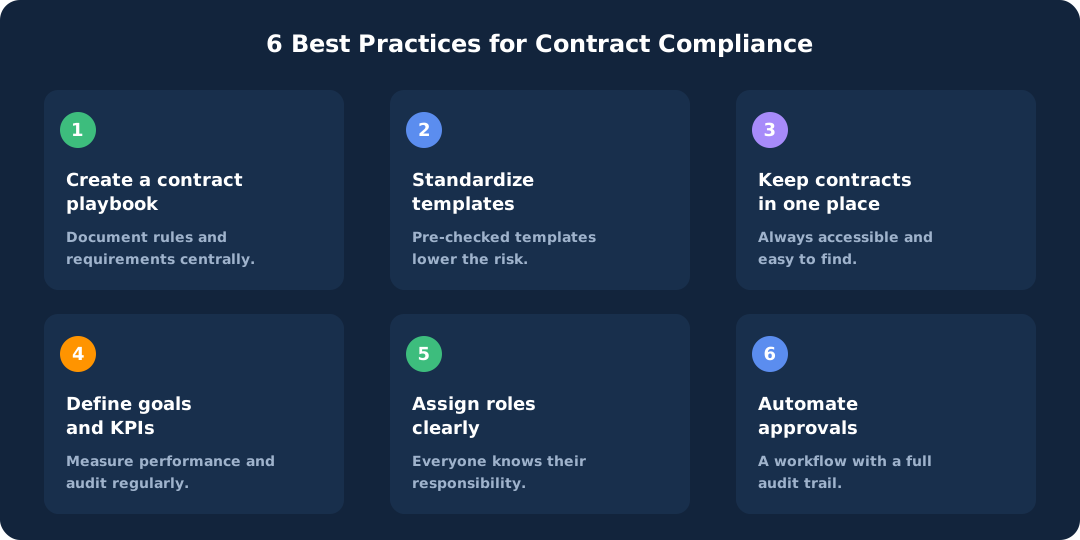
1. Create a contract manual
Contracts may require the help of an attorney if you're not from the legal department. Especially when you're dealing with them for the first time. That is why it helps to have a contract playbook that shows you how to comply with the regulations. Create one that captures all the relevant details, including applicable laws and regulations and the approvals required.
2. Standardize your contract templates
You can reduce regulatory non-compliance by using templates that meet a specific standard. However, that is not the only advantage. In addition, pre-checked templates help your legal team by sparing them from analyzing every document from scratch, speeding up the process and saving time. This allows your company team to work freely on documents with low risk.
3. Keep all your contracts in one place
It helps to keep all of your contracts in one place. That way, they are always accessible and easy to find. This allows you to reuse previous contracts as a basis for new contracts and at the same time have more control over your documents. You'll also see how similar contracts were handled and whether there were any issues, so you can develop a better compliance strategy.
4. Define goals and KPIs
Set KPIs to evaluate your team's performance and define your goals. Conduct regular audits to determine whether standards are being met, whether KPIs are still achievable, and whether certain aspects need to be adjusted.
5. Clarify roles and responsibilities
Make sure that every employee in your company knows what they are responsible for when it comes to complying with your company's contracts. This means that everyone's tasks and duties must be clearly defined. All too often, things fall through the cracks simply because employees are not aware of their responsibilities.
6. Establish a coherent contract approval workflow
Using software to automate your contract approval workflows gives you an easy-to-use dashboard. It shows the status of all active contracts, streamlining your contract management process. This results in a more efficient process for viewing and managing contracts, with every step traceable via an audit trail.
You should also try to automate your workflow wherever possible and most effective.
Checklist: 9 Basic Points to Ensure Contract Compliance
1. Scope of contract
- Have all aspects of the scope of the contract been clearly defined and agreed upon?
- Are all services and schedules to be provided clearly outlined in the contract?
2. Payment terms
- Is the total amount due stated in the contract?
- Is the schedule for payments and any penalties or interest for late payments clearly stated in the contract?
3. Quality requirements
- Are the quality standards and acceptance criteria for the goods or services to be delivered clearly defined?
- Are the quality control measures to be taken clearly outlined in the contract?
- Does the contract provide for warranties or guarantees?
4. Performance metrics
- Are performance indicators such as deadlines and performance indicators included in the contract?
- Has the process for monitoring and reporting performance been set out in the contract?
5. Delivery items
- Are all services and their expected completion dates clearly defined in the contract?
- Is there a process for reviewing and approving benefits?
6. Confidentiality
- Does the contract contain a confidentiality clause?
- Is the handling of confidential information clear in the contract, including who has access to this information and how it is protected?
7. Cancellation and renewal
- Are the conditions for contract termination and extension clearly defined in the contract?
- Is there a procedure for terminating or extending the contract?
8. Conflict resolution
- Does the contract provide for a procedure for resolving disputes, such as conciliation, arbitration, or court proceedings?
- Were any associated costs or charges clearly defined in the contract?
9. Legal obligations
- Are all regulatory compliance requirements, such as environmental, safety or labor regulations, clearly outlined in the contract?
- Are documentation or reporting requirements included in the contract?
Ready for the next step?
Book a demo with our team and see top.legal in action