
What is Legal Ops? A modern approach to running legal teams efficiently. Learn how legal operations cuts costs, improves compliance, and where to start.
Is your legal team overwhelmed with manual tasks, slow approvals, and rising compliance demands? Without the right processes and technology, legal work becomes a bottleneck instead of a driver of business.
Legal teams are under more pressure than ever — tight budgets, heavier workloads, and growing demands from the wider business. Yet many still rely on outdated ways of working: long email chains, manual compliance checks, and documents scattered across drives.
The result is that lawyers spend more time on administrative work than on the legal work that actually matters.
This is where legal operations (Legal Ops) comes in. By improving workflows, adopting the right technology, and making legal teams more strategic, Legal Ops helps organisations work smarter, not harder.
In this guide, you'll learn everything you need to know about Legal Ops — what it is, how it works, why it matters, and how to roll it out in your organisation to save time, cut costs, and increase efficiency.
What is Legal Ops? Definition and core functions
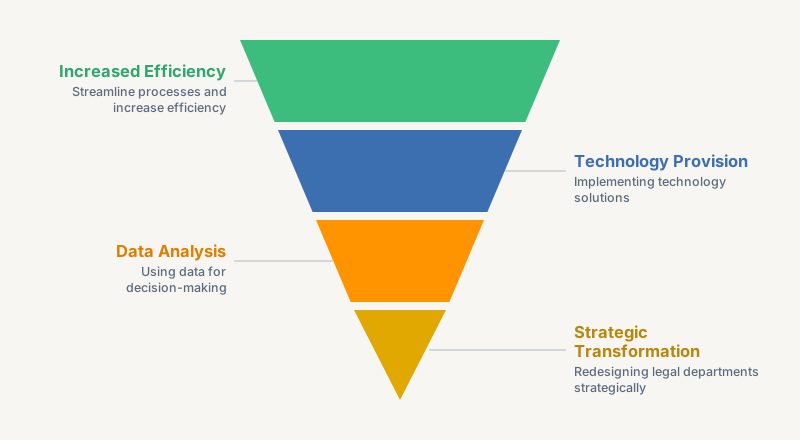
Legal operations (Legal Ops) is the function that transforms legal departments from reactive cost centres into strategic business partners. It focuses on efficiency, technology, and data-driven decision-making so legal teams can work smarter.
Rather than simply handling legal matters, Legal Ops professionals optimise how legal teams work — from contract management and regulatory compliance to vendor management and budgeting.
The evolution of Legal Ops
Legal Ops was not always a distinct function. For decades, legal teams focused primarily on legal advice, dispute resolution, and compliance. The operational side of legal work — budgeting, vendor management, process improvement, and technology adoption — was usually treated as an afterthought.
As companies grew and legal complexity increased, that traditional approach became unsustainable. Organisations found themselves facing:
- Rising legal costs with little visibility into where the money went
- Growing regulatory requirements that demanded stricter compliance controls
- Gaps in contract management that caused delays and risk in deals
- A widening disconnect between legal teams and business goals
Legal departments could no longer operate as isolated support units. They needed to become more strategic, data-driven, and technology-led — and Legal Ops is how they got there.
Why Legal Ops matters: the key benefits for business
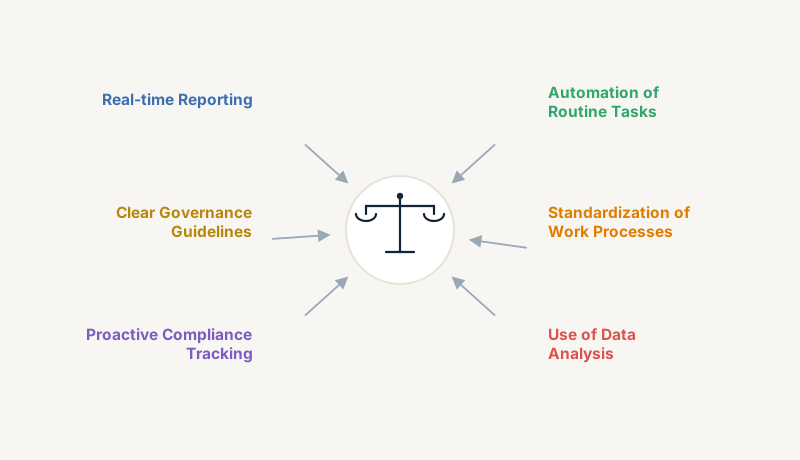
1. Greater efficiency and lower costs
Many legal teams spend more time on administrative work than on genuine legal matters. Reviewing contracts, chasing approvals, and manually tracking compliance all create delays and drive up costs. Legal Ops tackles this by:
- Automating routine tasks such as contract approvals, invoice processing, and compliance monitoring
- Standardising workflows to reduce bottlenecks, errors, and inconsistencies
- Using data analytics to optimise legal spend and improve resource allocation
By streamlining processes, legal teams can focus on high-value work — strategic negotiations and risk reduction — instead of getting bogged down in admin. The result: faster processes, lower costs, and a more effective legal function.
2. Stronger compliance and risk management
The regulatory landscape is constantly shifting, and companies can't afford compliance missteps. A reactive approach — scrambling to meet deadlines or fix mistakes after the fact — can lead to expensive fines and reputational damage. Legal Ops makes compliance proactive by:
- Implementing automated compliance tracking so regulatory requirements are met in real time
- Introducing clear governance policies that reduce legal risk and standardise best practices
- Making legal risk transparent through centralised data and real-time reporting
By building compliance into daily operations, Legal Ops reduces regulatory risk, improves oversight, and keeps the organisation ready for audits and legal reviews.
3. Optimised contract lifecycle management (CLM)
Contracts sit at the heart of every business deal, defining relationships, obligations, and financial commitments. Without the right processes, contract management becomes a major bottleneck: approvals drag on, terms are inconsistent, and key deadlines slip. These inefficiencies slow deals down and expose companies to legal and financial risk. Legal Ops improves CLM by:
- Automating contract workflows to speed up approvals and execution
- Standardising templates and clauses to cut negotiation time and ensure consistency
- Tracking contract performance in real time to manage risks, obligations, and renewals proactively
With a structured CLM approach, companies close deals faster, reduce legal risk, and build stronger, more reliable partnerships — all while keeping full control of their agreements.
The main responsibilities of a Legal Ops team
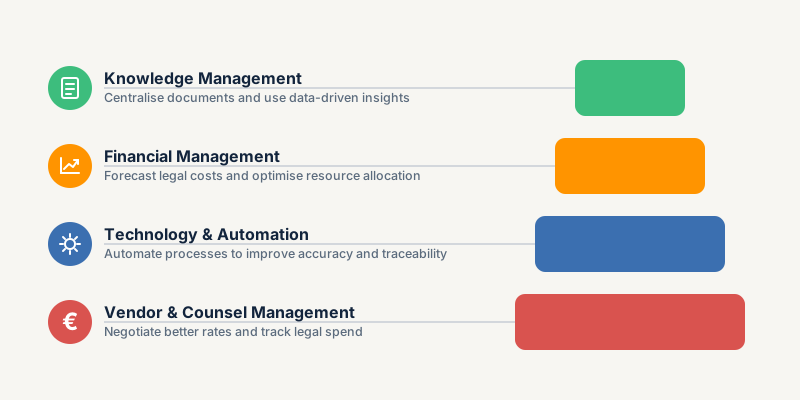
Behind every high-performing legal department is a strong Legal Ops team. Here are its most important responsibilities.
Managing vendors and outside counsel
Bringing in external legal support is often necessary, but without oversight costs can escalate quickly. Legal Ops helps teams get the most out of outside counsel by:
- Negotiating better rates — working with law firms and external providers to secure competitive pricing and high-quality legal services without overspending.
- Tracking legal spend — analysing billing data and spending patterns to spot inefficiencies, prevent budget overruns, and allocate resources more effectively.
- Building preferred-provider programmes — a network of trusted law firms and service providers delivers consistent quality, smoother collaboration, and better cost control over time.
With structured vendor management, companies get high-quality legal support without unnecessary cost.
Technology and automation in the legal department
Legal Ops uses technology to make legal work faster, more accurate, and easier to trace. Some of the most useful tools include:
- Contract lifecycle management (CLM) software — automates the creation, negotiation, approval, and renewal of contracts for a smooth, standardised process, and tracks deadlines, obligations, and compliance in real time to avoid costly delays.
- eDiscovery tools — use advanced search and filtering to quickly surface relevant documents for litigation and audits, cutting manual review time and reducing the risk of missing key information.
- AI-driven contract review — scans contracts for risks, discrepancies, and missing clauses so legal teams can catch issues early, and benchmarks agreements against templates and legal standards to strengthen negotiations and reduce liability.
By integrating these solutions, legal teams streamline their work, improve accuracy, and focus on strategic tasks rather than repetitive admin.
Financial management and budgeting
Managing legal costs is essential to keeping a company financially healthy, and the Legal Ops function plays a key role in putting budgets to good use:
- Forecasting legal costs — predicting future spend helps avoid overruns and ensures the legal team has the resources it needs without breaching budget limits.
- Optimising outside-counsel costs — analysing billing trends and performance data ensures companies get the best value from external law firms and legal service providers.
- Using analytics to find inefficiencies — data-driven insight uncovers where costs can be cut or processes improved, leading to smarter financial decisions.
A well-managed budget lets legal teams work efficiently, justify their spend, and contribute more strategically to business goals.
Knowledge management and data-driven decision-making
Legal teams process huge volumes of information, and without the right structure, valuable insight gets lost. Legal Ops keeps knowledge organised and accessible by:
- Centralising legal documents and playbooks — storing policies, templates, and best practices in one place so legal teams can find and apply them consistently.
- Tracking contract and compliance trends — spotting potential risks, monitoring obligations, and adapting to regulatory change before it becomes a problem.
- Using AI and analytics — analysing historical data to identify patterns, sharpen forecasts, and surface insights that lead to smarter legal and business decisions.
With the right data at hand, legal teams make informed decisions, mitigate risk, and align legal strategy with corporate goals.
How to build an effective Legal Ops function
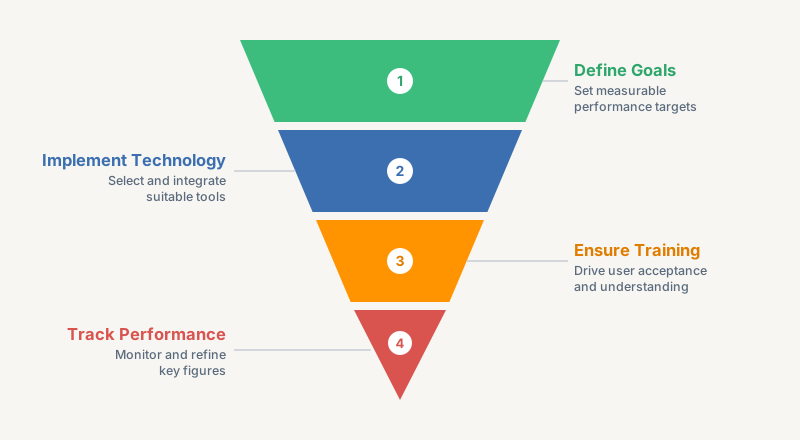
Legal Ops is more than support — it empowers legal teams to work smarter, cut costs, and manage risk effectively by bringing together the right people, processes, and technology.
Key roles in a Legal Ops team
Legal Ops requires a mix of legal knowledge, financial acumen, and technical understanding to optimise workflows and manage resources effectively. The key roles include:
- Legal Operations Manager — oversees strategy, identifies inefficiencies, and drives process improvements to lift legal team performance.
- Financial Analyst — manages the legal budget, tracks spend, and ensures cost-effective use of outside counsel and resources.
- Legal Technologist — evaluates, implements, and optimises legal technology such as contract management software, workflow automation, and AI tools.
- Compliance Specialist — ensures the organisation meets legal requirements, manages risk, and keeps policies up to date.
Each role is critical to turning Legal Ops from a reactive support function into a proactive, data-driven team that creates strategic value.
Best practices for implementing Legal Ops
Building an effective Legal Ops function takes a structured approach. Here's how to get started:
- Assess existing legal workflows — identify bottlenecks, repetitive tasks, and areas where automation can reduce workload.
- Define clear goals — set measurable targets, such as improving contract turnaround time, reducing legal spend, or strengthening compliance monitoring.
- Implement the right technology — choose tools that automate tasks, centralise legal data, and integrate with existing business systems.
- Drive adoption and training — even the best tools fail if teams don't use them; ongoing training and clear communication are essential.
- Track and continuously optimise — use metrics such as legal spend, contract cycle times, and compliance rates to refine processes and improve efficiency.
Choosing the right Legal Ops technology
Technology is a decisive factor for Legal Ops, but not all solutions are equal. When choosing legal tech, look for:
- Scalability — can the solution grow with your business and handle increasing legal demands?
- Integration — can it connect with existing tools such as SharePoint, Salesforce, or your contract management system?
- Automation — does it reduce manual work through AI-driven contract review, workflow automation, and document management?
- Security and compliance — does it meet industry standards such as GDPR and SOC 2 to protect sensitive legal data?
Frequently asked questions
What is legal operations (Legal Ops)?
Legal operations is the function that runs the business side of a legal department — process, technology, budgeting, vendor management, and data. It frees lawyers to focus on legal work by making the surrounding operations efficient, measurable, and aligned with company goals.
What does a Legal Ops team do?
A Legal Ops team manages vendors and outside counsel, implements legal technology and automation, controls the legal budget, and organises knowledge and data. In practice that means standardising workflows, tracking legal spend, running contract lifecycle management, and reporting on performance.
How is Legal Ops different from a general counsel or legal team?
The general counsel and lawyers handle legal advice, negotiation, and risk judgement. Legal Ops handles the operational backbone — the processes, tools, budgets, and metrics that let the legal team deliver that work faster and at lower cost. The two are complementary.
How do you start implementing Legal Ops?
Begin by assessing your current workflows to find bottlenecks and repetitive tasks. Set measurable goals, choose technology that automates and centralises legal work, and invest in adoption and training. Then track metrics such as contract cycle time and legal spend to keep improving.
What technology does Legal Ops rely on?
The core stack usually includes contract lifecycle management (CLM) software, eDiscovery tools, AI-driven contract review, and analytics or reporting dashboards. The best solutions are scalable, integrate with existing business systems, automate manual work, and meet security standards such as GDPR and SOC 2.
Ready for the next step?
Book a demo with our team and see top.legal in action