
What a corporate Power of Attorney (PoA) is, the different types, how to set one up for your company, and the risks to avoid when delegating authority.
What if you couldn't sign an important contract or approve an important financial transaction when your business needs you most? Would your business come to a standstill — or would someone you trust step in seamlessly?
Running a business means making countless decisions—negotiating deals, signing contracts, managing finances. But what happens when you can’t be there to handle everything yourself? Maybe you're traveling, expanding into new markets, or simply need to delegate tasks to trusted employees.
That’s where a Power of Attorney (PoA) comes in. In this article, we’ll break down everything you need to know about corporate PoAs—how they work, the different types, when you might need one, and how to set one up safely. When done right, a PoA keeps your business running smoothly—but without the right safeguards, it can be risky. Let’s dive in.
What Is a Company Power of Attorney?
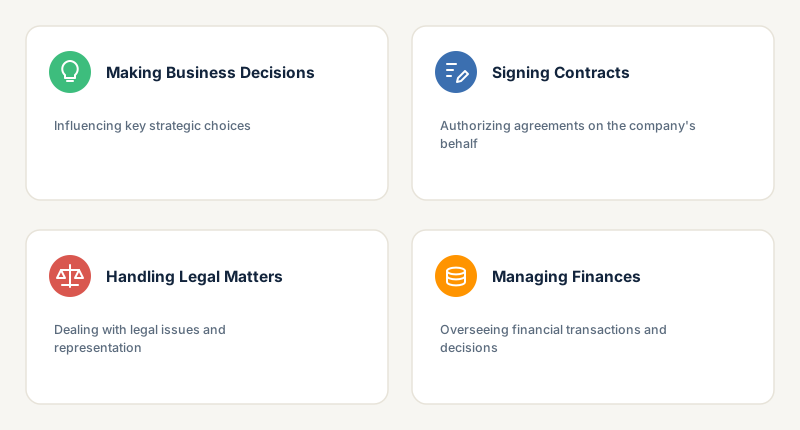
A Company Power of Attorney (PoA), also called a Corporate Power of Attorney, is a legal document that grants a business the ability to authorize an individual or entity to act on its behalf. This authority can cover signing contracts, managing finances, handling legal matters, and making key business decisions.
In short: PoA is the full form of "Power of Attorney." It's a legal instrument in which one party (the grantor) authorizes another (the agent, or attorney-in-fact) to act on its behalf. In a corporate context, the grantor is the company and the agent is an executive, employee, or external representative empowered to bind the business.
Company vs. Personal Power of Attorney
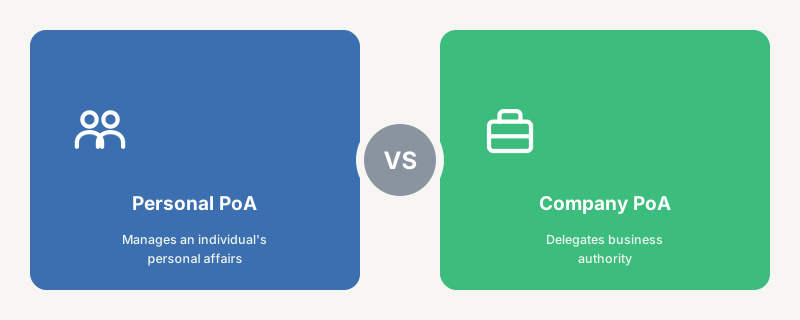
While both personal and corporate Powers of Attorney (PoA) grant authority to act on someone else's behalf, they serve different purposes:
- Personal PoA: Used by individuals who need someone to manage their personal affairs, such as handling finances, making medical decisions, or signing documents if they become incapacitated. This is often granted to a trusted family member or friend.
- Company PoA: Specifically designed for businesses, allowing them to delegate authority to executives, employees, or external representatives. This can include signing contracts, managing financial transactions, or making key business decisions when the primary decision-makers are unavailable. Unlike a personal PoA, a company PoA is typically governed by corporate bylaws and may require board approval.
Legal Framework for Corporate Power of Attorney
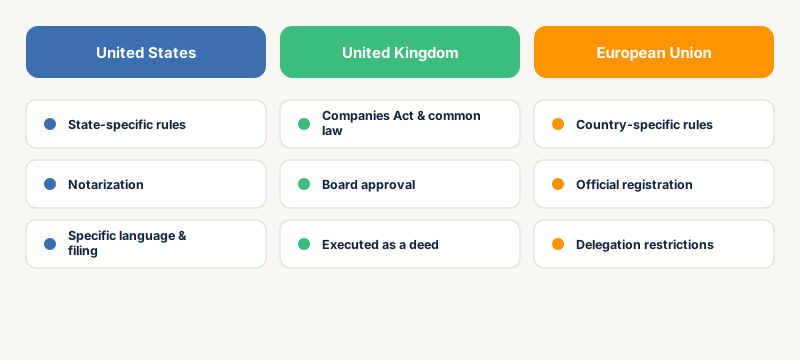
Corporate Power of Attorney (PoA) regulations differ across jurisdictions, with each country setting its own requirements for validity and enforcement.
- United States: PoA rules vary by state. Many require notarization, specific language, or even official filing, depending on the level of authority granted.
- United Kingdom: Corporate PoAs must align with the Companies Act and common law. They often need board approval and must be executed as a deed, sometimes with a witness.
- European Union: Regulations differ by country. Some require official registration, while others impose restrictions on which powers can be delegated.
Types of Business Power of Attorney
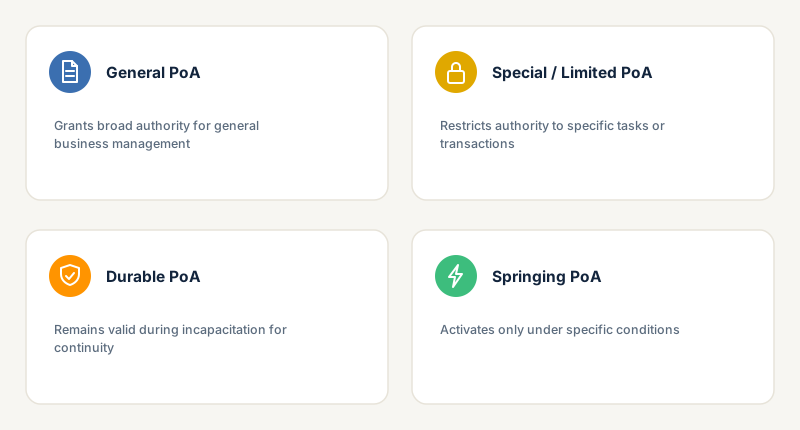
Not all Powers of Attorney (PoAs) serve the same purpose. The type you choose depends on how much authority you want to delegate and under what conditions.
1. General Power of Attorney
A General Power of Attorney grants broad authority to act on behalf of the business. The appointed agent (or attorney-in-fact) can make decisions related to financial transactions, contracts, legal matters, and daily operations.
✅ Best for: When a business owner, executive, or board member is temporarily unavailable but needs someone to manage key responsibilities.
2. Special or Limited Power of Attorney
A Special or Limited PoA is restricted to specific tasks or transactions. It clearly defines what the agent is authorized to do and limits their power beyond that scope.
✅ Examples:
- Authorizing an employee to sign a contract on behalf of the company.
- Granting an attorney the power to handle a single legal case.
- Allowing a finance officer to complete a specific banking transaction.
3. Durable Power of Attorney
Unlike a general or limited PoA, a Durable Power of Attorney remains valid even if the business owner or key executive becomes incapacitated due to illness or other circumstances.
✅ Best for: Long-term business continuity planning, ensuring operations continue smoothly even if decision-makers are unable to act.
4. Springing Power of Attorney
A Springing Power of Attorney only becomes effective when a specific condition is met, such as the CEO becoming incapacitated or unavailable. Until that condition occurs, the agent has no authority.
✅ Best for: Companies that want extra safeguards, ensuring authority is only transferred when absolutely necessary, such as during medical emergencies or leadership transitions.
Choosing the right type of PoA depends on your business needs, risk tolerance, and long-term strategy. A well-structured PoA ensures smooth operations while protecting the company from unnecessary risks. For the specific instrument used to delegate day-to-day trading authority to an employee, see commercial power of attorney.
Who Can Be Given Power of Attorney in a Company?

Choosing the right person for a corporate Power of Attorney (PoA) is a crucial decision. The wrong choice can expose the company to financial, legal, or reputational risks. The agent should be someone trustworthy, qualified, and aligned with the company’s interests. For a broader look at how businesses define who may commit them contractually, see our guide to signing authority.
Here are the most common choices:
- Executives or Board Members High-level decision-makers often receive PoA authority due to their leadership roles. Examples: CEO, CFO, COO, managing directors. Best for: Major business decisions, financial transactions, and strategic partnerships.
- Key Employees Certain employees may be given PoA to handle specific business operations within their expertise. Examples: Finance officers, legal representatives, operations managers. Best for: Approving contracts, handling banking transactions, or overseeing compliance matters.
- External Professionals Companies sometimes grant PoA to lawyers, accountants, or auditors for specialized tasks. Best for: Legal representation, tax filings, regulatory compliance, and financial audits.
- Business Partners or Service Providers Consultants, external negotiators, or suppliers may receive limited PoA for handling specific deals. Best for: Signing agreements, managing supplier contracts, or negotiating international transactions.
Key Considerations
- Trustworthiness: The agent must act in the company’s best interest.
- Expertise: They should have the skills and experience to handle the assigned responsibilities.
- Legal and Financial Implications: Misuse of PoA can lead to serious risks, so it’s essential to have safeguards in place.
How to Set Up a Power of Attorney for a Company
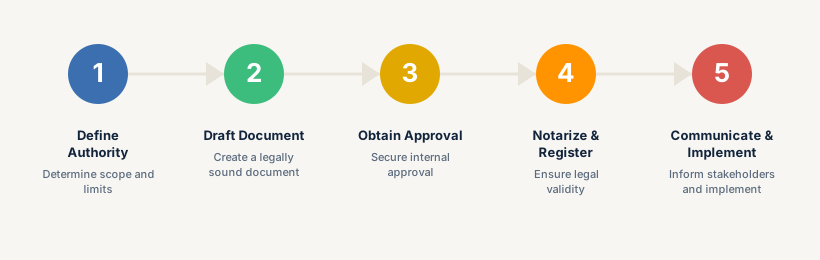
Follow these steps to set up a PoA effectively:
Step 1: Define the Scope of Authority
Before drafting a PoA, it's essential to clearly outline the powers being granted.
- Determine the Type of PoA – Will it be a general PoA (broad authority) or a limited PoA (specific tasks)?
- Specify Authorized Actions – Outline exactly what powers the agent will have, such as signing contracts, managing bank accounts, or representing the company legally.
- Set Duration and Conditions – Will the PoA be ongoing, time-limited, or activated only under specific circumstances (springing PoA)?
Step 2: Draft the Power of Attorney Document
Ensure the document meets local legal requirements and includes all essential details:
- Grantor Information – The company name and the individual granting authority (e.g., CEO, board member).
- Agent Details – The name, role, and qualifications of the person or entity receiving authority.
- Scope of Power – A clear description of what the agent can and cannot do.
- Duration & Conditions – When the PoA starts and ends, and any conditions for revocation.
- Signatures & Witnesses – Depending on jurisdiction, witness signatures or notarization may be required.
Step 3: Obtain Internal Approval
Before a corporate PoA can take effect, it must comply with internal decision-making processes and governance rules.
- Board or Shareholder Approval – Some PoAs require official approval, especially for significant business matters.
- Company Bylaws & Governance Compliance – Ensure the PoA aligns with internal company policies.
Step 4: Notarization and Legal Registration
To ensure the PoA is legally enforceable, it may need to go through official verification processes.
- Check Legal Requirements – Some jurisdictions require PoAs to be notarized or registered with business authorities.
- File with Regulatory Bodies – If required, submit the PoA to relevant government agencies, banks, or legal entities for recognition.
Step 5: Communicate and Implement
Once the PoA is finalized, it's crucial to ensure all relevant parties are informed and the document is securely stored.
- Inform Key Stakeholders – Notify banks, suppliers, legal partners, and employees who may interact with the authorized agent.
- Maintain Secure Records – Store copies of the PoA in company records and ensure access is limited to authorized personnel.
Final Considerations
- Regularly review and update the PoA to reflect business changes.
- Establish clear safeguards to prevent misuse.
- If unsure, consult a business lawyer to ensure full compliance.
A properly structured PoA ensures smooth business operations while protecting the company’s interests.
Risks and Precautions When Granting a Business Power of Attorney
A corporate PoA provides flexibility and efficiency, but if not carefully managed, it can also pose significant risks to the business.
Potential Risks
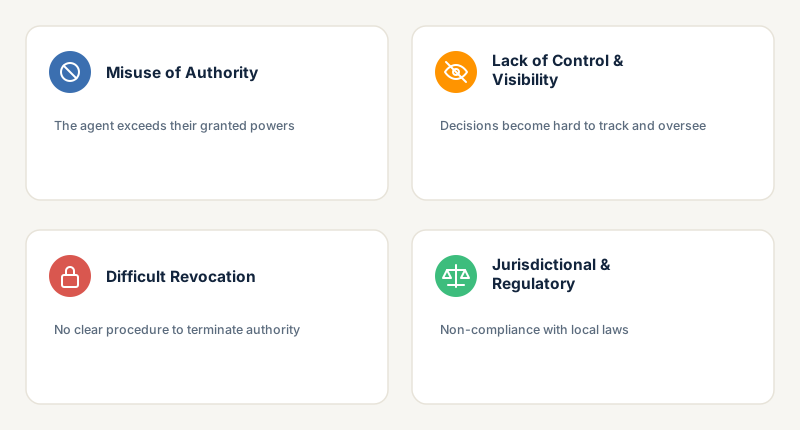
- Misuse of Authority: An agent might exceed their authorized powers, making unauthorized commitments, signing unfavorable contracts, or making strategic decisions beyond their expertise. This could expose the company to financial and legal complications.
- Lack of Control and Visibility – Granting broad or indefinite powers without regular monitoring can make it difficult for company leadership to track decisions and ensure compliance with company policies. This lack of oversight can lead to operational inefficiencies and risks.
- Difficult Revocation Process – If a PoA lacks clear termination procedures, revoking authority can become complicated, especially if the agent refuses to relinquish power or disputes arise regarding the legitimacy of their actions.
- Jurisdictional and Regulatory Issues – If the PoA is not structured in compliance with local laws, the company could face legal challenges, making it difficult to enforce the agent’s actions or revoke authority when needed.
How to Mitigate Risks
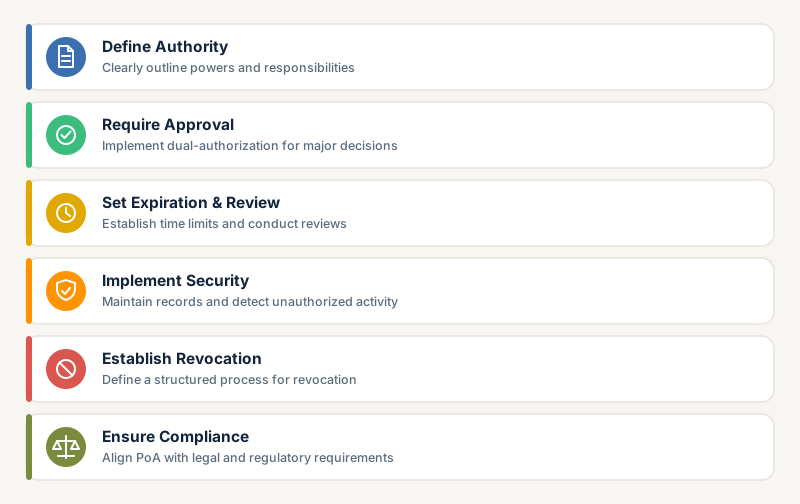
Clearly Define and Limit Authority: Specify the exact powers granted, the scope of responsibilities, and any restrictions to prevent excessive control by the agent.
Require Board or Executive Approval: Implement dual-authorization requirements for major decisions, such as high-value transactions, legal disputes, or operational changes.
Set Expiration Dates and Regular Reviews: Establish time limits for the PoA and conduct periodic reviews to ensure it remains relevant and appropriate.
Implement Security and Monitoring Measures: Maintain detailed records of transactions and actions taken under the PoA. Set up internal controls to detect unauthorized activity early.
Establish a Clear Revocation Process: Define a structured process for revoking a PoA, including formal documentation and immediate notification to stakeholders such as banks, legal entities, and business partners.
Ensure Compliance with Legal and Regulatory Requirements: Work with legal professionals to ensure the PoA aligns with local laws, industry regulations, and company governance policies to avoid legal complications.
With the right precautions, a PoA can make business operations smoother without sacrificing control or security.
Frequently Asked Questions (FAQ)
What does PoA stand for in business?
PoA is the full form of "Power of Attorney." In a business or corporate context, it refers to a legal document in which a company (the grantor) authorizes another person or entity (the agent, or attorney-in-fact) to act on its behalf — for example, to sign contracts, manage finances, or represent the company in legal matters.
What is a corporate power of attorney?
A corporate power of attorney is a PoA granted by a company to delegate authority to executives, employees, or external representatives. It can cover signing contracts, handling financial transactions, or making key business decisions when the primary decision-makers are unavailable, and it is typically governed by the company's bylaws and may require board approval.
What are the types of power of attorney for a company?
There are four common types: a General PoA (broad authority), a Special or Limited PoA (restricted to specific tasks or transactions), a Durable PoA (remains valid even if a key decision-maker becomes incapacitated), and a Springing PoA (takes effect only when a defined condition is met).
Can a company director be given power of attorney?
Yes. Directors, along with other executives and key employees, are common choices to hold a company PoA because of their leadership roles. The scope should be defined clearly in the document, and significant authority may require board or shareholder approval under the company's governance rules.
How do you revoke a corporate power of attorney?
Define a clear revocation process when the PoA is first granted. To revoke it, issue a formal written notice, inform the agent and all affected parties — such as banks, regulators, and business partners — and document the revocation in company records. If the PoA was registered or filed with authorities, the revocation should be recorded there as well.
Ready for the next step?
Book a demo with our team and see top.legal in action