
Learn the types of breach of contract, their common causes, available remedies, and practical steps to protect your agreements from costly disputes.
Have you ever trusted someone to hold up their end of a deal, only to be let down when they didn't? It's a situation most of us have faced — and in business, it's frustrating, costly, and often preventable. Below, we explain why contracts fail and how you can protect yourself from broken promises.
Contracts are more than just formal documents — they form the foundation of every agreement, whether professional or personal. They set out the commitments, obligations, and expectations for everyone involved, helping to establish trust and collaboration. However, even the best agreements can fall apart if one party fails to follow through on their responsibilities. This is called a breach of contract, and it can lead to disputes, financial loss, and strained or even broken relationships.
So how can you better understand and protect your contractual relationships? In this article, we break down what a breach of contract is, the different types of breaches that can occur, the potential consequences, and — most importantly — practical steps to prevent them from happening.
What Is a Breach of Contract?
A breach of contract occurs when a party fails to comply with the obligations set out in a legally binding agreement. The breach may take the form of failing to meet the agreed terms, obligations, or conditions.
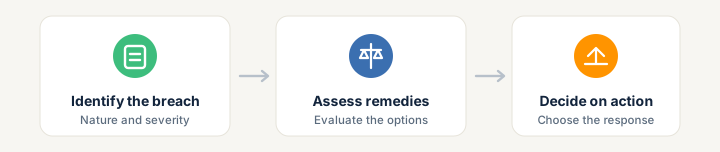
When a breach occurs, the party that has fulfilled its part of the contract — the non-breaching party — has the right to seek remedies. Depending on the nature of the breach and the contract itself, these may include compensation or specific performance.
It's important to know that not all breaches of contract are the same. Each breach varies in severity and can carry different consequences.
The 4 Types of Breach of Contract
Let's take a closer look at the four main types of breach.
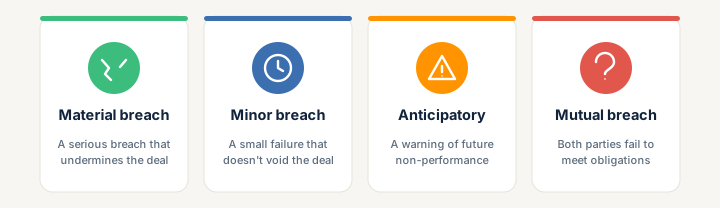
- Material breach — A material breach is a serious breach that fundamentally undermines the agreement and makes it impossible for the contract to fulfil its intended purpose. For example, if a supplier is contractually obliged to deliver high-quality raw materials but instead delivers defective goods, this affects the core of the contract. A material breach usually gives the non-breaching party the right to terminate the contract and claim compensation. In most cases, the injured party can also pursue additional legal remedies, since the breach affects the effectiveness of the contract as a whole.
- Minor (partial) breach — A minor breach, also known as a partial breach, occurs when a party fails to fulfil a relatively small obligation but the overall purpose of the contract is still met. Imagine, for example, that a web designer delivers a website two weeks later than agreed. Even though the delay causes some inconvenience, the client still receives the finished website they contracted for. Because the breach does not invalidate the contract, the non-breaching party may claim compensation for the delay but generally cannot terminate the contract. The focus is on remedying the inconvenience or losses caused by the breach.
- Anticipatory breach — An anticipatory breach occurs when a party signals — through direct communication or through its actions — that it will not be able to fulfil its future obligations under the contract. For example, if a contractor tells a client ahead of time that they will not meet the agreed deadline, this is an anticipatory breach. It allows the non-breaching party to act before the breach actually occurs, such as terminating the contract early or seeking compensation for potential losses. It is an early warning that helps mitigate potential risks.
- Mutual breach — A mutual breach occurs when both parties fail to meet their contractual obligations. Unlike a typical breach, where one party fails to perform, a mutual breach means both sides have not met the agreed conditions, resulting in a more complex situation. For example, Company A does not deliver software updates on time, while Company B withholds payment due to the lack of service. Both sides are now in breach of the agreement, which often requires negotiation or legal action to resolve.
Common Causes of Contract Breaches
A breach of contract is no accident. It is usually caused by underlying factors — some of which can be controlled, while others are beyond anyone's control. When companies understand why breaches happen, they can take steps to reduce the risks and make their contracts run more smoothly. Here are some of the most common reasons for contract breaches:
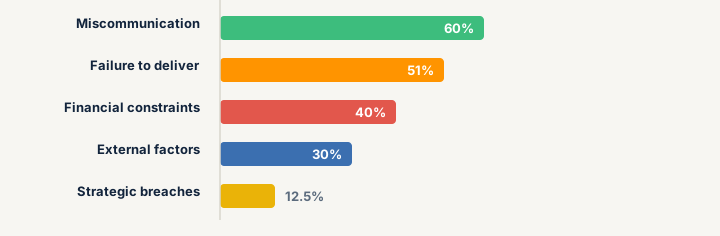
- Misunderstandings and ambiguity — Unclear terms are one of the main reasons contracts fail. According to the International Association for Contract and Commercial Management (IACCM), more than 60% of contract disputes stem from unclear or poorly defined terms. Ambiguous language such as "ASAP" can lead to very different interpretations — one side may read it as a few days, while the other expects delivery within hours. This kind of miscommunication can result in disputes or breaches, which is why it's essential to define terms clearly and keep communication open throughout the agreement.
- Failure to deliver — Over 50% of companies report delays or problems in meeting their contractual obligations, whether in providing services on time or delivering products. According to a global contract management report by the Aberdeen Group, 51% of companies experience delays in meeting contractual obligations — often due to inadequate planning, mismanagement, or a lack of resources. When deliverables fall short, entire projects can be disrupted and relationships with partners or customers damaged. Timely delivery is critical to maintaining trust and long-term business relationships.
- Financial constraints — Financial difficulties are a major factor in contract breaches. A report by Deloitte found that almost 40% of companies face financial problems that prevent them from meeting their contractual obligations. Cash-flow problems, an economic downturn, or poor financial management can make it impossible for a company to meet its commitments. Evaluating a partner's financial stability before signing an agreement helps reduce the risk of a breach caused by financial trouble.
- External factors — Unforeseen external factors, such as natural disasters or global crises, can affect a company's ability to meet its contractual obligations. A PwC survey revealed that almost 30% of companies had to accept delays or breaches due to external events such as supply-chain disruptions or the COVID-19 pandemic. Although force majeure clauses usually cover these situations, a lack of clarity in defining an "unforeseen event" can lead to disputes. Clear contract terms and contingency plans are essential for dealing with these breaches.
- Strategic breaches — Sometimes a breach occurs because a party calculates that paying the penalties for breaching is cheaper than meeting its obligations. Research from Harvard Law School suggests that around 10–15% of contract breaches happen because companies consider paying contractual penalties less expensive than complying with the terms. While this may make financial sense in the short term, it can carry long-term consequences such as reputational damage, loss of trust, and legal exposure. Companies should weigh the risks of a strategic breach carefully before considering this option.
Legal Consequences of a Breach of Contract
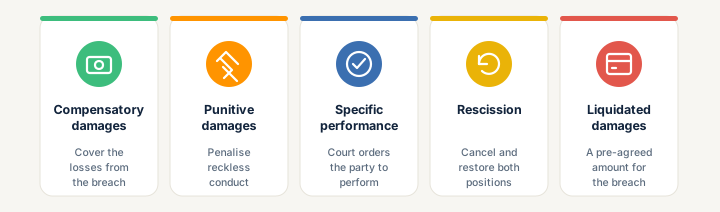
- Compensatory damages — Compensatory damages are payments made to the party harmed by a breach to cover the losses it suffered. They are intended to put the injured party back in the position it would have been in had the contract been fully performed. Unlike punitive damages, which are meant to punish the party at fault, compensatory damages are meant to repair the harm done to the innocent party. To calculate them, the court examines the actual losses the non-breaching party suffered as a result of the breach. There are two main types: expectation damages, which cover what the party expected to gain from the contract, and consequential damages, which cover any additional losses incurred as a result of the breach.
- Punitive damages — Punitive damages, sometimes called "exemplary damages," are awarded to punish a defendant for particularly reckless or negligent conduct. They usually apply to companies or larger institutions and are most common in cases such as medical malpractice or product liability, where the defendant's actions cause harm to others. For example, if a company knowingly sells a faulty product that puts consumers at risk in order to make a profit and is found to have acted negligently, the court may impose punitive damages as a penalty.
- Specific performance — Specific performance is a remedy that forces a party to fulfil its contractual obligations following a breach. It is used when no other solution can adequately compensate the non-breaching party and when damages alone are not enough. In such cases, the court may order the defendant to fulfil the original terms of the contract. For example, in a real-estate dispute where a seller backs out of selling a property, the court may order the seller to complete the sale as originally agreed.
- Rescission — Rescission is a remedy that cancels a contract and returns both parties to the position they were in before the agreement was made. It is used when there is a major problem with the contract, such as fraud, misrepresentation, or a mutual mistake. When a contract is rescinded, each party must return any benefits or assets received from the other. Rescission may be sought by either party if it can show that the contract was entered into under false pretences or contains a material defect that affects its validity. This remedy lets the parties unwind the contract and avoid further complications without waiting for additional harm to occur.
- Liquidated damages — Liquidated damages are an amount agreed in advance that one party must pay the other in the event of a breach. Set when the contract is signed, they provide a clear remedy if a party fails to perform or comply with the terms. Their purpose is to provide certainty and avoid lengthy disputes over how much compensation is owed after a breach. They are particularly useful in contracts where the exact amount of damage is difficult to determine. To be enforceable, liquidated damages must be reasonable and must not amount to a penalty. Courts generally uphold liquidated-damages clauses when they reflect a genuine estimate of the actual losses at the time the contract was concluded.
Impact on Personal and Business Reputation
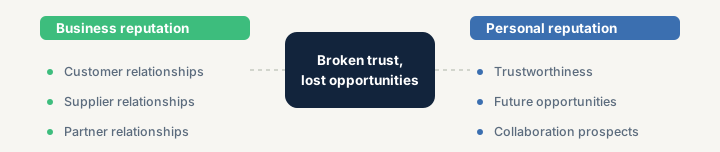
While legal remedies focus on the financial or performance-related aspects of a breach, the long-term impact on reputation can be just as damaging. In business, reputation is an important asset, and a breach can strain relationships with customers, suppliers, and partners and cost a company future opportunities. A business can come to be seen as unreliable or untrustworthy, eroding its competitive advantage.
On a personal level, individuals can also suffer reputational harm, particularly in areas where trust is essential. Repeated breaches can label a person as unreliable, making it harder to secure future deals or collaborations. Restoring trust and reputation often takes far longer than resolving the breach itself, which is why meeting contractual obligations and managing risk proactively is critical.
Real-Life Case: Starbucks vs. Kraft Foods
Background
In 1998, Starbucks signed an agreement with Kraft Foods to sell its coffee in grocery stores, a pivotal moment for the brand's expansion beyond coffee shops. As part of this partnership, Kraft was responsible for marketing, distributing, and selling Starbucks-branded packaged coffee in supermarkets across the United States. The agreement was meant to help Starbucks expand its retail presence and bring its coffee to a wider audience.
However, in 2010, Starbucks began to express dissatisfaction with Kraft's handling of its coffee brand. Starbucks claimed Kraft had failed to meet the expectations set out in the contract, including inadequate marketing efforts and a lack of focus on expanding the brand's presence in grocery stores. Starbucks felt Kraft's approach was holding back the brand's potential and leading to sub-optimal retail performance.
The Breach
The dispute came to a head when Starbucks tried to cancel the agreement in 2010, arguing that Kraft had not adequately marketed the coffee brand and had failed to meet other contractually agreed performance indicators. Starbucks felt Kraft's management of the partnership was deficient and argued that Kraft's actions were damaging Starbucks' reputation and growth prospects.
Kraft, for its part, claimed it had met its obligations under the contract in full. It argued that the terms were vague and that Starbucks' dissatisfaction was baseless. Kraft also pointed out that the coffee market had become increasingly competitive and that the issues Starbucks raised could have been influenced by factors beyond Kraft's control.
Effects of the Breach
The effects of the dispute were far-reaching for both companies. Starbucks, which wanted to regain full control of its coffee brand, worried that leaving distribution to Kraft would harm its reputation and expansion opportunities. Kraft, on the other hand, faced a significant loss of revenue if the partnership was terminated, as Starbucks coffee was a profitable product line for the company. The breach strained the business relationship and led to a public and legal dispute that attracted considerable attention in the media and among stakeholders.
The financial impact was also significant. Starbucks believed it could better control its brand and retail marketing by handling distribution itself. Kraft, meanwhile, faced the potential loss of a key product in its portfolio and a significant portion of its food revenue.
Resolution
In December 2013, after several years of legal dispute, the matter was settled with a substantial financial agreement. Starbucks agreed to pay Kraft $2.75 billion to buy back the rights to distribute Starbucks-branded coffee in grocery stores. Kraft was also allowed to continue selling Starbucks coffee products during a transition period until the contract was fully terminated.
The settlement allowed Starbucks to regain full control of its brand and distribution channels, while Kraft received significant financial compensation. Importantly, Starbucks gained the freedom to pursue a new sales strategy more closely aligned with its goals and values, including expanding its own retail presence through direct sales.
Source: New York Times article on the Starbucks–Kraft settlement
How to Prevent a Breach of Contract
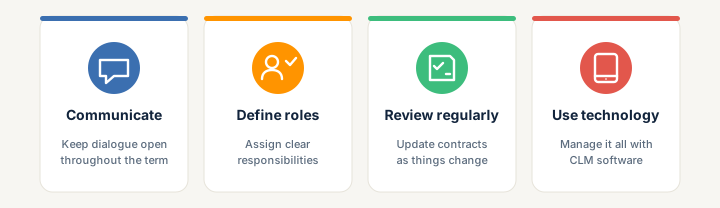
Now that we've looked at what a breach of contract is, the types of breach, what causes them, and their consequences, let's turn to how you can actually prevent these problems. It's always easier to prevent a breach than to deal with the fallout. Here are a few key ways to protect yourself and your business:
-
Draft clear and detailed contracts. One of the most effective ways to prevent a breach is to create a precise, thorough agreement from the outset. A well-drafted contract sets clear expectations for everyone involved. Here's how to make sure yours is watertight:
- Payment terms: State the amount due, payment deadlines, and payment terms clearly to avoid misunderstandings.
- Deadlines: Set realistic, achievable deadlines for every deliverable. Specify exactly when and how tasks should be completed to avoid ambiguity.
- Penalties: Define the consequences for missed commitments. This creates accountability and helps keep everyone on track.
- Legal review: Having a lawyer draft or review your contract is essential. They can spot potential problems, ensure the contract complies with relevant laws, and protect your interests by making the agreement watertight.
-
Keep communication open. Continuous communication with the other party throughout the term of the contract is critical. Regular feedback and transparent discussions stop small problems from growing into larger ones. Always document your conversations — whether by email, phone, or in meetings — so there's a record of what was agreed. This keeps both parties on the same page and lets disputes be resolved quickly if they arise.
-
Review and update contracts regularly. Contracts aren't set in stone. Circumstances, terms, and laws change over time, so it's important to review and revise contracts regularly. Whether it's shifts in your industry or changes to your business strategy, keeping contracts up to date ensures they stay relevant and aligned with current circumstances. Regular reviews also help you identify and close potential gaps before they become problems.
-
Assign clear roles to create accountability. One of the most important aspects of preventing a breach is ensuring each party has clearly defined roles and responsibilities. When roles are unclear, the result is confusion, delays, and unmet expectations. Here's how to keep everyone on the same page:
- Clearly define roles: Determine who is responsible for what, including timelines, deliverables, and specific tasks. This avoids misunderstandings and clarifies who is accountable if things go wrong.
- Set checkpoints: Run regular progress checks to make sure everyone is meeting their commitments. These act as early warning signs when something falls behind.
- Delegation and oversight: Everyone involved should know not only what they are responsible for, but also who oversees the work. Clear responsibilities help ensure tasks get done and problems are resolved quickly.
-
Use technology. Using contract management software can significantly reduce the risk of a breach by streamlining processes, improving communication, and increasing transparency. Here's how it helps:
- Keeps all contracts in one place, so they're easy to access and no terms are missed.
- Sends alerts about important dates, payments, and milestones so nothing slips through the cracks.
- Ensures everyone works from the latest version of a contract, avoiding confusion.
- Lets you communicate directly in the software and follow discussions to prevent misunderstandings.
- Tracks compliance with contract terms and helps ensure commitments are met.
What to Do If a Breach of Contract Happens
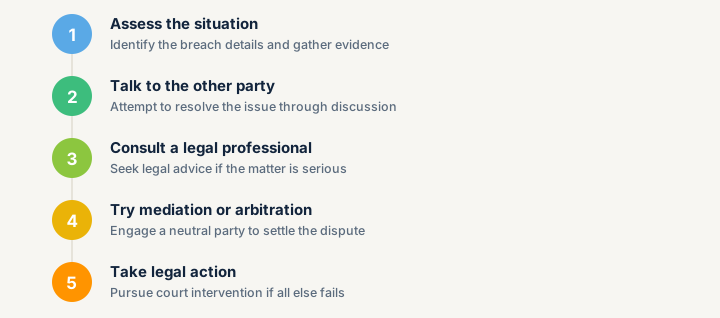
Even with the best precautions, breaches can still happen. If you find yourself in this situation, here's what to do:
- Assess the situation and gather your evidence. The first step is to figure out what went wrong. Review your contract and any related communications to pinpoint exactly where the breach occurred. Gather all relevant documents — they'll be important if things escalate.
- Talk to the other party. Before things get out of hand, contact the other party and discuss the issue. Sometimes a simple conversation is enough to clear up a misunderstanding or miscommunication, and you may be able to resolve things without taking further action.
- Consult a lawyer. If conversations aren't working or the breach is serious, it's time to consult a lawyer. A legal expert can explain your rights, possible next steps, and your options.
- Consider mediation or arbitration. If direct communication doesn't resolve the issue, try mediation or arbitration. These methods let a neutral third party settle the dispute without going to court, and they're often faster and cheaper than traditional litigation.
- Know when to take legal action. If all other measures fail and the breach is significant, you may have to go to court. While litigation can be costly and time-consuming, it may be necessary to achieve the outcome you need — whether that's compensation or performance of the contract.
If you're proactive and address issues early, you can avoid most breaches or handle them efficiently when they occur. The key is to stay calm, assess the situation, and take the right steps to protect your interests.
Ready for the next step?
Book a demo with our team and see top.legal in action