
Contract management is critical for your company because contracts, as legally binding documents, govern relationships between stakeholders, pricing, scope of work, rights and obligations, project timelines, warranty terms, etc.
The claim that contracts are at the heart of every medium to large company is by no means new. Be it providers, suppliers, sales partners, consultants, customers or employees — they all need contractual arrangements. According to information from World Commerce & Contracting An average Fortune 1000 company has between 20,000 and 40,000 active contracts.
With such a large number of contracts, there is no doubt that standardized contract award procedures — or in other words, contract management — are necessary.****
What is contract management?
Contract management refers to the business processes that oversee the creation, implementation, and evaluation of contracts to improve business performance and reduce risks.
The relevance of contract management for companies is undisputed. Contracts, as legally binding documents, govern the relationships between the parties involved and define aspects such as pricing, scope of work, rights and obligations, project timelines and warranty conditions. Due to the scope of contracts, well-structured contract management can significantly improve corporate performance. On the other hand, poorly organized contract management can expose your company to various operational and financial risks.
The role of contract management has evolved over time and requires an in-depth understanding of all facets of the contract life cycle to enable valuable data analyses. Companies use contract management to optimize their performance and find out how they can achieve their goals more efficiently.
Eineinem Gartner report According to “CLM is evolving from an operational record system to a core enterprise-level system that takes into account business risks, expenses and revenue maximization.” ****
The drawbacks of traditional contract management
There are crucial aspects that traditional contract management cannot offer. Traditional contract management has a number of disadvantages, which is why companies are turning to innovative platforms such as top.legal:
Manual procedures: Contract management is often inefficient and error-prone when done manually. Manual processes waste time when creating new contracts, as a considerable amount of manual effort is required for redlining, legal review and status tracking. Manual contract management is not only time-consuming, but also incredibly expensive. When performing manual operations, you must consider the associated labor and overhead costs.
Collaboration is limited: Contract negotiations are inherently collaborative; they require extensive coordination and internal engagement with other corporate functions affected by the contract. Because of the inherent silo structure of corporate teams, it is extremely difficult to ensure this collaboration with standard contract management systems.
The risk is present due to a lack of standardization: Traditional contract management lacks risk controls to enforce and ensure compliance with contract processes. The use of multiple systems by parties and the exchange of information via spreadsheets or one-off papers involves a high risk of errors.
**There is a lack of transparency and reporting following the signing of the contract: **Human errors and incorrect data/metadata are possible as the ability to analyze contracts using outdated methods such as spreadsheets is limited. In addition, old systems make it difficult to find and retrieve contracts, and time is lost when searching for the relevant information in disordered filing cabinets/offline archives. Ultimately, these bottlenecks and lack of transparency result in missed deadlines and deliveries.
Why is contract management important?
On average, almost 40% of the value of a deal is lost due to inadequate contract drafting. The main idea of contract management software should be to provide an iterative process that progresses over time
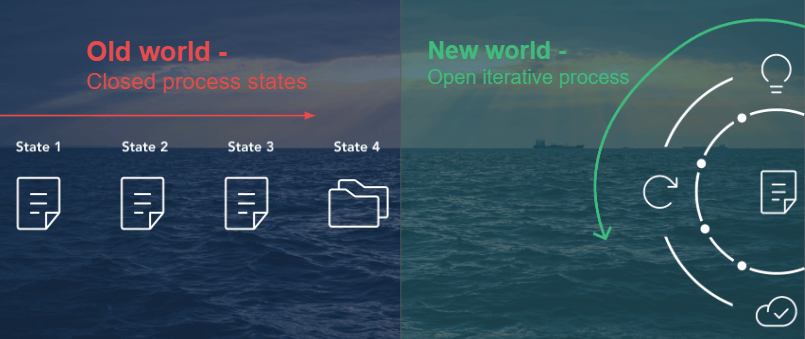
While it's common to manually store contracts in folders and filing cabinets, this method is fraught with inefficiencies that can hurt a company's overall productivity.
Contract management software is not only important for this reason because it offers an electronic solution to these problems, but also because it enables the organization of all contract documents using automated and efficient software processes. It can also help you track and allocate contract management resources by recording contract signing and renewal in an easy-to-manage electronic calendar.
By integrating an automated contract management tool, countless hours of work can be saved and countless contract management processes can be automated, which leads to an increase in value for your company.
The life cycle of contract management
Let's take a look the different phases of the life cycle of a contract in more detail:
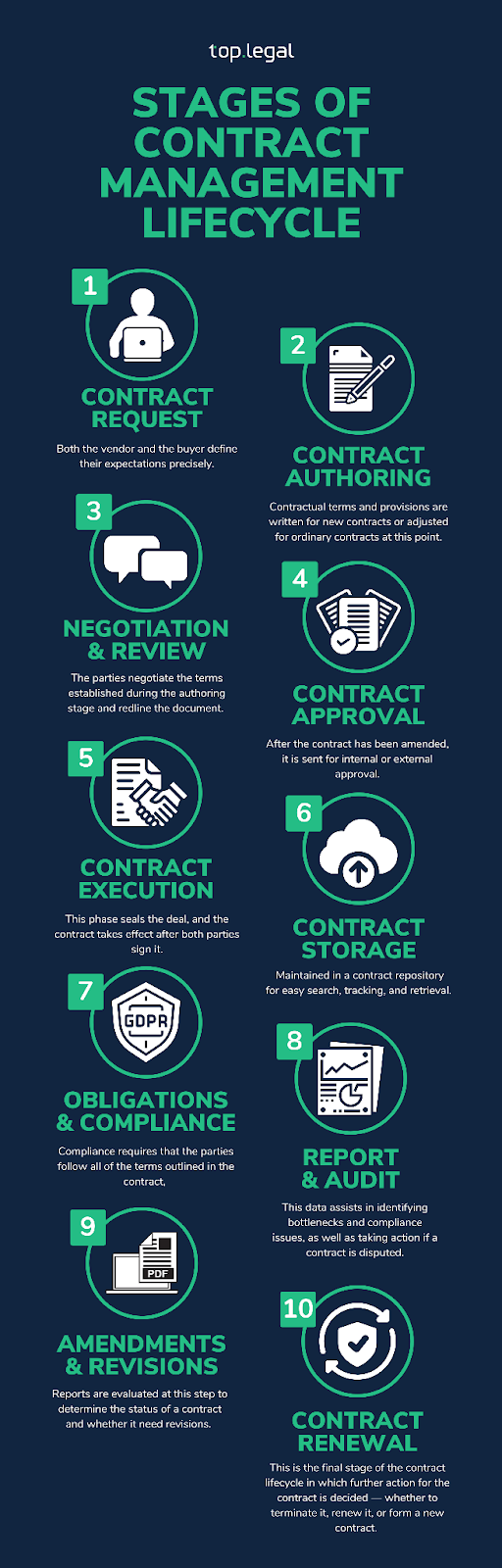
1. Contract request
In this phase, the contract life cycle process is initiated. A contract application is entered into the system, in which both the seller and the buyer precisely define their expectations.
The core of contract preparation is based on this very first step. Make sure that there are no gaps and that all important information is available, including the partner's defined requirements, expected goals, terms to be understood, relevant documents, and supporting data.
2. Contract preparation
After the sound was created in the previous phase, it is now time to create the contract. In this phase, the contract terms for new contracts are written or adjusted for ordinary contracts.
This is also the stage in which templates and a clause library are created. This allows business teams to select the most appropriate contract templates depending on the type of contract.
3. Contract negotiation and review
Here, the parties negotiate the conditions set during the preparation phase and revise the document. This phase creates clarity by bringing both sides to a common understanding and setting the appropriate expectations.
Version control is also facilitated by contract management software. When a document is edited, a new version is created automatically. This allows the team to find and edit the latest document.
4. Contract approval
Once the contract has been amended to reflect the new agreements and negotiated terms, it is submitted for internal or external approval.
5. Contract execution
Contract execution, also known as contract fulfilment, is an important phase in the life cycle of a contract. In this phase, the contract is actively implemented and essentially includes the provision of services, the obligations and requirements set out in the contract.
In doing so, the contracting parties ensure that the agreed deliveries and services are provided on time and in the agreed quality. They continuously check and document whether the terms of the contract are being met. This also includes monitoring the contractual partner's services and deliveries and managing any discrepancies or conflicts.
In addition, the contract execution phase may include processing payments and invoices, managing contract changes, and carrying out regular reviews or audits to ensure that contract conditions are met.
6. Contract archiving
Contracts must also be stored somewhere and managed in contract storage so that they can be easily searched, tracked, and retrieved.
The software for contract management includes electronic filing cabinets for storing and organizing contracts. It indexes documents with the associated metadata to make it easier to find documents.
It can also convert PDFs into rich text documents using optical character recognition (OCR).
7. Managing obligations and ensuring compliance
Compliance requires the parties to comply with all conditions set out in the contract and the standards and guidelines established by the government, industry associations, and other agencies.
8. Reporting and audit
Contract management software maintains an audit trail and stores all contract-related information, such as who accessed the documents and when, who made changes, and so on. This data helps identify bottlenecks and compliance issues and to take action when a contract is disputed.
Above all, it ensures that companies are constantly prepared for audits.
9. Changes and revisions
In this step, reports are evaluated to determine the status of a contract and whether it needs to be revised. It is an advantage to work proactively on the adjustments and to make well-founded decisions well in advance of the contract extension date.
10. Contract extensions
This is the last phase of the contract life cycle, in which a decision is made on how to proceed with the contract — whether it should be terminated, extended or a new contract should be concluded. Contract management software informs users in good time about deadlines and renewal dates through automatic notifications.
Benefits of using contract management software
There are numerous options How you can benefit from contract management software.
Standardize your contract processes
With a contract management software solution, you can choose from a library of templates and clauses to ensure a consistent contract text and clauses across the organization. You can now put an end to the six different copies of NDAs scattered around the company.
Easily monitor and track contract changes
There's no need to worry about version control. All text changes, whether internal or external, are automatically redlined and can be easily approved or rejected.
Improve the efficiency of your contract approval process
Stop wasting time trying to figure out who needs to review a contract and then go after that person. The approval workflow ensures that the relevant items are approved and documented in good time by the responsible employees.
Keep all your contracts in one place and find them faster
Say goodbye to manually tracking contracts. CLM (Contract Lifecycle Management) technology with contract storage is a practical way to store contracts and related documents in such a way that stakeholders can access them securely and conveniently — from anywhere.
Use electronic signatures
Stop stressing about finding the right person to sign. Instead, use the electronic signature: It only takes a few minutes and works just like a physical signature.
Save costs, time, and effort
Contracts with insufficient transparency can lead to unintentional contract cancellations and extensions. Contract management software automates business processes and enables companies to create, revise or renew contracts in a timely and reliable manner.
Who can benefit from contract management software?
Every day, companies need many different types of contracts for different reasons. The features and easy-to-use functionality of contract management software make it an ideal partner for most business function teams in an organization.
Legal departments
Contracts are unavoidable for legal teams or legal departments as they play an important role in managing risk and ensuring compliance. The legal departments are involved in all phases of the process, from discussions to drafting to approval.
With ready-to-use contract templates and a clause library, contract management software helps legal teams speed up the contract creation process. It provides real-time information to track contract progress and react when needed.
Distribution
Sales representatives are constantly looking for new customers or projects. Contracts are legal documents that are essential to sell a product or service. This is how sales people close the deal. Any stumbling block in the contract signing process could prevent them from achieving their sales target.
You can use contract management software to shorten the contract creation cycle, communicate with customers in real time to address concerns, and expedite legal signing and closing processes. By connecting the software to other CRM solutions such as Salesforce, HubSpot, and others, they can manage the entire sales process from start to finish.
Human resources department
By centralizing and tracking all recruitment documents and activities, contract management software speeds up the hiring process. Securely send offer letters, contracts, confidentiality agreements, and other hiring documents to new employees. Check the status of contracts at a glance and send signature reminders when needed.
Finances
Finance teams can use contract management software to increase profitability by uncovering lost revenue and opportunities to cut costs, improve compliance, and coordinate and enforce terms and obligations.
Which functions should contract management software cover?
Let's take a look at the essential components that make contract management software a valuable asset for companies.
1. Preparation and drafting of contracts
This feature is very important as it makes it easy to create contracts. Good contract management software should provide ready-made templates and tools for creating contracts. These tools help users create contracts right from the start or adapt existing templates to meet their needs. This ensures that the content of contracts remains consistent and accurate.
2. Automated work processes
Automation is a big step forward in managing contracts. This means creating pre-set processes that automatically send contracts for review, approval, and signing. Automated workflows can also send reminders and assign tasks, reducing the time and effort required to approve contracts. This not only saves time, but also reduces the likelihood of mistakes happening.
3. Centralized storage
Storing all contracts in a secure digital repository is essential. This removes the need to search through physical files and ensures that contracts are easy to find and retrieve when needed. This centralization improves security and regulatory compliance by controlling access and version control.
4. Contractual cooperation
The collaboration is critical when multiple stakeholders are involved in a contract process. Contract management software should allow team members to work on contracts at the same time. It should also track changes made by various users and thus ensure transparency and accountability in the processing and negotiation process.
5. Alerts and notifications
Timely reminders play a crucial role in contract management. Contract management software should send alerts when contracts expire, contract renewals, and important milestones. These notifications help prevent deadlines, extensions, and opportunities from being missed, thus reducing the risk of financial losses and legal complications.
6. E-signature
Electronic signatures, or e-signatures, have become an integral part of modern contract management software due to their efficiency and security. They streamline the contract signing process, making it faster and more convenient while ensuring regulatory compliance.
7. Authorization checks
Permission control allows administrators to assign specific roles and permissions to individual users or groups within the organization. This means that only authorized employees can view, edit, or delete contracts and related documents. For example, the legal department can have full access and editing rights, while other departments such as sales or marketing only have read-only access to certain contract details.
8. Analytics and reporting
Advanced reporting features are valuable for gaining insight into how your contract portfolio is performing. Analytics can help companies track contract compliance, evaluate supplier or customer performance, and make data-based decisions. Robust reporting capabilities enable a better contract management strategy and risk reduction.
Choosing the best contract management solutions
Contract management software is a cost-effective and efficient solution to streamline contract management and add value to your business. But with so many contract management software providers to choose from, how do you know which is right for you?
The following are some important questions to ask yourself before choosing.
✔️ Is it easy to integrate with your existing systems?
✔️ Is it adaptable enough to meet your needs?
✔️ Is it easy to use and learn?
✔️ Would you like to be able to contact a support team?
✔️ Is the platform secure and how powerful are the analytical options?
The best contract management solutions
The market has dozens of capable providers, from lightweight repositories to enterprise CLM suites. Rather than repeat the full list here, we maintain a dedicated, regularly updated ranking that compares the leading tools side by side — what each one is best for, its standout strengths, and where it falls short.
👉 See the full breakdown in our best contract management software comparison, covering top.legal, Outlaw, Ironclad, ContractWorks, Concord, Conga and more.
If you would rather see how an AI-guided CLM platform handles negotiation, signing, and analytics in one place, explore top.legal.
Ready for the next step?
Book a demo with our team and see top.legal in action