
Online contracts are legally valid, secure and fast to close. Learn how they work, which e-signature you need, and how to make them enforceable across borders.
How often are deals delayed by outdated contract processes? Waiting for signatures, scanning documents, and tracking versions slows business down. In a digital world where speed matters, it may be time to rethink how contracts are signed and managed.
Imagine this: you’re about to close a crucial deal. Everything is aligned, the terms are agreed, and all that’s left is getting the contract signed. But instead of a seamless digital process, you’re stuck waiting for a PDF to be printed, scanned, and emailed back—delaying the deal by days, if not weeks.
This is exactly why online contracts are becoming the standard in modern business. In a world of remote work, global teams, and instant communication, companies can no longer afford the inefficiencies of traditional paperwork.
In this article, we’ll explore how online contracts have evolved, why they are legally valid, and how they can transform the way businesses operate. If you’re looking for a specific step instead, these guides go deeper: digital contract signing covers the signature itself, and digital contracting frames the wider shift to digitizing contract processes end to end.
Understanding the Evolution of Online Contracts
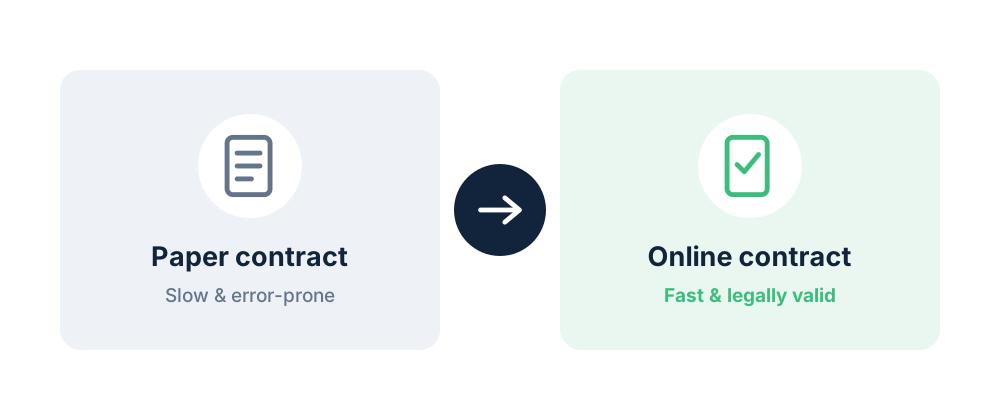
From Paper to Digital: The End of Contract Chaos
For decades, contracts were a slow, tedious affair—printed, signed by hand, scanned, and either mailed or faxed back. This manual approach led to frustrating delays, misplaced documents, and unnecessary administrative costs. A single missing signature could stall a deal for days or even weeks.
Enter online contracts. Instead of dealing with stacks of paper and manual processing, businesses can now create, sign, and manage contracts digitally in minutes. This shift has not only eliminated administrative headaches but also reduced costs and made contract management far more efficient. Whether closing a deal with a client or finalizing a partnership agreement, online contracts keep business moving at the speed of the digital world.
The Technology Behind Online Contracts: More Than Just E-Signatures
What makes online contracts so powerful? It’s not just about replacing pen and paper—it’s about using technology to make contracts smarter, faster, and more secure. Key innovations include:
- E-signature platforms – Legally binding digital signatures let contracts be signed from anywhere, on any device, reducing turnaround times and eliminating physical paperwork.
- Secure cloud storage – Contracts are stored in encrypted, cloud-based systems, ensuring easy access, automated version tracking, and protection against accidental loss or unauthorized changes.
- Advanced encryption and cybersecurity – End-to-end encryption safeguards contract data from breaches and cyber threats, so only authorized parties can access or modify an agreement.
- AI-driven analytics and automation – Artificial intelligence helps streamline contract management by identifying risks, flagging discrepancies, suggesting optimized terms, and supporting compliance with legal standards.
- Smart contract capabilities – Some platforms use blockchain to create self-executing contracts that trigger actions automatically when predefined conditions are met, further reducing human error.
Legal Validity and Compliance of Online Contracts
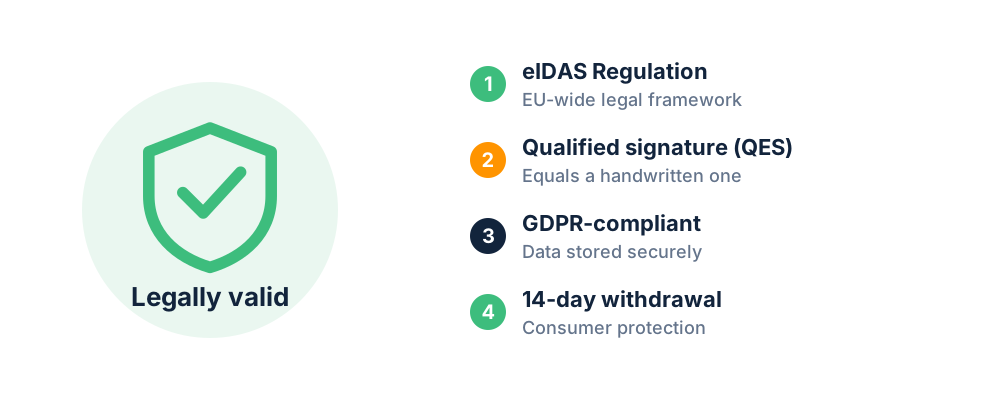
Technology has made contract management faster and more efficient, but legal requirements must still be met to ensure compliance and avoid disputes.
Key Legal Considerations
For an online contract to hold up legally, it must meet the same fundamental criteria as a traditional paper contract:
- Mutual consent: Both parties must willingly agree to the terms.
- User authentication: Digital identity verification ensures the right individuals are signing the contract.
- Clear terms and conditions: The contract should be explicit, leaving no room for misinterpretation.
- Secure record-keeping: Contracts must be stored safely and be easily retrievable for future reference or audits.
Together, these elements ensure that an online contract is legally binding and enforceable in the event of a dispute.
Jurisdiction and Cross-Border Agreements
One of the biggest advantages of online contracts is their ability to facilitate international business. However, legal enforceability can vary by jurisdiction. To avoid complications, businesses should:
- Align contracts with recognized legal frameworks such as the EU eIDAS Regulation and the U.S. ESIGN Act, which provide a legal foundation for digital agreements.
- Consult legal experts when dealing with multi-jurisdictional contracts to ensure compliance with local laws.
- Clearly specify governing law and dispute resolution mechanisms in the contract to avoid conflicts over which country’s laws apply.
Common Pitfalls to Avoid
Many businesses make avoidable mistakes when adopting online contracts, leading to legal challenges. The most common pitfalls include:
- Not obtaining clear user consent, which can invalidate the agreement.
- Failing to properly verify digital signatures, making it difficult to prove who signed the contract.
- Using non-compliant platforms that don’t meet legal standards for security and authentication.
- Neglecting secure storage, increasing the risk of lost or compromised contracts.
The Advantages of Online Contracts
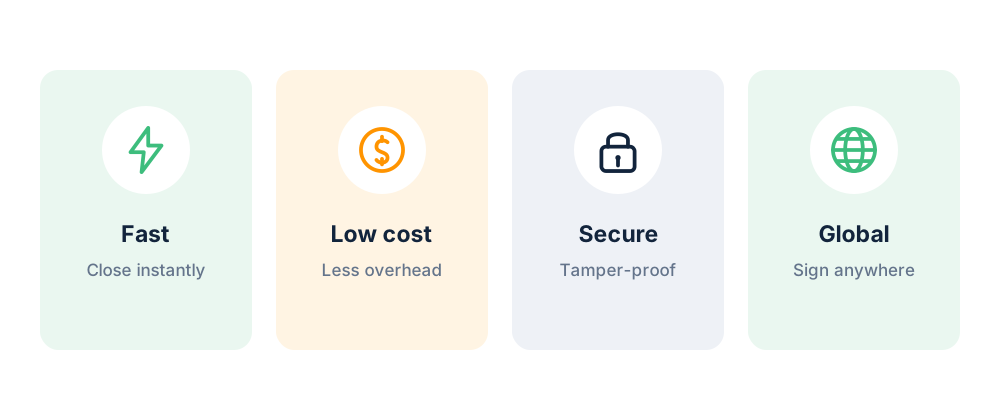
- Speed and Efficiency: Online contracts eliminate the delays and bottlenecks of traditional paperwork. Instead of waiting days or weeks for contracts to be printed, signed, and mailed, agreements can be reviewed and signed instantly from anywhere. Automated approvals and digital workflows keep deals moving without unnecessary back-and-forth, letting legal, sales, and procurement teams collaborate in real time.
- Cost-Effectiveness: Switching to online contracts isn’t just about convenience—it’s a smart financial move. Businesses save on printing, shipping, and storage. Administrative overhead drops too, since tasks like version tracking and reminders can be automated. Over time, these efficiencies translate into higher productivity and a better return on investment.
- Enhanced Security: Paper contracts can be lost, altered, or forged. Online contracts, by contrast, come with built-in security features that protect both parties. Encryption and digital signatures keep documents tamper-proof and legally binding. Time-stamped records create a clear audit trail, while access controls and authentication prevent unauthorized users from viewing or modifying sensitive agreements.
- Global Accessibility: For companies operating across locations, online contracts remove geographical barriers. Legally recognized e-signatures make international agreements seamless, eliminating in-person signings. Whether a business is a small startup or a multinational enterprise, digital contract solutions scale to meet growing demand—and with 24/7 access, teams in different time zones can review and execute contracts without delay.
Potential Challenges and Concerns with Online Contracts
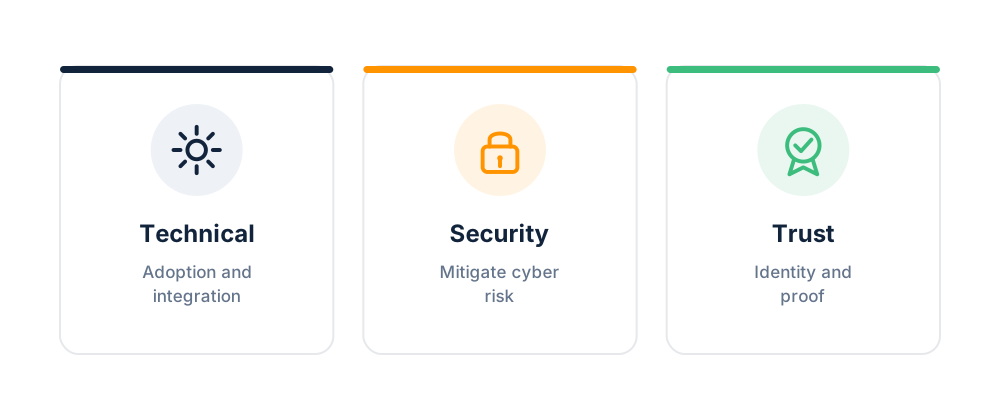
Online contracts have many benefits, but businesses need to address a few challenges for a smooth and secure transition.
Technical Barriers
Switching to digital contracts changes processes, which can create technical hurdles:
- Employees may face a learning curve when adapting to e-signature platforms and digital workflows.
- Integrating different contract management tools can cause compatibility issues, especially in large organizations using multiple systems.
- A reliable IT infrastructure is essential to support digital contract storage, authentication, and retrieval without disruptions.
Security and Data Privacy Risks
Digital contracts contain sensitive business information, making security a top priority:
- Without proper safeguards, they can be vulnerable to cyberattacks and data breaches.
- Businesses must comply with regulations like GDPR, HIPAA, and other data protection laws that require strict handling of contract data.
- Choosing a secure, certified contract management provider with encryption, access controls, and audit trails is critical for compliance and confidentiality.
Trust and Authenticity in Digital Agreements
Despite legal recognition, some businesses hesitate to trust online contracts over authenticity concerns:
- Fake signatures and fraudulent agreements remain a concern, especially in high-value contracts.
- Strong identity verification measures, such as multi-factor authentication, help confirm signatory legitimacy.
- Transparency in the contract execution process, including detailed audit logs and tamper-proof records, builds confidence in digital agreements.
These challenges are real but not insurmountable. With the right tools, security measures, and legal awareness, businesses can confidently transition to online contracts while minimizing risk.
Best Practices for Implementing Online Contracts
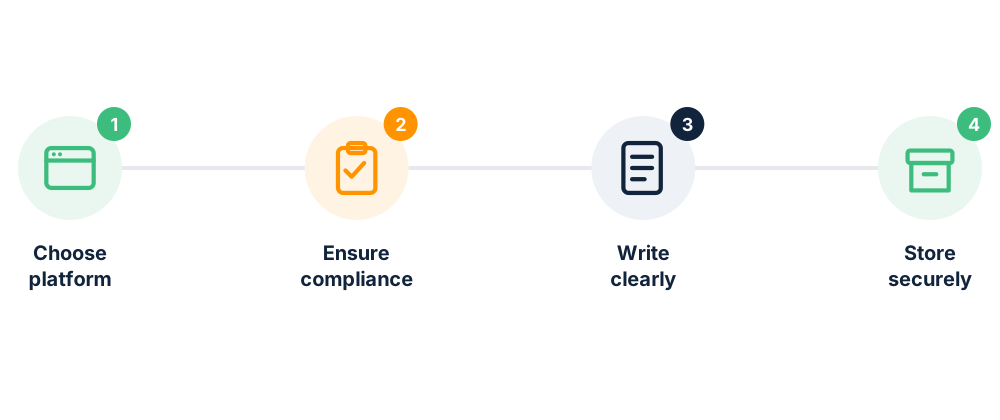
Selecting the Right Platform. Choosing a contract management platform isn’t just about convenience—it’s about security, ease of use, and compatibility. Prioritize platforms with strong encryption, compliance certifications, and built-in security. A user-friendly interface drives quick adoption, and integration with tools like CRM or ERP streamlines workflows.
Ensuring Legal Compliance. Legal validity is critical. Make sure your platform complies with regulations like eIDAS and the ESIGN Act. For complex contracts, consulting legal experts helps navigate jurisdictional differences. Strong authentication methods, such as multi-factor verification, add an extra layer of security and prevent unauthorized access.
Writing Clear and Enforceable Contracts. Contracts should leave no room for confusion. Precise language, clearly defined terms, and a well-described acceptance process prevent misunderstandings. Automated reminders for renewals and deadlines ensure nothing falls through the cracks.
Keeping Contracts Secure and Accessible. Proper record-keeping is essential for compliance and risk management. Store contracts in encrypted digital archives with regular backups and version control. A well-documented audit trail makes it easy to track changes, verify authenticity, and stay compliant with legal standards.
Frequently Asked Questions About Online Contracts
Are online contracts legally binding?
Yes. As long as the general requirements of a contract are met—mutual consent, clear terms, and demonstrable agreement—a contract concluded online is just as binding as a paper one. For agreements that require a specific written form, use a qualified electronic signature (QES) under eIDAS, which is legally equivalent to a handwritten signature.
Which electronic signature do I need for an online contract?
It depends on the risk and any formal requirements. Everyday agreements are often fine with a simple or advanced electronic signature. For high-value or form-bound contracts, use a qualified electronic signature (QES), which provides the strongest evidence in a dispute. See digital contract signing for how the process works step by step.
What’s the difference between an online contract and digital contracting?
An online contract is a single agreement concluded digitally. Digital contracting describes the broader practice of digitizing contract processes end to end—creation, negotiation, signing, and management. Learn more in our guide to digital contracting.
How do I keep online contracts secure and enforceable?
Store signed contracts in an encrypted digital archive with access controls, regular backups, and version history. A dedicated contract management platform handles storage, deadline tracking, and the audit trail automatically, keeping every contract retrievable and defensible.
Can online contracts be used across borders?
Yes, and they’re one of the easiest ways to do international business. Enforceability still varies by jurisdiction, so align your contracts with recognized frameworks such as eIDAS (EU) and the ESIGN Act (U.S.), specify the governing law and dispute-resolution mechanism, and consult legal experts for multi-jurisdictional deals.
Ready for the next step?
Book a demo with our team and see top.legal in action