
A practical guide to contract processing: the full lifecycle from drafting to management, best practices, and the tools that make each stage faster.
Many companies struggle with the complexity of contract processing, especially when they handle a high volume of agreements. Skipping the basics has real consequences: legal disputes, missed renewal dates, and lost opportunities.
Contract processing is central to how businesses operate across every industry. It covers drafting, reviewing, negotiating, and managing legally binding agreements between two or more parties. Handled well, it keeps a company's legal interests protected, its risks contained, and its strategic goals on track.
What is contract processing?
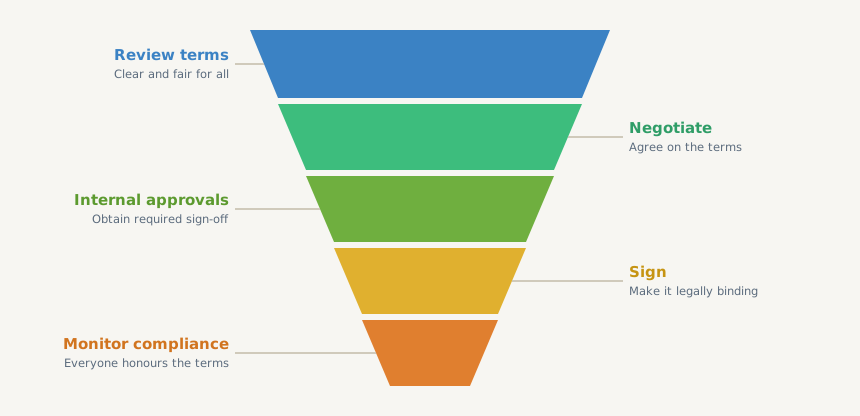
Contract processing is the full sequence of steps that takes an agreement from idea to enforceable document: preparing, reviewing, negotiating, approving, signing, and administering a contract between two or more parties. Contracts define the rights, responsibilities, and obligations of everyone involved, so getting this sequence right is what builds and sustains successful business relationships.
The typical contract processing lifecycle
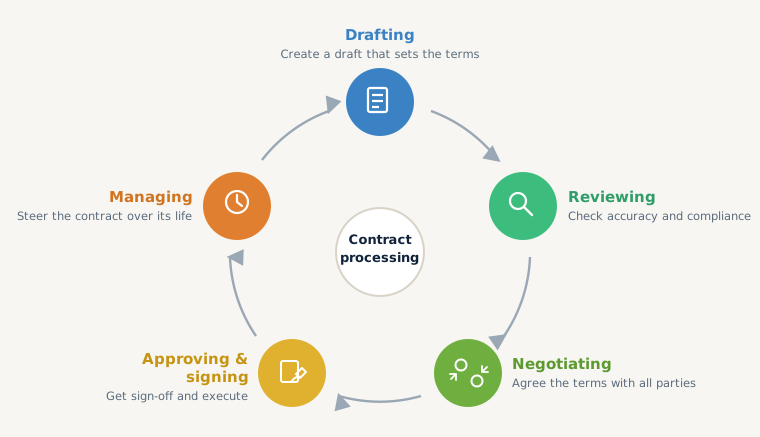
Drafting
Contract drafting is the first phase of the cycle: you create a legally binding agreement that sets out the terms of the relationship between the parties. It anchors everything that follows, because it forms the basis of the entire contractual relationship.
Most companies keep a library of ready-made templates for their common contract types. Drafting starts with picking the template that best fits the transaction, then adapting it to the parties involved — adding party-specific details, adjusting clauses, or inserting extra provisions. Digital drafting tools speed this up with clause libraries, smart fields, and guided questionnaires that make customisation far easier.
Reviewing
Contract review is the next critical phase. Here you examine and evaluate the terms of a draft carefully, before anyone signs, to confirm the contract meets the interests and requirements of every party.
Digital tools have made review much faster. The process usually begins by importing the contract into a contract management platform. AI-driven analysis then flags key clauses, conditions, and potential risks, and highlights deviations from your standard positions so the draft stays aligned with company policy and industry regulation.
Real-time collaboration lets legal and other internal teams add input and suggest changes in one place, while version control keeps the process transparent and removes ambiguity. Together, these features make review more accurate and lower risk without slowing the deal down.
Negotiating
In the contract negotiation phase, the parties discuss, refine, and agree on the terms of the contract. The goal is a mutually beneficial agreement that balances the needs and interests of everyone at the table.
Negotiation has become more efficient and collaborative. It typically starts with securely sharing the draft through a contract management platform, so each party can open the document, review it, and suggest changes directly.
Features like real-time collaboration, redlining, and commenting simplify the exchange of feedback and counteroffers, while version control and audit trails record exactly how the terms evolved. The payoff is the same as in earlier stages: less friction, more open communication, and faster agreement.
Approving and signing
Once the contract is reviewed, negotiated, and finalised, it goes through internal approval. Contract management platforms often run automated approval workflows that route the contract to the right decision-makers based on rules such as contract value or department. Approvers can review, comment, or sign off in a few clicks, and email reminders keep reviews on schedule, while audit trails record every step for full traceability.
Signing is the final step before a contract becomes legally binding. Each party's signature confirms their agreement to the terms. In recent years, most companies have moved from manual, paper-based signatures to electronic signature solutions — faster, cheaper, and just as enforceable.
Managing
The management phase covers the ongoing monitoring and administration of a contract across its entire lifecycle, from signature to renewal or termination. Skip it, and you risk missing obligations and overlooking chances to improve performance or reduce risk.
Digital tools make this stage efficient and data-driven. Teams store contracts in a central repository for easy access, retrieval, and tracking, and automatic alerts on key dates — milestones, renewal deadlines — trigger timely action and cut the risk of non-compliance.
Best practices for contract processing
Efficient contract processing runs through every phase of the lifecycle, so small improvements compound. Follow these practices to streamline your process, reduce risk, and build a stronger contract management system:
- Standardise your drafts. Develop templates for your common contract types. They improve consistency, save time, and lower legal risk.
- Use clear, plain language. Avoid legal jargon wherever you can. A contract everyone can read is a contract everyone can honour.
- Keep a central contract archive. Maintain one organised, easily accessible repository for every contract and related document, so anyone involved can find what they need.
- Prioritise collaboration. Encourage communication across legal, procurement, and business teams to prevent misunderstandings and keep everyone aligned.
- Run due diligence. Research and vet partners, suppliers, and contractors before you sign, to avoid committing to an unfavourable deal.
- Monitor, audit, and analyse. Review contract performance regularly to catch issues, bottlenecks, and areas to improve.
- Track milestones. Set key milestones and deadlines for each contract, and follow progress to ensure timely completion.
Technologies and tools for contract processing
Walking through the lifecycle makes one thing clear: the right technology is critical for modern businesses because it improves efficiency, accuracy, and scalability. Contract management software automates repetitive tasks, standardises workflows, and accelerates the whole lifecycle — saving significant time and reducing the human error that creeps into manual drafting, versioning, and data entry.
As a company grows and its contracts multiply in volume and complexity, that software becomes the backbone for managing and tracking every contractual activity. It supports regulatory compliance, mitigates risk, and sharpens decision-making — which in turn drives better business results.
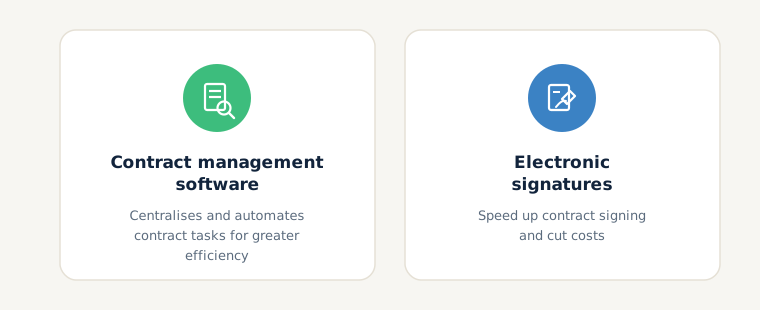
Two categories of tooling improve the contract processing cycle the most:
Contract management software
Contract management software stores every agreement in a central repository, making contracts easy to access, retrieve, and manage, and improving collaboration between internal teams and external partners. Automated workflows, template libraries, and monitoring features save time and support compliance with legal requirements, industry standards, and internal policy.
For what to look for when evaluating a platform, read our contract software guide.
Electronic signatures
Electronic signatures have grown far more important as the way companies work has gone digital. Laws such as the US ESIGN Act (2000) and the EU's eIDAS Regulation (2016) established the legal framework that recognises electronic signatures as valid and binding.
They bring clear benefits in efficiency, cost, and security:
- Time savings. No more printing, signing, scanning, and posting physical documents — signing is faster and deals close sooner.
- Lower costs. Less reliance on paper, printing, and mail cuts material and shipping costs and makes contract processing more sustainable.
- Stronger security. E-signature solutions typically offer encryption, secure authentication, and digital audit trails that protect sensitive data and keep signed agreements enforceable.
Ready for the next step?
Book a demo with our team and see top.legal in action