
Learn how Germany's Supply Chain Act works, who it affects, and how contract software helps companies meet their due diligence obligations.
With the new year 2023, Germany was enriched by a groundbreaking law: the Supply Chain Act. This law is not only a milestone in the business world, but also a strong signal for the protection of human rights and environmental protection in global supply chains.
Whether it's a coffee mug, a smartphone or a pair of jeans, there is a supply chain behind every product. This chain often extends across continents and includes a variety of companies. The Supply Chain Act now requires these companies to comply with human rights and environmental protection, not only in their own areas of business, but also in the actions of their contractual partners and suppliers.
Where the Supply Chain Act Stands in 2026
Germany's Supply Chain Act (LkSG) is still in force, but it is being fundamentally reworked. Three developments are essential context for the requirements described below:
- Reporting obligation abolished: Lawmakers have retroactively scrapped the annual report to the Federal Office of Economics and Export Control (BAFA). The digital reporting form has been deactivated since November 2025, and companies no longer have to file LkSG reports.
- Enforcement scaled back: BAFA now pursues only serious violations, and most of the fineable offences are being struck out under the ongoing LkSG amendment. The fines of up to 800,000 euros described further down reflect the original version of the law and are largely being dismantled.
- Replacement by the EU directive: The LkSG is set to be replaced by a new law transposing the EU Corporate Sustainability Due Diligence Directive (CSDDD). The CSDDD entered into force in 2026; Germany must transpose it by July 2028, with application phased in from 2029. Its scope is much narrower — going forward it mainly covers companies with more than 5,000 employees and over 1.5 billion euros in turnover.
What matters in practice: the substantive due diligence duties — risk analysis, prevention and remediation measures, complaint channels — still apply. It is mainly the formal reporting obligation and the harshest sanctions that are being removed. Companies that get their supplier contracts and processes in order now will also be ready for the coming CSDDD regime.
The following sections explain the LkSG's due diligence duties in detail. The passages on the reporting obligation and fines describe the original legal position and should be read in light of the reform outlined above.
Summary
Consequences of the Supply Chain Act for companies:
- Expanded Responsibility: Companies are now not only responsible for their own actions, but also for those of their suppliers. They must ensure that human rights and environmental regulations are met along the entire supply chain, an act that revolutionizes the traditional understanding of corporate responsibility.
- Risk analysis and assessment: Companies must proactively identify, assess and prioritize risks in their supply chains. This is not a one-time exercise, but a constant process that requires both care and attention.
- Transparent reporting: Companies are required to report regularly on their supply chain management activities. Not only must compliance with human rights and environmental protection regulations be guaranteed, but it must also be verifiable and transparent for everyone.
How contract software can help companies comply with supply chain law:
- Overview and control: Contract software provides a structured overview of all contracts with suppliers and enables companies to insert specific clauses that ensure compliance with supply chain law.
- Risk assessment: With contract software, companies can identify and assess the risks in their contracts. Some programs even have AI-powered risk analyses that help identify potential problem areas.
- Continuous monitoring: Contract software enables continuous monitoring of suppliers' compliance with contract terms. This allows companies to react quickly to identified violations and take appropriate measures.
What is the Supply Chain Act?
The Supply Chain Act, or the Business Due Diligence in Supply Chains Act, came into force on January 1, 2023. It regulates corporate responsibility for compliance with human rights in global supply chains and strengthens environmental protection. The law requires companies in Germany to respect human rights by implementing defined due diligence obligations. These obligations extend to one's own business area, the actions of a contractual partner and the actions of other (indirect) suppliers. As a result, the responsibility of companies no longer ends at their own workshop, but exists along the entire supply chain.
What is a Supply Chain and How Does the Law Define It?
In the vibrant world of global trade, the supply chain is the invisible network that brings goods from their origins to our homes. It is the lifeline that enables the pulse of the modern economy. But what exactly is a supply chain? Simply put, a supply chain is the entire process of manufacturing and delivering a product, from sourcing raw materials to production and ending with the end user.
The new German Supply Chain Act, which came into force in 2023, defines the term supply chain a bit more broadly. It not only looks at a company's direct suppliers, but also at indirect suppliers — the so-called “indirect” suppliers. This means that the law covers the entire chain of production and supply processes, from the original source of raw materials to the end product.
With this broad definition, the law becomes a powerful instrument to strengthen human rights and environmental protection across the entire supply chain. It requires companies to review not only their own business practices, but also those of their contractual partners and their indirect suppliers. This means that companies' responsibility does not end at their factory gates, but exists along the entire supply chain.
In other words, the Supply Chain Act builds bridges — not only between the various stages of the supply chain, but also between companies and the people who are affected by their operations. It is a step towards a more sustainable and equitable global economy.
Why Was the Supply Chain Act Introduced?
In a globalized world, where products and raw materials are shipped and traded across continents, it can be difficult to keep track of the entire supply chain. And this is precisely where the problem lies: In some parts of the world, the production of goods can still involve practices that are both inhumane and environmentally harmful. Child labor, forced labor, unfair wages and environmental offenses are unfortunately still a reality in some production processes.
The German government wants to put an end to this reality and introduced the Supply Chain Act as a major consequence. This law is intended to ensure that German companies live up to their responsibilities by ensuring that their products and services are manufactured in compliance with human rights and environmental protection — and not just within their own company, but along the entire supply chain.
With the introduction of the Supply Chain Act, the German government not only wants to set an example for a more sustainable and fairer economy, but also to inform and sensitize consumers. Ultimately, as consumers, we have the power to use our buying behavior to reward companies that are committed to fair working conditions and environmentally friendly practices. The Supply Chain Act allows us to make these decisions based on transparency and accountability. It is a strong signal that Germany is committed to a fairer and more sustainable world.
Who is Affected By the Supply Chain Act?
From 2023, the law will initially apply to companies with at least 3,000 employees, and from 2024 it will be extended to companies with at least 1,000 employees in Germany.

What Are the Requirements of the Supply Chain Act?
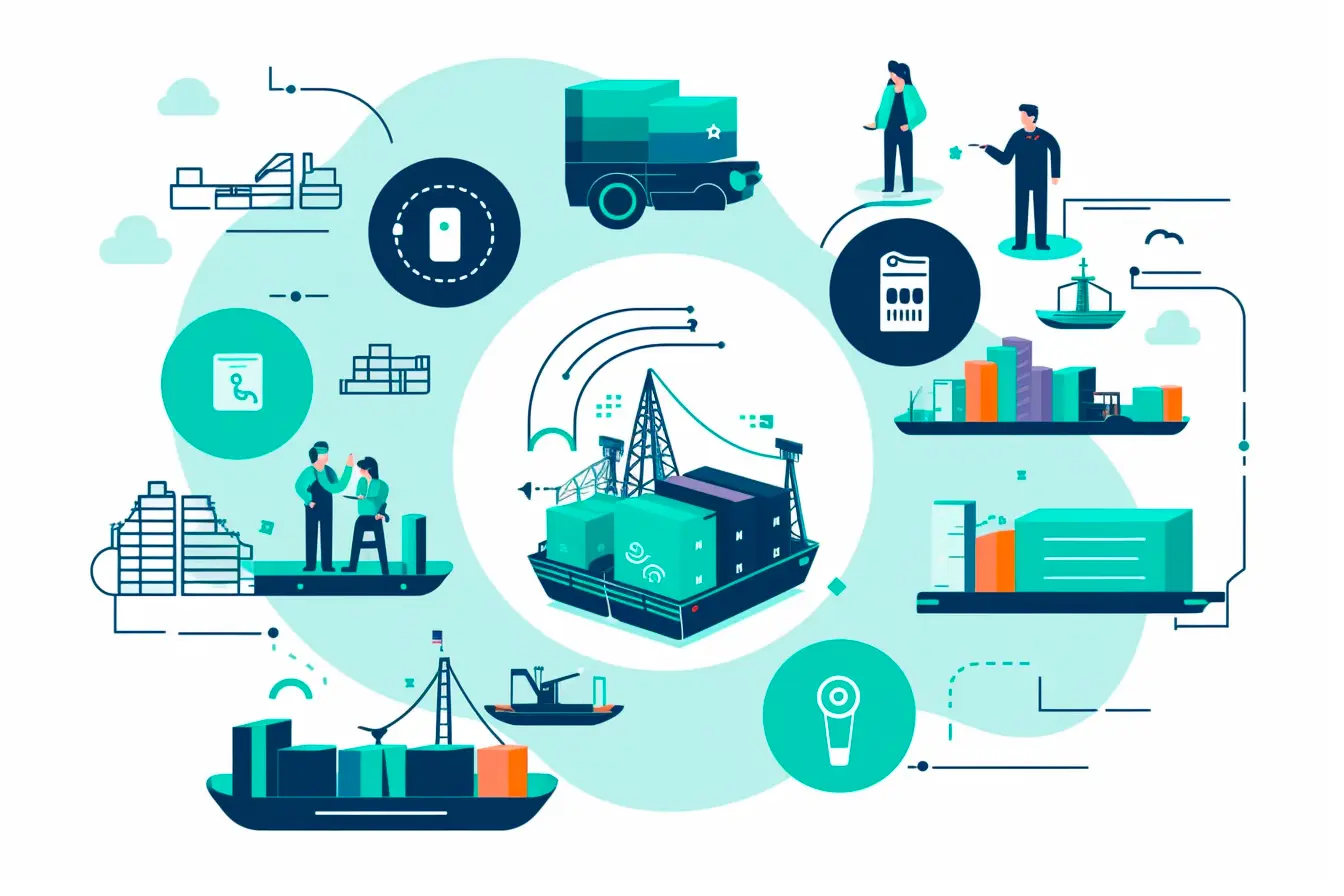
The Supply Chain Act places a number of requirements on companies to ensure that they live up to their responsibility to respect human rights and environmental protection in their supply chains. These requirements are divided according to the stages of the supply chain and the respective business activity and influence of the company. The specific obligations are explained in more detail in the following sections.
How is the Supply Chain Act Enforced?
Enforcing the Supply Chain Act is an essential part of ensuring its effectiveness. Because a law is only as strong as its enforcement. In Germany, the Federal Office of Economics and Export Control (BAFA) has taken on the important task of monitoring compliance with the Supply Chain Act.

The BAFA has considerable powers to enforce the implementation of the law. It may impose fines and fines for violations of the law. These fines can be significant and provide a strong incentive for companies to take their human rights due diligence obligations seriously.
But it is not just about penalties. Enforcing the Supply Chain Act also promotes transparency and accountability of companies. Not only must they comply with their due diligence obligations, but they must also report on them regularly. This allows consumers, investors and the general public to assess companies' performance and make decisions based on this information.
Enforcing the Supply Chain Act is therefore an important step on the road to fairer and more sustainable business practices. It ensures that companies assume their responsibilities and helps ensure that workers' rights and the environment are respected along the entire supply chain.
Supply Chain Act Requirements
What specific obligations do companies have?
Under the umbrella of the Supply Chain Act, companies must fulfill specific obligations to help ensure that human rights and environmental protection are respected in their supply chains. These are more than just guidelines — they are clear, legal requirements that every affected company must meet.
First, companies are required to carry out a thorough risk analysis. This analysis is intended to identify potential violations of human rights or environmental standards throughout the supply chain. The results of this analysis must then be used to take effective measures to prevent or minimize these risks.
In addition, companies must make a public statement about their policies regarding human rights and environmental protection. This statement should be clear and unequivocal and set out the specific measures that the company is taking to comply with its due diligence obligations.
Another important aspect is the establishment of complaint channels. These enable people in the supply chain to report potential violations. This creates a mechanism through which problems can be identified and addressed.
Finally, companies are required to report regularly on their efforts to comply with supply chain law. This promotes transparency and makes it possible to track the company's progress and challenges in this area.
What Strategic Measures Should Companies Now Take?
- Set up task force: The first step is to form an internal team focused on implementing the Supply Chain Act. This team should be interdisciplinary and include representatives from various departments such as purchasing, human resources and compliance.
- Carry out a risk analysis: The team should conduct a thorough risk analysis to identify potential human rights and environmental violations across the supply chain. This analysis should include both direct and indirect suppliers.
- Develop and publish a policy: Based on the risk analysis, the company should develop and publish a clear policy for compliance with human rights and environmental protection in the supply chain.
- Implement measures continuously: The company should take effective measures to prevent or minimize identified risks. These measures may include training, inspections and improvement of working conditions.
- Set up complaint channels: In addition, clear and accessible complaint channels should be established to receive and respond to reports of potential breaches.
- Regular reporting: As already mentioned, companies must regularly report on their efforts to comply with the Supply Chain Act. These reports should be as transparent and detailed as possible and show both progress and challenges.
Which Practical Steps Help to Implement the Measures?
The right tools make implementing these due diligence duties far more manageable. Five technology-focused approaches have proven effective in practice:
- Step 1: Introduce contract management software: This software keeps track of all your contracts, including those with your suppliers, and ensures they contain the clauses needed to protect human rights and the environment. Automated reminders flag when a contract needs to be reviewed or renewed.
- Step 2: Monitor the supply chain with technology: Modern solutions — from satellite data that verifies environmental violations to blockchain records that confirm the origin of your products — make the supply chain more transparent and help you spot problems early.
- Step 3: Build knowledge across the team: Use training to familiarise your team with the requirements of supply chain law. Everyone from executives to purchasing managers should understand the obligations — well-trained staff are your first line of defence against breaches.
- Step 4: Set up complaint channels for whistleblowers: An effective whistleblowing system can integrate with your existing IT and give employees a secure, anonymous way to raise concerns, making potential violations visible early.
- Step 5: Use artificial intelligence to analyse data: AI-powered tools process large volumes of supply chain data and surface patterns or trends that are easy to miss manually. This helps you identify risks sooner and act on them.

What Are the Penalties For Non-compliance?
Note: The fine and sanction rules below describe the original version of the law. Under the ongoing LkSG amendment most of these offences are being removed, and BAFA now pursues only serious violations (see Where the Act stands in 2026).
In its original form, the supply chain law was not a toothless tiger — it had the ability to severely punish companies if they fail to comply. As soon as a breach of due diligence obligations is identified, the law first requires that the company take appropriate corrective action. However, if the company is unable to take these measures within a reasonable period of time, the law requires a detailed plan to minimize or prevent the violation.
The Federal Office of Economics and Export Control is responsible for monitoring these requirements. They are the ones who review company reports and investigate complaints. For intentional or negligent violations of the law, they can impose fines of up to 800,000 euros. In addition, there may be a threat of exclusion from public tenders for up to three years — a potential blow for any company that relies on public contracts.
It is interesting, however, that the law expressly excludes civil liability. This means that a violation of the Supply Chain Act cannot result in civil lawsuits against the company. This exclusion appears to be aimed at protecting managing directors personally from legal consequences.
However, the amount of the fine depends on various factors, including the extent, duration and impact of the infringement. In fact, fines are staggered under the Supply Chain Act and can amount to 800,000, 500,000 or 100,000 euros.
But there is an exception for particularly large companies. If a company has an annual turnover of more than 400 million euros, the fine can amount to up to two percent of this turnover — a possible fine of millions. When calculating the annual turnover, all associated companies are included.
Contract Software and the Supply Chain Act
What is Contract Software?
Contract software is a digital tool that manages and optimises a company's entire contract process — from drafting and negotiation through to renewal.
Instead of hunting through folders and email inboxes, you access contracts in a few clicks, search them by keyword, and set automatic reminders for important dates. The complex maze of contract management becomes a well-organised, transparent process.
Contract software goes beyond mere administration: it helps minimise risk and demonstrate regulatory compliance. That makes it especially valuable for companies facing complex regulatory requirements — such as those of the Supply Chain Act.
How Can Contract Software Support Compliance With Supply Chain Law?
In the world of business ethics and legal compliance, the introduction of the Supply Chain Act has caused a veritable storm. Companies must now ensure that their supply chains are free from human rights violations and environmental damage. This is where contract software comes into the limelight.
Contract software searches your entire contract portfolio for specific clauses relating to environmental standards, working conditions, or other relevant aspects. This lets companies ensure that their suppliers comply with the required standards and that contract terms exist to enforce them.
But the contract software goes even further. It enables companies to establish processes and controls to monitor compliance with these standards. You can set automatic reminders for regular reviews and even generate reports to document compliance with laws. In this way, companies can ensure that they comply with the law not only on paper but also in practice.
Introducing the Supply Chain Act may be a challenge, but with the right contract software, it becomes an opportunity. An opportunity to rethink business practices and act more ethically while ensuring compliance. And all this with the support of a digital tool that is as agile and adaptable as your company itself.
Practical Application of Contract Software in the Context of Supply Chain Law
Which specific functions of contract software are particularly useful here?
In the constantly changing global economic landscape, risk management and assessment play a decisive role. Companies are looking for ways to identify, assess and minimize potential risks. With the new Supply Chain Act, this task is becoming even more urgent. That's where contract management software comes in, a digital ace up the sleeve of every modern business.
Contract management software gives you a bird's-eye view of your entire contract landscape and helps you identify potential risks systematically, rather than missing them in individual documents.
With contract management software, you can search and analyze all of your contracts to identify potential risk factors. These could be, for example, contractual partners operating in countries with a high risk of human rights violations or environmental damage. They could also be clauses that do not meet the requirements of the Supply Chain Act.
Once identified, these risks can be assessed and prioritized. The system can help you rank risks based on factors such as the likelihood of them happening and the potential impact on your business.
With this information at your fingertips, you can then take steps to minimize those risks. You may need to renegotiate certain contracts or introduce new contract clauses. Perhaps you need to restructure your supply chain or find a new supplier.
In short, contract management software can help you understand, assess, and effectively manage risks in your supply chain. It is a powerful tool that can help you ensure that your business meets the requirements of the Supply Chain Act while remaining successful.

How Can Contract Software Help to Monitor Suppliers' Compliance With Obligations?
Contract management software is not just a tool for executives and legal departments. It can also play a critical role in ensuring that your employees understand and comply with supply chain law requirements. Think of the software as your personal coach who trains and supports your team in compliance.
The software can serve as a central information portal in which your employees have access to all relevant contract documents and information. It contains detailed information on the requirements of the Supply Chain Act and provides practical advice on how to implement these in contractual relationships. With just a few clicks, your employees can understand the legal requirements relating to human rights and environmental protection and ensure that they are enshrined in the contracts with your suppliers.
However, the contract management software can also serve as an early warning system. It can uncover potential violations of the law and sound the alarm before they become a serious problem. With automatic notifications and reports, your employees can always keep an eye on compliance with contract terms and act quickly when problems arise.
In addition, the software can promote a culture of compliance in your organization. It can help ensure that compliance with supply chain law is not only perceived as a necessary evil, but as an integral part of your business practice. With contract management software, you can empower your employees to understand and implement the requirements of the law and help raise awareness of the importance of human rights and environmental protection throughout the supply chain. With their commitment, you can not only comply with the law, but also strengthen your customers' trust and strengthen your reputation as a responsible company.
How Can Contract Software Help to Create and Implement an Action Plan to Eliminate Identified Violations?
Contract management software supports the full cycle from a detected violation to lasting improvement, making supply chain obligations manageable.
When a violation is discovered, the software helps you get to the bottom of it: it pulls together the relevant contract information, makes the nature and underlying causes of the violation visible, and provides the basis for the right response.
On that basis, you can design a concrete action plan. The software helps you define the steps, set priorities, fix deadlines and assign responsibilities — turning a complex problem into a clear, actionable plan.
Once the plan is under way, the software monitors implementation: it tracks progress and flags automatically when deadlines or measures are at risk of slipping, keeping remediation consistent and auditable.
Finally, the software's documentation gives you a foundation for learning from incidents and continuously improving your contract practice — keeping your company a step ahead of the Supply Chain Act's requirements.
With contract management software at your side, complying with supply chain law shifts from a burden to a manageable process — with the tangible benefit of a legally compliant and responsible supply chain.
Frequently Asked Questions About the Supply Chain Act
Is the German Supply Chain Act still in force in 2026?
Yes, the Supply Chain Act (LkSG) is still in force. However, the annual reporting obligation to BAFA has been abolished retroactively, the reporting form has been deactivated since November 2025, and BAFA now pursues only serious violations. The law is set to be replaced by a new act transposing the EU Corporate Sustainability Due Diligence Directive (CSDDD), which Germany must adopt by July 2028. The substantive due diligence duties remain in place until then.
Which companies are affected by the Supply Chain Act?
The LkSG has applied since 2023 to companies with at least 3,000 employees in Germany, and since 2024 to companies with at least 1,000 employees. The forthcoming EU directive (CSDDD) has a much narrower scope, mainly covering companies with more than 5,000 employees and over 1.5 billion euros in turnover.
What due diligence duties does the law require?
Companies must carry out a risk analysis, issue a policy statement on human rights and environmental protection, take preventive and corrective measures, and set up a complaint procedure. These substantive duties remain in place despite the removal of the formal reporting obligation.
How does contract software help with Supply Chain Act compliance?
Contract software provides a central overview of all supplier contracts, lets you search for relevant clauses, supports risk assessment, and continuously monitors compliance with contract terms. This makes due diligence auditable and helps identify violations early.
Ready for the next step?
Book a demo with our team and see top.legal in action