
What is a B2B contract? This guide explains the key clauses, common contract types, best practices for drafting and negotiating, and the pitfalls to avoid — so you can write enforceable agreements and dodge costly mistakes.
Are your B2B contracts driving smooth partnerships — or setting up costly disputes? The right contract protects your business; a poorly structured one leads to financial and legal trouble. So what separates a strong B2B contract from a weak one?
In business, a handshake isn't enough. Deals are made and promises are exchanged, but without a solid contract things can fall apart fast — missed payments, creeping scope, lawsuits.
B2B contracts are not mere legal formalities. They are the foundation for smooth, predictable business relationships. A well-drafted contract sets expectations, protects both parties, and ensures there are no surprises down the line. But drafting one isn't always easy: unclear terms, unbalanced clauses, and poor contract management create more problems than they solve.
In this guide, you'll learn everything you need to know about B2B contracts: the key clauses that matter, best practices for drafting and negotiating, common pitfalls to avoid, and how digital tools are changing contract management.
What is a B2B contract? Definition and purpose
At its core, a B2B (business-to-business) contract is a legally binding agreement between two companies that sets out the terms of their cooperation. Whether it's a vendor delivering materials, a software provider offering a cloud-based service, or a marketing agency managing campaigns, a contract ensures both parties know exactly what to expect.
Unlike B2C contracts, which often use standardized terms for a broad customer base, B2B contracts are usually individually negotiated. They reflect the unique requirements of both companies and account for factors such as negotiated pricing, service levels, intellectual property rights, and termination terms.
Common types of B2B contracts
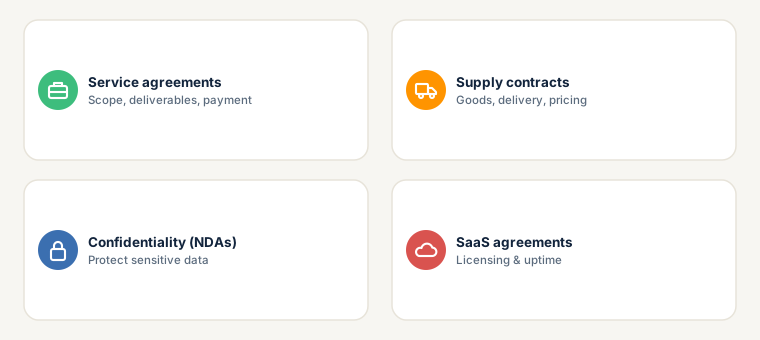
Which type of B2B contract you use depends on the business relationship. Some of the most common include:
- Service agreements: Define the scope, deliverables, and payment terms for professional services such as consulting, marketing, or IT support.
- Supply contracts: Set the conditions for purchasing goods, accounting for factors such as delivery dates, product quality, and pricing structures.
- Confidentiality agreements (NDAs): Protect sensitive business information by restricting how a party can share or use protected data. Learn more in our guide to NDAs.
- SaaS agreements: Govern the use of cloud-based software services by setting out licensing terms, privacy requirements, uptime guarantees, and subscription terms. See our deep dive on SaaS contracts.
For long-term supply relationships, companies often use a framework agreement under which individual orders are placed. For a broader map of every contract type, see our pillar guide.
Regulatory framework and key considerations
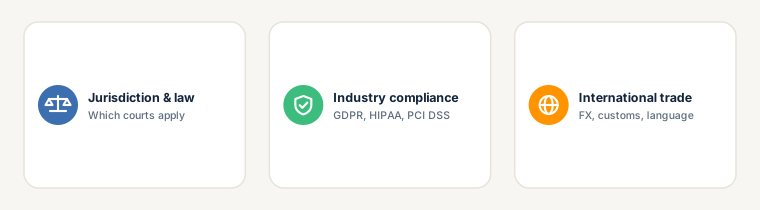
Drafting a B2B contract is not only about the content — it's also about making sure the agreement holds up legally. Three considerations strongly influence how enforceable and effective a contract will be.
1. Jurisdiction and governing law
Not all laws are the same. If two companies operate in different states or countries, they must agree on which legal system applies to their contract. This clause states:
- which country or state has jurisdiction in the event of a dispute;
- which courts or arbitral tribunals have authority over the contract.
Without a clear jurisdiction clause, resolving legal disputes can become complicated and expensive.
2. Compliance with industry regulations
Every industry has its own rules. Depending on the type of contract, companies may need to comply with:
- data protection laws (e.g. GDPR in Europe, CCPA in California) for handling customer or business data;
- financial regulations for payment processing and reporting;
- industry-specific regulations such as HIPAA (healthcare data protection) or PCI DSS (credit card transactions).
Failing to adapt contracts to legal requirements can result in fines or reputational damage.
3. International trade considerations
Cross-border agreements bring additional factors into play, such as:
- Exchange-rate risk — fluctuations can affect payments if the contract doesn't provide for exchange-rate mechanisms.
- Import/export regulations — customs duties, taxes, and customs law can affect contract prices and delivery obligations.
- Language and translation — contracts should be drafted in a legally recognized language and translated precisely when necessary.
Clarifying these legal details early helps companies ensure their contracts are valid, enforceable, and compliant with the right laws.
Key clauses in B2B contracts
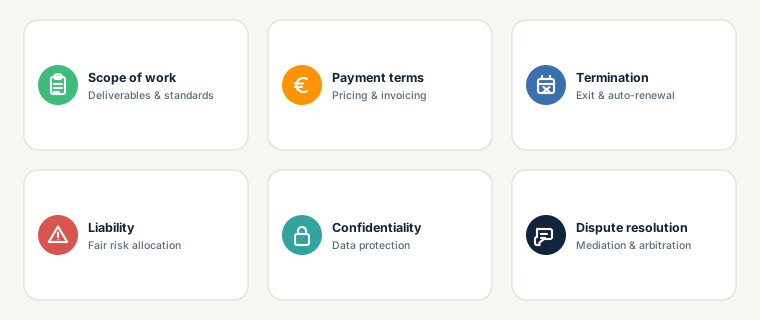
A well-structured B2B contract includes core clauses that define responsibilities, protect both parties, and reduce the risk of disputes. Here's what should be covered.
Scope of work and deliverables
This clause ensures both parties have a clear idea of what is expected, reducing the likelihood of later disputes. It should include:
- a detailed description of the services or products offered;
- timelines and milestones for deliverables to keep projects on track;
- quality standards and performance expectations to avoid disagreements about what counts as acceptable work;
- the responsibilities of each party, ensuring accountability.
Payment terms and pricing structure
Financial clarity is critical in any business arrangement. This section should specify:
- the pricing model (fixed price, milestone-based, hourly rate, or subscription);
- the frequency of invoicing (monthly, per milestone, or on completion);
- accepted payment methods and currencies for international contracts;
- penalties for late payment and interest rates to discourage delays;
- a procedure for resolving payment disputes to keep financial processes running smoothly.
Termination and renewal terms
A contract should clearly state how and when it can be terminated or extended. This clause should specify:
- valid grounds for termination (e.g. breach of contract, insolvency, failure to meet obligations);
- notice periods before termination to avoid sudden interruptions;
- the consequences of termination, such as refund policies or obligations to complete outstanding work;
- automatic renewal clauses, if applicable, and how to cancel them.
Liability and indemnification
This clause ensures a fair distribution of risk between the parties and covers:
- liability limitations that cap each party's financial risk;
- indemnification terms that determine who is responsible if a third party sues over contract-related issues;
- disclaimers, such as force majeure events that prevent the fulfillment of obligations.
Confidentiality and data protection
With concerns about data security and intellectual property growing, this section is critical. It should address:
- what information is considered confidential, to prevent misuse or leaks;
- how long confidentiality obligations last, even after the contract expires;
- compliance with data protection laws such as GDPR and CCPA when handling customer or business data;
- security measures to prevent unauthorized access or breaches;
- what happens to the data after the contract ends, including deletion or return policies.
Dispute resolution and applicable law
Instead of costly litigation, contracts should specify how conflicts are resolved. This includes:
- the preferred method for resolving disputes, such as mediation, arbitration, or litigation;
- the choice of jurisdiction, indicating which laws apply;
- an escalation procedure that ensures disputes are handled efficiently before legal action is taken.
For a detailed breakdown of each building block, see our guides to essential contract terms and common contract clauses.
Best practices for drafting and negotiating B2B contracts
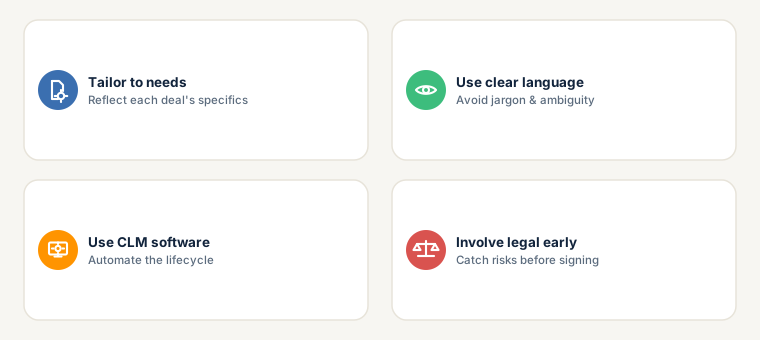
A solid B2B contract ensures both parties agree on expectations, obligations, and legal protection. To create fair, enforceable, and effective contracts, follow these best practices.
Tailor contracts to specific business requirements
General contract templates are handy, but they often ignore important details. Instead, contracts should be tailored to:
- reflect the specifics of the transaction and clearly document all services, obligations, and expectations;
- address industry-specific regulations, such as data protection laws for SaaS contracts or compliance standards for supply-chain agreements;
- ensure enforceability by adapting the terms to applicable law and jurisdiction.
Large companies manage 20,000 to 40,000 contracts at once, so contracts must be well structured to keep processes running smoothly.
Use clear and concise language
A contract should be easy to understand, not a legal puzzle. Complex legal jargon leads to confusion, disputes, and unnecessary litigation costs. For more clarity:
- use plain language wherever possible;
- avoid vague or ambiguous terms that leave room for multiple interpretations;
- define key terms explicitly, particularly for technical or industry-specific concepts.
Studies show that up to 40% of a contract's value can be lost to weak enforcement and unclear terms. A clear contract from the outset reduces the risk of discrepancies later on.
Use CLM software for contract automation
Contract lifecycle management (CLM) software makes it easier to create, negotiate, and manage contracts by:
- automating contract creation using pre-approved templates and clause libraries;
- tracking revisions and version control so everyone works with the latest version;
- sending automatic notifications for important dates, such as renewals or payment deadlines.
Because legal departments spend up to 50% of their time managing contracts, CLM software improves efficiency, reduces human error, and keeps contracts compliant throughout their life cycle. For an overview of the options, see our guide to contract management software.
Involve legal and compliance teams early
Waiting until the last minute to involve legal teams can result in costly oversights. Instead, companies should:
- bring in legal and compliance experts early to identify risks before signing;
- ensure regulatory compliance by adapting terms to industry laws and company policies;
- strengthen enforceability by making sure contract terms are legally sound and balanced.
These best practices help companies create fair contracts that protect their interests and build strong partnerships.
Common pitfalls and how to avoid them
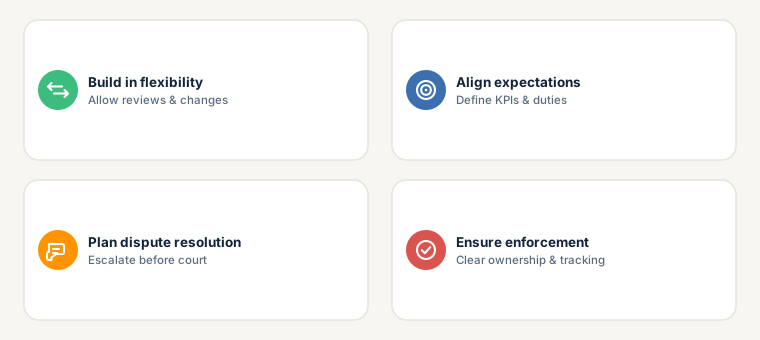
Here are a few commonly overlooked pitfalls and how to avoid them.
- Lack of flexibility as business needs change. Contracts that are too rigid can become obsolete when business conditions, regulations, or market dynamics shift, leading to expensive renegotiations or even early termination. To avoid this, contracts should include clauses that allow adjustments under defined conditions, set review periods to reassess key terms, and ensure termination terms are fair and adaptable.
- Differing expectations between the parties. Even a legally sound contract can fail on unclear or unrealistic expectations. Before signing, both parties should discuss the scope of work in detail, set measurable performance indicators (KPIs), and clearly document each party's responsibilities to rule out assumptions.
- Failing to plan for dispute resolution. Without a clear process, conflicts can quickly escalate into expensive litigation. Contracts should include mediation or arbitration clauses as a first step before legal action, provide a structured escalation process, and choose a jurisdiction that is fair and practical for both parties.
- Poor contract handover and enforcement. Even the best contract is ineffective if the teams responsible for implementing it don't fully understand their obligations. Aligning sales, legal, and operations teams, using contract management tools to track deadlines and compliance, and assigning clear ownership for enforcement all help prevent misunderstandings and missed obligations.
The future of B2B contracts: digitalization and AI
Looking ahead to 2025 and beyond, B2B contracts face major changes driven by new technologies and innovative approaches. Here are a few trends shaping the future of contract management.
1. Integration of generative AI into contract processes. Generative AI is transforming how companies approach contract management. By automating the creation of draft contracts and playbooks, AI reduces time and effort in the early phase of drafting. This not only speeds up the process but also helps ensure contracts are comprehensive and tailored to specific business needs.
2. Better contract insights with contextual AI. AI does more than assist with contract review; it analyzes contract history, industry trends, and risk factors to surface smarter insights. Companies can receive AI-driven recommendations on risks, compliance gaps, and negotiation strategies, allowing them to address legal and financial risks before they escalate.
3. The rise of agentic AI in contract management. Agentic AI is changing contract management by enabling autonomous systems to perform routine tasks such as monitoring contract compliance, managing renewals, and even negotiating terms within predefined parameters. This shifts contract management toward a proactive, self-regulating approach. According to Deloitte, by 2025, 25% of companies using generative AI will have run pilots or proofs of concept with agentic AI, with adoption expected to reach 50% by 2027.
Frequently asked questions
What is a B2B contract?
A B2B contract is a legally binding agreement between two businesses that sets out the terms of their cooperation — such as scope of work, pricing, service levels, and termination conditions. Unlike B2C contracts, B2B contracts are usually individually negotiated and tailored to the requirements of both parties.
What is the difference between a B2B and a B2C contract?
B2C contracts typically use standardized terms for a broad consumer base and are governed by strong consumer-protection law. B2B contracts are negotiated between businesses, offer more room to customize terms, and deal in much greater detail with matters like liability limitations, intellectual property, and service levels.
What clauses should a B2B contract include?
Essential clauses include scope of work and deliverables, payment terms and pricing, termination and renewal terms, liability and indemnification, confidentiality and data protection, and a dispute-resolution and governing-law provision.
Are B2B contracts legally binding without a signature?
In most jurisdictions, oral and email-based B2B agreements can be binding as long as the parties agree on the essential terms. For evidentiary reasons and enforceability, however, a written contract is always advisable — and for certain contract types, written form is legally required.
What is B2B contract management?
B2B contract management is the end-to-end process of creating, negotiating, signing, tracking, and renewing the contracts a company holds with its business partners. Done well — increasingly with CLM software — it improves compliance, reduces risk, and prevents missed deadlines or unwanted automatic renewals.
Ready for the next step?
Book a demo with our team and see top.legal in action