
Learn how to formulate clear and enforceable contract terms to avoid disputes, ensure compliance, and build strong business relationships.
What problems can arise if the terms of a contract are vague or incomplete? And how do you make sure your contracts are clear, fair, and enforceable?
Imagine signing a business deal, only to realise later that the payment terms were unclear, responsibilities were vague, or there was no agreed way to resolve disputes. These situations lead to frustration, financial loss, and legal trouble. That is why well-defined contract terms are essential.
Contract terms set out the rights, responsibilities, and expectations of each party, keeping business agreements transparent and enforceable. Without clear terms, small misunderstandings escalate into costly disputes. This guide explains what contract terms are, the key elements every agreement should cover, the main types of terms, best practices for drafting and negotiating them, and how to keep them compliant and enforced.
What Are Contract Terms?
Contract terms are the legally binding provisions that define the conditions of an agreement. They clarify each party's rights, obligations, and expectations, covering essential areas such as payment, confidentiality, dispute resolution, and termination.
Well-structured contract terms help businesses by:
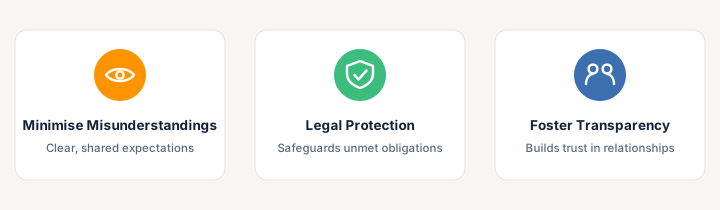
- Minimising misunderstandings through clear, shared expectations.
- Providing legal protection when obligations are not met.
- Fostering transparency that supports strong business relationships.
In short, clear and enforceable terms help businesses avoid problems, stay protected, and work well together. For a deeper look at the individual provisions that make up an agreement, see our guide to common contract clauses.
Key Elements of Contract Terms
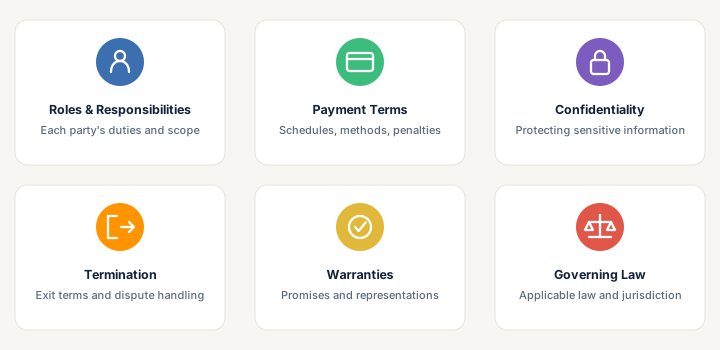
Clear terms create a solid foundation for any agreement by making sure every party knows their rights and responsibilities. Most business contracts should define the following six elements.
1. Roles and Responsibilities
Clearly outlining what each party is expected to do reduces confusion and prevents disputes. Whether it is a service agreement, employment contract, or business partnership, defining roles ensures accountability. Cover:
- The scope of work or services to be provided.
- Responsibilities and performance expectations for each party.
- Any limitations or exclusions that prevent misinterpretation.
2. Payment Terms and Obligations
Financial clarity is critical to avoiding payment delays and conflicts. Specify:
- Payment schedules — upfront, in instalments, or on completion.
- Accepted payment methods — bank transfer, credit card, digital payments.
- Late fees and penalties for missed or delayed payments.
- Currency and exchange-rate terms for international agreements.
- Refund or cancellation policies, where applicable.
3. Confidentiality and Privacy
Many agreements involve sensitive information that must be protected. A strong confidentiality clause should define:
- What counts as confidential — trade secrets, client data, pricing.
- Who can access it and under what conditions.
- How long confidentiality lasts, including after the contract ends.
- The consequences of a breach, such as financial penalties or legal action.
4. Termination and Dispute Resolution
Contracts should set out clear exit routes and how disagreements will be handled. Key elements include:
- Termination conditions — when and how a contract can end early, including notice periods (see contract termination).
- Consequences of a breach — what happens if one party fails to perform.
- Dispute resolution mechanisms — mediation, arbitration, or litigation (see the contract dispute resolution process).
- Force majeure clauses — protection against unforeseen events such as natural disasters or economic crises.
5. Warranties and Representations
To prevent misunderstandings, contracts should include:
- Warranties — promises that certain facts are true, for example that a product meets defined quality standards.
- Representations — statements that build trust, such as confirming a business is legally authorised to enter the contract.
- Disclaimers that limit liability where expectations cannot be guaranteed.
6. Governing Law and Jurisdiction
For contracts spanning different regions or countries, this clause specifies:
- Which laws apply to the agreement.
- Where disputes will be handled — local courts or international arbitration.
- Conflict-of-law provisions that manage legal differences across jurisdictions.
Types of Contract Terms
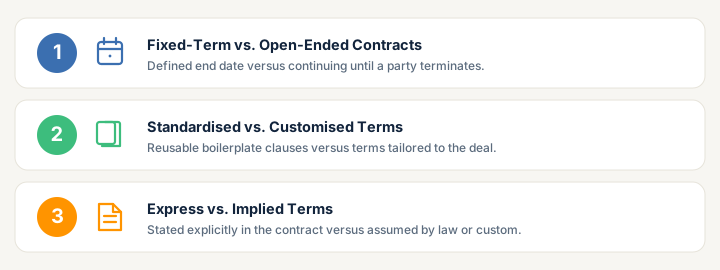
Contracts vary widely depending on their purpose, duration, and level of customisation. Understanding the main types helps you choose the right approach for each agreement.
Fixed-Term vs. Open-Ended Contracts
Fixed-term contracts have a defined duration and end automatically on a set date unless renewed. They are common in project work, temporary employment, and leases where a clear end date matters. Because both parties know the expiry date, planning renewals or transitions is easier.
Open-ended contracts continue indefinitely until one party terminates them. They suit ongoing relationships such as supplier or employment agreements where flexibility is preferred, and termination usually requires advance notice.
Standardised vs. Customised Terms
Standardised terms — often called boilerplate clauses — use pre-drafted language that applies broadly across similar agreements. They cover essential protections such as indemnification, liability limits, and dispute resolution, saving time and legal cost on routine transactions.
Customised terms are tailored to specific business needs and usually require legal review to confirm enforceability. They are essential for unique arrangements, intellectual-property considerations, or industry-specific regulatory compliance, but they demand careful negotiation to balance both parties' interests.
Express vs. Implied Terms
Express terms are stated explicitly in the contract, in writing or verbally, and include details like payment schedules, responsibilities, and confidentiality clauses. They leave little room for ambiguity.
Implied terms are not written down but are assumed from legal principles, industry norms, or past dealings. For example, an employer is expected to provide a safe working environment even if the employment contract does not say so. Courts may enforce implied terms where they are necessary for fairness or to complete the agreement.
Best Practices for Drafting and Negotiating Contract Terms
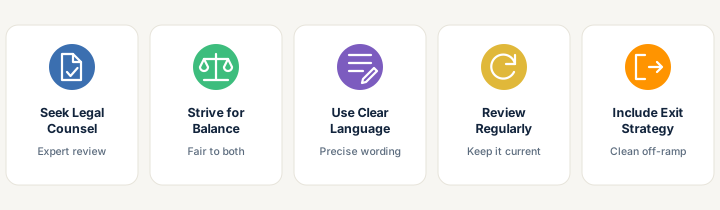
Use these five practices to keep your contract terms clear, fair, and effective.
- Seek legal counsel. Contract law differs across jurisdictions, and what works in one country or industry may not apply elsewhere. A legal expert helps ensure your terms comply with relevant regulations, protect your interests, and close loopholes or ambiguous wording before they cause problems.
- Strive for balance and fairness. A contract should benefit both parties. One-sided terms — excessive penalties, unilateral termination rights, or unreasonable liabilities — damage relationships and may not hold up in court. Distributing risk and reward equitably builds long-term trust and reduces disputes.
- Use clear, precise language. Ambiguity is one of the biggest causes of contract disputes. Avoid vague or overly complex wording, define expectations, deadlines, and obligations plainly, and spell out any industry-specific terms within the contract.
- Review and revise regularly. Scheduled reviews — yearly, twice a year, or whenever something material changes — keep terms fair, relevant, and legally compliant, and let you remove outdated provisions.
- Include a clear exit strategy. No business relationship lasts forever. Set out valid reasons for termination, the required notice, and any financial or legal consequences so ending the contract stays orderly.
How to Ensure Compliance and Enforcement
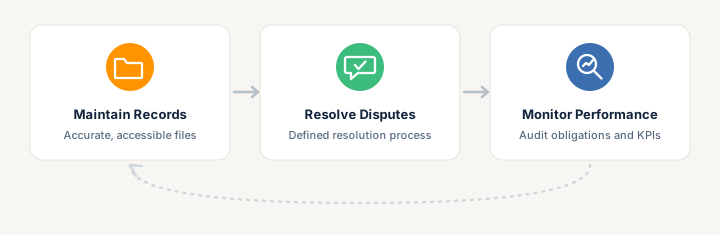
Drafting a strong contract is only half the battle — making sure everyone follows through is just as critical. Without oversight, even well-written agreements lead to missed obligations and legal trouble. Here is how to keep contracts compliant and enforced.
- Keep accurate, accessible records. Store signed contracts, amendments, and related communications in one central place, such as a contract management system. This gives quick access to critical information and a clear audit trail if compliance issues arise.
- Define and enforce dispute-resolution processes. Even careful contracts run into disagreements. Set out clear mechanisms up front: mediation to resolve conflicts amicably, arbitration as a binding alternative to court, and litigation as a last resort for serious breaches of contract.
- Monitor and audit performance proactively. Do not wait for a problem to surface. Run periodic contract audits, review performance metrics, and use automated alerts to stay on top of deadlines, renewals, and compliance requirements.
Using Contract Management Software to Monitor Contract Terms
Traditionally, businesses tracked contract terms manually — with spreadsheets, email reminders, and physical documents. That approach leads to missed deadlines, overlooked renewal clauses, and compliance risk from human error.
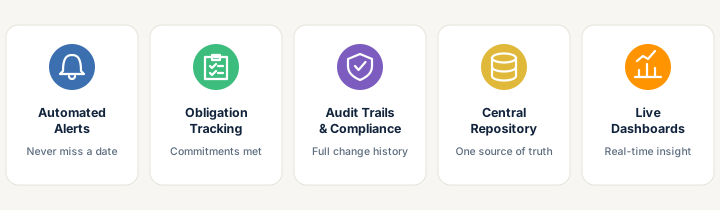
Contract management software automates the process so terms are actively monitored and enforced. It helps with:
- Automated alerts and reminders — never miss renewals, payment deadlines, or termination windows.
- Obligation tracking — confirm each party meets the commitments set out in the terms.
- Audit trails and compliance monitoring — keep a detailed history of changes and verify adherence to legal and regulatory requirements.
- A centralised repository — store every contract in one place for easy review and access.
- Real-time reporting and dashboards — surface contract risks, performance, and upcoming actions that need attention.
FAQ
What is the difference between contract terms and contract clauses?
- Contract terms are the substantive rights and obligations the parties agree to — what each side must do, pay, or protect. Clauses are the individual written provisions that express those terms in the document. In practice the words overlap, but "terms" describes the commercial and legal substance, while "clauses" describes the drafted paragraphs. Our common contract clauses guide covers the specific provisions in detail.
What are the essential terms of a valid contract?
- A legally binding contract generally requires an offer, acceptance, consideration (something of value exchanged), the intention to create legal relations, and the capacity of each party to contract. Beyond these fundamentals, most business contracts also define scope, payment, confidentiality, termination, and governing law. See our guide to the fundamental terms of a contract for a full breakdown.
What is the difference between express and implied terms?
- Express terms are stated openly in the contract, whether written or spoken — for example the price, delivery date, or confidentiality obligations. Implied terms are not written down but are assumed from law, industry custom, or the parties' past dealings, such as the expectation that goods will be fit for purpose. Courts can enforce implied terms where they are needed to make the contract fair or workable.
What are commercial terms in a contract?
- Commercial terms are the business-facing provisions that determine the economics of the deal — pricing, payment schedules, volumes, discounts, service levels, renewal, and termination rights. They sit alongside the legal terms (liability, indemnity, governing law) and are usually the parts most actively negotiated.
How often should contract terms be reviewed?
- Review contract terms on a set schedule — annually or twice a year for most agreements — and whenever something material changes, such as new regulations, a change in scope, or a renewal date approaching. Regular reviews keep terms compliant, remove outdated provisions, and prevent value leaking from missed obligations or auto-renewals.
Ready for the next step?
Book a demo with our team and see top.legal in action